In the middle of the night in 2008, Noah Brier had a question about the advertising business. If a brand lived in somebody’s head, could you simply ask what was in there? He bought a domain, put nine brands into a prototype, and had something working about ninety minutes later. A logo appeared. A visitor typed the first word or phrase that came to mind. Another logo appeared. The machinery was modest. The invitation was almost impolite: tell us what you actually think.
Brand Tags made a small opening in an industry that spends considerable money deciding what people ought to think. Brier had recently been teaching himself PHP and MySQL. His code was serviceable enough to test an idea, which was the immediate requirement. The project eventually drew roughly 200,000 visitors and three million page views in a month. An idle question had become a rather busy website.
There is a useful way to read Brier’s subsequent career through that experiment. He keeps finding something apparently soft - a brand, a company’s culture, a person’s curiosity - and asking whether a piece of software might make it visible. The questions have survived several changes of job title. The software has become considerably more elaborate.
A SMALL EXPERIMENT / ONE MONTH IN 2008
The audience declines the brief
By 2009, Brand Tags had accumulated 1.6 million words about 900 brands. Its results could be inconveniently funny. Some visitors associated Audi with the Olympics, apparently following the visual logic of interlocking rings. Apple attracted different descriptions from Mac and PC users. The same symbol could carry admiration in one mind and irritation in another. The company did not get to approve either answer.
That year, Brier appeared on Fast Company’s list of 100 Most Creative People in Business. He was leading strategy at The Barbarian Group, working in the territory between advertising, culture, and the web. His assessment of his own programming was less ceremonial: “If a programmer saw my code, they’d probably vomit.”
Another experiment, My First Tweet, collected people’s opening remarks on Twitter. Brier noticed how often they resembled someone testing a microphone. A new medium had arrived, and people were checking whether it was on. His projects gave him ways to observe behavior before turning it into a strategy. An experiment could answer back. A slide deck generally has better manners.
Coffee before the company
The experiments also involved leaving the computer. Brier and Piers Fawkes started Likemind, a series of coffee gatherings that brought internet acquaintances into the same physical room. By May 2007, Brier was announcing meetings in 25 cities, including Beijing, Istanbul, and Missoula. The arrangement was uncomplicated: arrive at a coffee shop in the morning and talk.
In an industry fond of elaborate names for ordinary human activities, Likemind allowed conversation to remain conversation. Its international spread depended on other people making the gathering useful in their own cities. There was room for an idea that had no presentation attached, and for meeting someone before discovering whether you needed anything from them.
Brier’s work moved through journalism, copywriting, creative direction, and strategy, including roles at Naked Communications and The Barbarian Group. At New York University’s Gallatin School, he studied media, technology, and culture. That combination helps explain why his projects rarely remain inside one professional discipline. A question about a logo can become an exercise in programming; an online network can become a morning appointment.
The room that doubled
In 2011, Brier and James Gross founded Percolate. The company built software for marketing organizations, helping them coordinate content and campaigns. The ambition was to give marketing a system of record: somewhere the work, its movement, and the people responsible for it could be understood together. Making more content creates a less glamorous companion problem. Somebody has to know where it is.
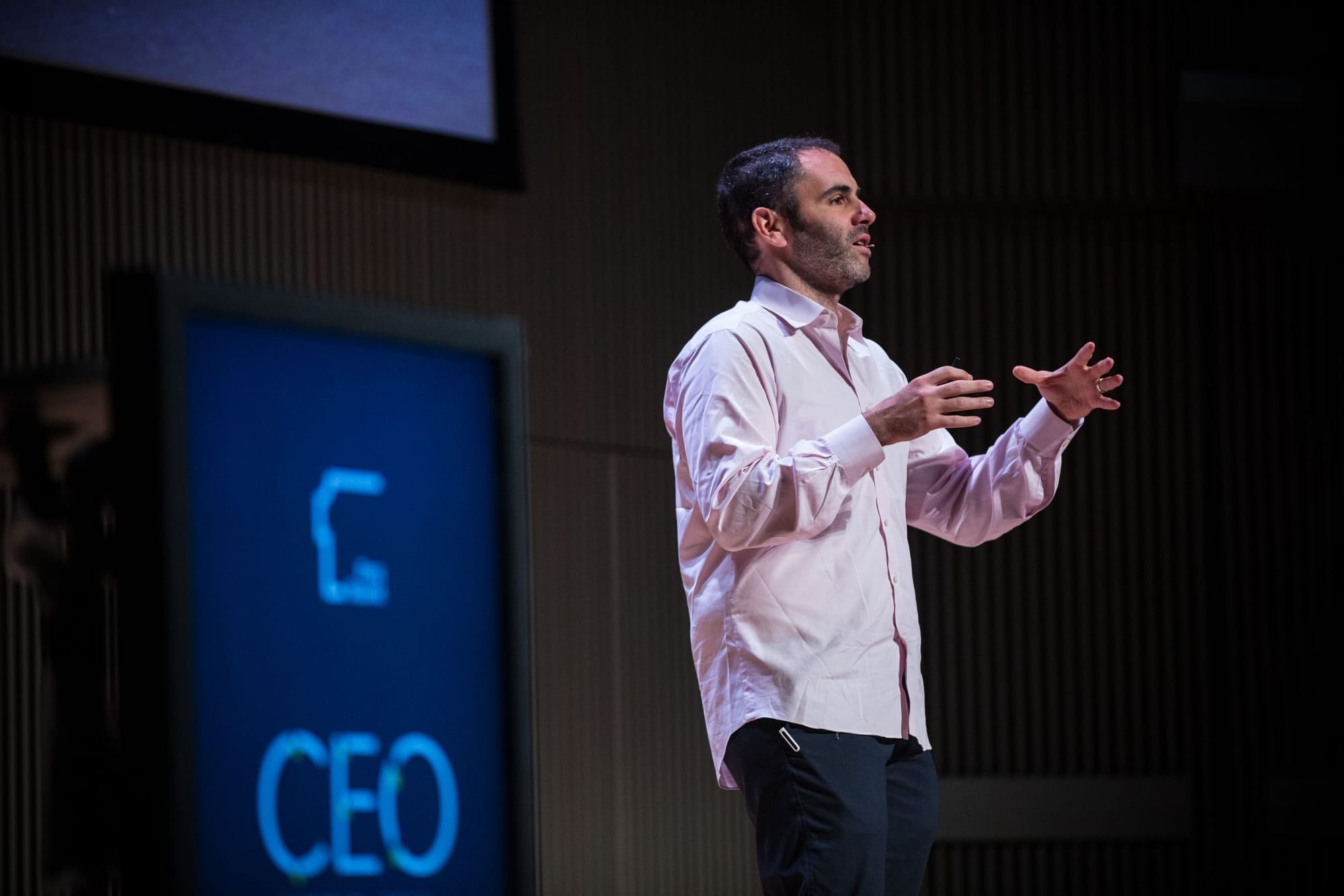
Then Percolate’s own growth produced a communication problem. Early in 2013, Brier spoke to employees about the company’s values. By June, headcount had doubled to 60. When he returned to the presentation, he realized that half the people in the room had never heard it. The founding story had stayed still while the audience changed.
He responded with a deliberately designed introduction to the company. A living Day One document explained its history and working philosophy. New colleagues met departments beyond their own. They learned to use the espresso machine, a sensible detail at a company named Percolate. Culture had acquired a schedule, some documentation, and a practical relationship with coffee.
There is an ordinary generosity in treating a newcomer’s first week as something worth designing. The details answer questions a long-serving employee may have forgotten anyone needs to ask. They also expose the limits of a founder’s memory as an organizational tool. A conversation works beautifully until the person who needs it joined last Monday.
“We find that words scale well.”
Noah Brier, on documenting Percolate’s culture
A barista for questions
Percolate built tools for its own staff as well as its customers. One, Barista, routed questions to people equipped to answer them. Sales and account teams could bring in questions from clients; product specialists could respond; a daily digest circulated the answers. Knowledge that might otherwise disappear into a private exchange became available to the company.
Another tool, Phaser, connected stages of product development across the systems the team used. The aim was to get the right information to the right person without continually adding another meeting. Brier described the distinction neatly: “A process is communicated. A tool is programmed.”
That preference had limits. He advised checking whether an existing product could solve the problem first, and remaining willing to retire an internal tool the organization had outgrown. Building something was useful when it fitted the work. Keeping it forever because you had built it was a different proposition. The tinkerer was learning to put his own inventions on notice.
Seismic announced its acquisition of Percolate on November 5, 2019. The transaction brought campaign orchestration and content management into a broader sales enablement business. For Brier, it marked the end of one company’s independent chapter. The problem of making a group’s knowledge useful would follow him into the next one.
The question has an inbox
In 2019, Brier and Colin Nagy also started Why Is This Interesting?, a daily newsletter with a question for a title. Its roots included wide-ranging breakfast conversations at Balthazar. Writing gave those conversations another life, and readers a reason to follow a subject they might never have thought to investigate themselves.
The production routine was less cushioned than a daily publication might suggest. In December that year, Brier explained that their reserve of finished editions was generally zero. A message between the two writers could settle who was taking that day’s assignment. Curiosity still had to meet a deadline.
His appetite for research extends further back. As a schoolboy, he pursued a history teacher’s challenge about the XYZ Affair, discovered conflicting answers, and called an academic to resolve the discrepancy. He recalled returning with evidence that the expected answer was wrong. Years later, his research habits had produced an Evernote archive of more than 14,000 notes. The school assignment had acquired a storage problem.
Hermès enters the experiment
In late 2022, Brier launched BRXND, bringing together marketing and artificial intelligence through experiments, writing, and events. His CollXbs tool asked users for two brands and a product, then generated an imaginary collaboration. The inputs were playful. The question underneath them sounded familiar: what does a brand mean, and where does that meaning become visible?
His early announcement described how a strong aesthetic could dominate a proposed collaboration. A Hermès pairing might leave very little room for the other brand. These imaginary products became a way to explore the associations a model had absorbed. They also offered an unusually entertaining alternative to explaining brand identity with a triangle.
By May 2023, he had described a pipeline that moved from generated marketing copy through aesthetic descriptions to an image prompt. Watching the outputs, he wondered whether distinctiveness and consistency helped explain which brands emerged clearly. He presented that as an interpretation of his experiments. An image that looks persuasive is still an invitation to investigate.
Back at the keyboard
Brier’s return to building had a personal motive. In 2022, he wanted time away from running startups, with no employees or investors, to write code again. As companies grew, he had moved further from making things himself. Working with emerging AI tools brought him back to that part of the job.
In a 2023 conversation with Drew Neisser, he emphasized practical uses such as categorizing survey responses and extracting information. There was also a less futuristic maintenance assignment: he was still providing technical support for a Chicago Bears blog while a friend handled the writing. New tools arrive; WordPress continues to require attention.
In 2024, he founded Alephic, again working with Gross. The company builds AI software around a client’s particular knowledge and ways of working. Its current approach puts engineers alongside marketing teams, with the resulting systems owned by the client. The work brings his interests in brands, software, and organizational knowledge into the same engagement.
The new hire can write code
By 2026, Brier was revisiting his old coordination problem with a new set of colleagues: AI agents. His writing argued that faster code generation does not automatically produce a shared understanding of what should be built. He drew on Stewart Brand’s pace layers to distinguish rapidly changing code from slower decisions about architecture and standards.
The resemblance to Percolate’s expanding room is hard to miss. Someone joins the work with remarkable capabilities and incomplete context. A leader has to explain what matters, why it matters, and how choices fit together. Better machinery creates fresh reasons to be clear.
Brier has spent years giving questions somewhere to go: a tag cloud, a coffee shop, an internal tool, a daily email. The habit links the curious strategist to the company builder. A logo on a screen once prompted strangers to tell him what was in their heads. Now the work is finding useful ways to build with what people know.
Follow the questions
Writing, conversations, and the next experiment.