The delivery companies were using his app for the wrong reason. Nishith Rastogi and his co-founder, Geet Garg, had built RideSafe to notice when a journey went off course. It was a safety application, a way to recognise an unexpected deviation. Food-delivery businesses saw something useful for their fleets. They wanted to know where their riders had gone, and whether an unusual stop needed attention. The founders had an audience. It simply hadn’t read the original brief.
There are several ways to respond when customers misunderstand your invention. Rastogi listened. The requests pointed towards a much larger set of questions: who should carry an order, in which vehicle, along which route, at what time? A tracking tool could report a journey. Someone still had to organise it.
That discovery became Locus in 2015. A decade later, Ingka Investments, the investment arm of IKEA’s largest retailer, acquired the business. Between those events sits the more interesting personal story: an engineer becoming responsible for customers, colleagues and decisions that have to survive contact with a working day.
A childhood with things to dismantle
Rastogi grew up in Delhi with an appetite for making things. Robotics interested him at school; science exhibitions gave the interest somewhere to go. The impulse has survived the change in job title. His professional biography still makes room for hardware DIY, alongside the usual business responsibilities. Some founders collect titles. Rastogi appears to have retained an affection for the tools.
At BITS Pilani, he studied electronics and economics, an education that put circuits and incentives within the same student’s reach. His background also includes published work in experimental physics and machine-learning patents. These details matter because Locus would eventually ask him to work across disciplines: mathematical problems on one side, the commercial reasons for solving them on the other.
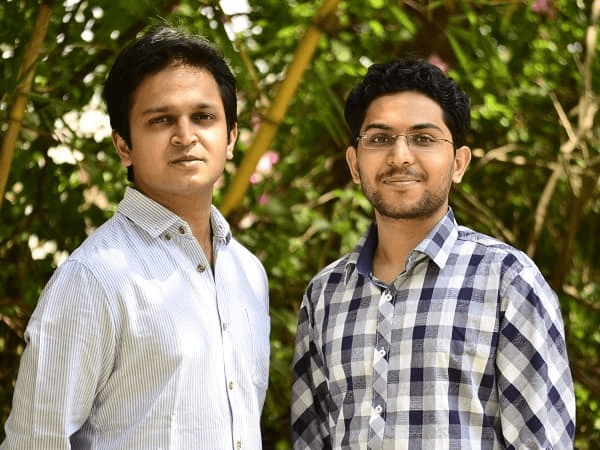
After graduating in 2012, he joined Amazon and worked on AWS machine learning. There he met Garg, an IIT Kharagpur graduate. Their shared background was technical. Neither came into the venture as a logistics veteran. They knew how to build systems and enjoyed doing it; the industry expertise would have to be acquired.
The customers who changed the destination
The pair’s route-deviation engine had a suitably engineering-minded nickname: R2D2, for real-time route deviation detection. RideSafe applied it to personal travel. When on-demand businesses adopted the technology, they were responding to a different daily pressure. Their services depended on people moving through a city, and those movements were difficult to supervise.
The useful clue was more specific than a demand for another map. Rastogi later explained that the businesses wanted to recognise unexpected stops and deviations. Location was the raw material. Deciding whether something needed to happen was where the work began.
Early investors gave the founders room to follow that clue. Rastogi has recalled raising initial backing while the idea was still shifting from a consumer application towards a business product. The investors supported the change. It was a consequential kind of permission: the founders could pursue the use they had discovered rather than defend the one they had first imagined.
The result required a different relationship with the customer. A person downloads an app and tries it. A business connects software to its orders, delivery staff and existing routines. Every new connection supplies another opportunity for an assumption to turn out to be wrong. The founders had found their market, and with it a rather demanding education.
A conceptual view of the product’s evolution, not a route map.
A street address is an engineering problem
In a 2017 interview, Rastogi identified a particularly unromantic obstacle: addresses. Converting an address into coordinates could be relatively straightforward in one market. Indian addresses required a system capable of interpreting the way people actually wrote them. Locus spent more than a year developing its own geocoding system, he said.
This is the sort of work that disappears inside a successful demonstration. A route appears on screen and the audience sees a line. Before that line can mean anything, the system must understand where the destinations are. The data does not arrive wearing a clean shirt and carrying its references.
Rastogi’s broader ambition was already explicit: automate the decisions needed to transport a package. That includes how to group the goods, which vehicles can carry them and the sequence in which deliveries should happen. A short road can be a poor choice if the vehicle, delivery window or load makes it unusable.
He had entered a field where an elegant answer could fail on a mundane detail. That seems to have suited his preference for difficult practical problems. He described strategy and problem solving as his strengths, and urged engineers to build finished products. A clever component needed somewhere useful to live.
“Build end-products. Create products that solve hard problems.”
Nishith Rastogi, on advice for engineers
The driver gets a vote
The people carrying out the plan brought another complication. Early on, delivery staff resisted the system. Rastogi described working with management to involve them as stakeholders and beneficiaries, with incentives to use the technology. Adoption required attention to the people whose working routines were being changed.
It is an instructive episode in the life of an engineering founder. Software can assign a task. The person receiving it can have quite reasonable concerns about the assignment, the monitoring or the reward. A business hoping to improve efficiency has to make the improvement intelligible to the people expected to deliver it.
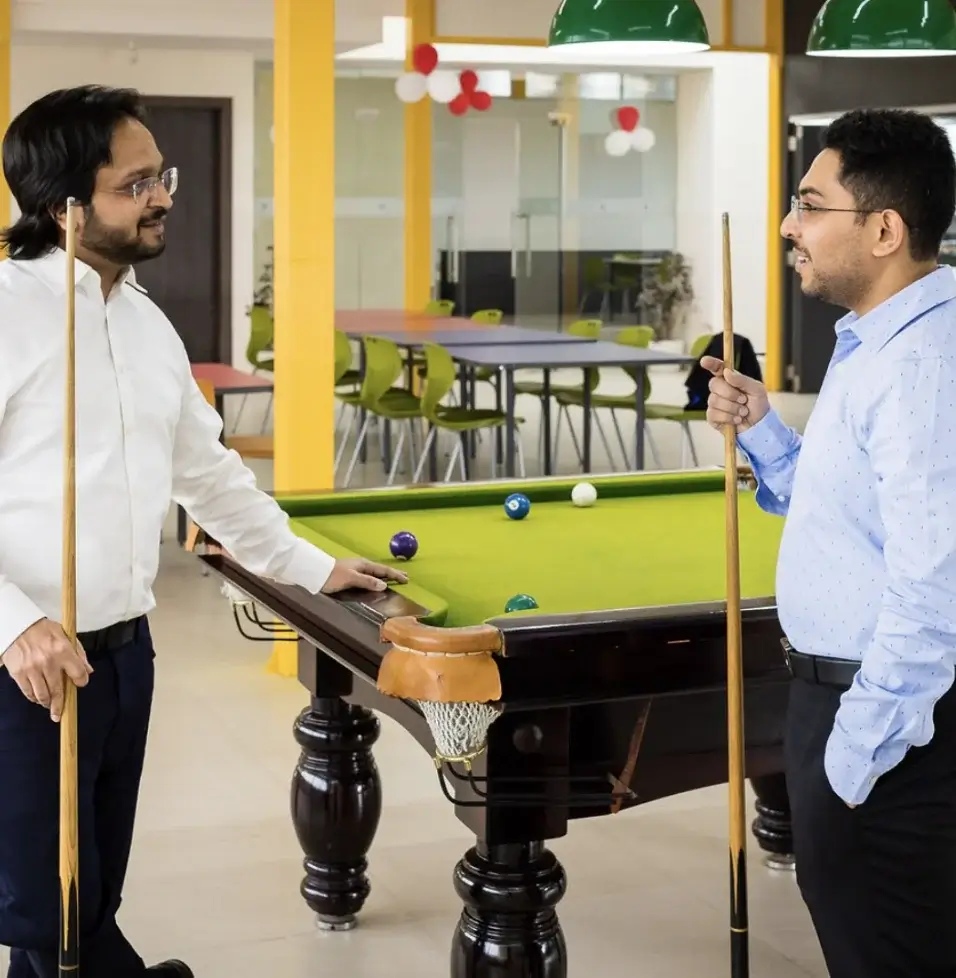
There were less solemn signs of the builders’ personalities, too. In the company’s Koramangala office in 2017, a conference room had lights that changed colour when somebody tweeted about Locus. The office also had a secret room accessed with a password. Someone had found time to give the workplace a few extra features.
The mix is appealing: mathematical seriousness alongside a willingness to make a room respond to the internet. A delivery system must behave predictably. The people building it need not spend every moment behaving like a delivery system.
Learning to sell the whole journey
The business grew into a more complicated sales conversation. Rastogi has said his first customer paid less than $10,000 a year. As Locus moved towards larger enterprise contracts, the buying decision involved more people. Business leaders, IT teams and procurement departments each needed their questions answered.
For a founder, that changes the work. Demonstrating that the software solves an operational problem becomes one part of making it acceptable inside a large organisation. The product needs to satisfy the people responsible for deploying it and living with it, as well as the person enthusiastic about the demonstration.
Locus raised a $2.75 million Series A in 2016, a $22 million Series B in 2019 and a $50 million Series C in 2021. Its customer relationships extended to enterprises including Unilever and Nestlé. Rastogi was named to Forbes Asia’s 30 Under 30 in 2018 and Fortune India’s 40 Under 40 in 2022.
The product kept expanding. By 2023, Locus reported powering more than a billion deliveries. Its 2024 timeline records the move to a broader transportation management system and the launch of an AI copilot called Mycroft. The company was taking responsibility for more of the journey around the route.
Locus’s Series A, B and C rounds. Company funding, in US dollars.
The shop across the road
Rastogi’s account of the acquisition begins with geography. Locus started in a rented apartment beside a service road in Nagasandra, Bengaluru. Later, an IKEA store opened across the road. The neighbour eventually acquired the company through Ingka Investments. It is a pleasing coincidence in a business otherwise obliged to calculate its journeys.
The October 2025 announcement placed Locus inside Ingka Group while preserving its operational independence and its work for other enterprises. At that point, the platform had more than 350 deployments across over 30 countries. Ingka wanted greater control over the systems supporting home delivery.
The commercial backdrop was clear. Online sales accounted for 28% of IKEA retail sales in FY24, up from 11% in FY19. As more shopping arrived at the customer’s door, the decisions between checkout and delivery carried greater weight. Furniture may look restful in a showroom. Moving it is another occupation altogether.
Rastogi framed the deal around a longer future for research and product development. In his own recollections of the early company, someone rang a bell when a delivery met its service agreement. He also described learning that “innovation is thrilling but reliability is sacred.” The bell makes the principle easier to picture.
The promise before the parcel
His more recent arguments remain close to the working day. In December 2025, he argued for spending on agility rather than relying too heavily on prediction. A blocked route or disrupted shipment still requires a response, however sophisticated the forecast that preceded it. He also pointed to document processing as a useful application of AI. Paperwork rarely makes a glamorous demonstration; it continues to occupy people anyway.
By August 2026, his writing focused on the delivery promise itself. Retailers should check their actual network capacity before offering a date at checkout, he argued. In October, he was writing about delivery economics under fuel-cost pressure, urging businesses to examine load consolidation and the use of available capacity.
The ambitions reach further: software agents, purposeful hardware and what he calls a Digital Supply Chain Officer. But the thread back to RideSafe remains visible. First understand what a journey is doing. Then work out what should happen next.
Rastogi began with people taking an unexpected route. Building Locus taught him how many things must agree before a journey can go as planned. There is still room for invention in that agreement. There is also, occasionally, a reason to ring a bell.
Follow the next turn
Conversations, writing and places to keep reading.
- Locus website · Locus company profile
- Nishith on LinkedIn · Nishith on X
- Watch: Founder Thesis conversation
- Watch: Supply Chain Pioneers, March 2026
- Read: Rastogi’s acquisition essay
- Ingka’s acquisition announcement
- Read: Delivery promises and network capacity
- Read: UK delivery economics, October 2026
- Times of India columns · Fortune India profile