A product can be too popular for its own good. Nikki Carlson and her business partner, Kailynn Bowling, discovered this with ChicBuds, their fashion-minded electronics brand. Women wanted accessories for their iPods. The two founders supplied them. Magazine coverage followed, then orders, then the awkward discovery that enthusiasm arrives considerably faster than inventory.
Carlson later recalled roughly $400,000 in back orders. It is a wonderfully impolite number. It interrupts the usual entrepreneurial fairy tale at precisely the point where everyone is supposed to applaud. Demand was real. So was the obligation to deliver. The founders brought in outside investment to help keep up, and eventually sold the brand.
Other business owners had questions about their magazine appearances and retail access. Answering those questions became ChicExecs. Carlson had acquired something more useful than a polished success story: experience of what happens after a success. Her working life would increasingly concern that difficult second act, when attention has to become a functioning business.
Before the earbuds, there was airtime
Her early career offered a rather different education in getting a message across. After earning a marketing degree, Carlson joined Russ Reid Company, an advertising agency in Pasadena. Her responsibilities came to include television, radio, print, fundraising, websites, branding and event sponsorship. This was marketing with several moving parts, each demanding its own version of the same message.
She spent five years there before taking an executive role at Ambassador Advertising Agency. Her clients included Compassion International and Breakpoint with Chuck Colson. She oversaw radio initiatives from the creative idea through execution. There is a useful discipline in that sequence. An idea has to survive scheduling, production and delivery before anybody gets to hear it.
In 2004, she ventured into ChicBlvd. Corporate experience travelled with her. So did an interest in helping other businesses and supporting charitable work. The subsequent ventures would change the medium and the customer, but those interests recur. A broadcaster needs an audience; a product needs a buyer; a charity needs something it can actually use.
A little sparkle in the electronics aisle
ChicBuds arrived in 2005, offering retractable earphones decorated with Swarovski crystals for iPods and mobile phones. The product joined two shopping impulses: wanting a useful piece of technology and wanting an accessory that looked like something you would choose yourself. An earphone could have a personality. Apparently it could also have a jewellery budget.
The founders developed and patented products within the electronics business. That hands-on work mattered to the agency that followed. They had dealt with a physical object, its presentation and its route to market. A press mention might start a conversation with a customer, but it could hardly pack the order or arrange a retailer's shelf.
By 2014, the product range had expanded. A tech-radio retrospective described a continuing emphasis on fashionable accessories for phones, tablets and computers. The premise had outlived the first gadget it served. Products could change while the customer remained recognisable: someone who wanted design and usefulness to occupy the same small object.
That distinction helps explain the move into services. Carlson's experience crossed product development and communication. She could discuss the appeal of an object and the work of finding somewhere to sell it. For another founder, those conversations belong together. Separating them neatly into professional departments does little to simplify the founder's day.
The shelf is only half the assignment
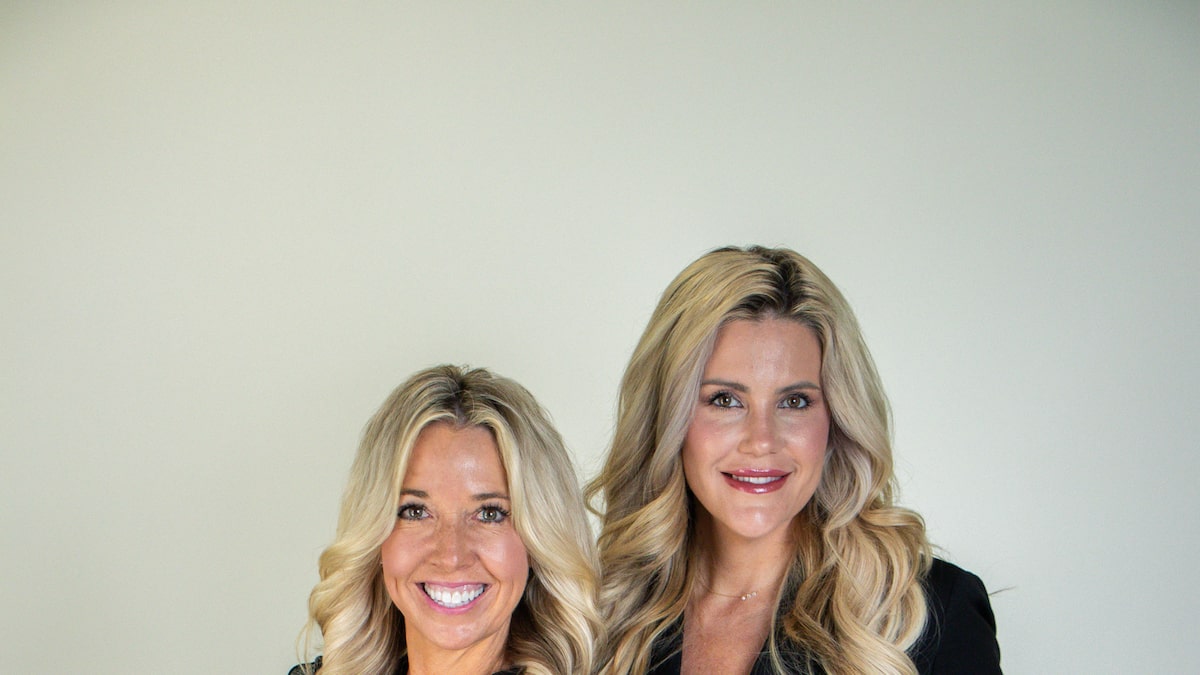
At ChicExecs, publicity and retail strategy became parts of one service. The agency's work encompasses media relations, digital marketing, social media and retail placement. Its home base is San Marcos, California, while its ambitions and client work extend beyond the neighbourhood. Carlson leads it with Bowling, the partnership continuing across the changes in business model.
The commercial logic is easy to picture. A customer reads about a product and needs somewhere to buy it. A retailer agrees to stock a product and needs customers to notice it. Each side can disappoint the other if the timing is wrong. Carlson's career sits in the space between those two events, where a promising introduction must become a sustained relationship.
In February 2022, ChicExecs announced that it had secured more than $20 million in retail orders for clients during 2021, alongside 20 percent overall growth. Those were the agency's reported results. Orders measure a different stage of progress from a magazine mention, and neither guarantees what happens next. Together, they show the kind of outcome Carlson's business was organised to pursue.
The distinction between a placement and a sale still figures in her public activity. Carlson has shared ChicExecs material about preparing brands for buyers and supporting sales after products reach stores. It is a practical emphasis for someone who has occupied both sides of the agency relationship. The photograph of your product on a shelf makes a fine keepsake. The next order makes a business.
Make the journalist's job easier
Carlson and Bowling's advice to founders can be surprisingly modest. Asked how a company with a small public-relations budget could attract coverage, they recommended making its story clear on its website and social channels. Waiting for a stranger to discover the interesting part adds an unnecessary obstacle to an already crowded transaction.
They also recommended a media kit: a concise collection of facts that allows an editor to understand a company without hunting through its website. Expertise was another route in. A founder who can offer useful insight gives a journalist a reason to return. The advice treats publicity as work done for another person, whose deadline and questions deserve attention.
There is something appealingly unceremonious about this approach. It asks for preparation before performance. A clear explanation, an accessible fact sheet and an informed answer are within reach of a small company. None requires a founder to behave like a celebrity. Carlson's broadcast background makes that emphasis on usable material particularly fitting.
A company with room for someone else's idea
The people around Carlson offer another view of the enterprise. In an account of leaving banking for ChicExecs, colleague Lydia Vargo described being drawn to opportunities for creativity and growth. She had already met the founders through trade shows. The move was a leap from a familiar profession toward a workplace where she expected to contribute differently.
That account gives substance to the firm's interest in intrapreneurship: employees developing ideas and responsibilities within an existing business. The arrangement is attractive precisely because starting a company is only one way to do entrepreneurial work. Someone else's organisation can provide the relationships and resources needed to try something new, provided its leaders leave enough room.
Carlson has also expressed interest in extending opportunity beyond the office. In a 2018 interview, she called for more practical career education, mentorship, scholarships for people with ideas and microloans. Her wish was for people to have the support to use their abilities. The aspiration is specific enough to be useful: give an idea a little instruction, a little money and someone willing to listen.
“Would love to see more micro-loans and mentoring to help.”
Nikki Carlson, 2018
The other inventory problem
ChicBuds taught the founders about excess stock as well as excess demand. Sometimes products remained on hand. Without the right discount retailer or charity connection, they gave items away or sold them cheaply at warehouse sales. They wondered whether those goods could do more for someone else. It was an operational question with a charitable destination.
GiveBack Stock grew out of that experience. Carlson and Bowling used their brand relationships to connect donated products with nonprofit needs. Early efforts included recruiting items for silent auctions and donations through organisations such as Big Brothers Big Sisters, The Rock Church and Excelsior Youth Center. The project gives their familiar connecting role a different purpose.
An unwanted box of merchandise and an organisation short of supplies can exist quite happily without ever meeting. Somebody has to arrange the introduction. Here, the founders' network became a way to move useful things toward people who could use them. It is a less glamorous image of business influence than a red carpet, and rather easier to understand.
A playlist, and the next chapter
There is a small musical footnote to Carlson's working philosophy. A playlist she and Bowling shared in 2016 included Tim McGraw's “Humble & Kind,” Natasha Bedingfield's “Unwritten,” Kutless's “What Faith Can Do” and Rachel Platten's “Fight Song.” Their accompanying explanations stressed ethics, faith, possibility and persistence. The selection would keep a car radio busy without alarming its passengers.
Faith appears throughout the founders' account of their businesses. So does partnership. Their parent company's account describes ChicBuds reaching seven-figure revenue before its acquisition by Incipio, and records the launch of BackHouse Digital Agency in 2024. It also describes Birdelo, their effort to automate parts of public relations. The tools have changed considerably since radio production.
Another 2024 expansion, ExPR, focuses on representing experts. Carlson was identified as its CEO when the launch was announced; Kristen Wessel serves as president. The work includes media relations, content and thought leadership. It extends a familiar question into another market: how does someone with something useful to offer become easier for the right audience to find?
Carlson's next chapter is therefore already plural. Products, agencies, expert representation and charitable introductions share a recurring concern with the distance between having something and getting it to someone. Her own business life has repeatedly crossed that distance with Bowling beside her. The sparkly earbuds were an early lesson. A customer wanting what you have is a good beginning. There is still the matter of getting it into their hands.