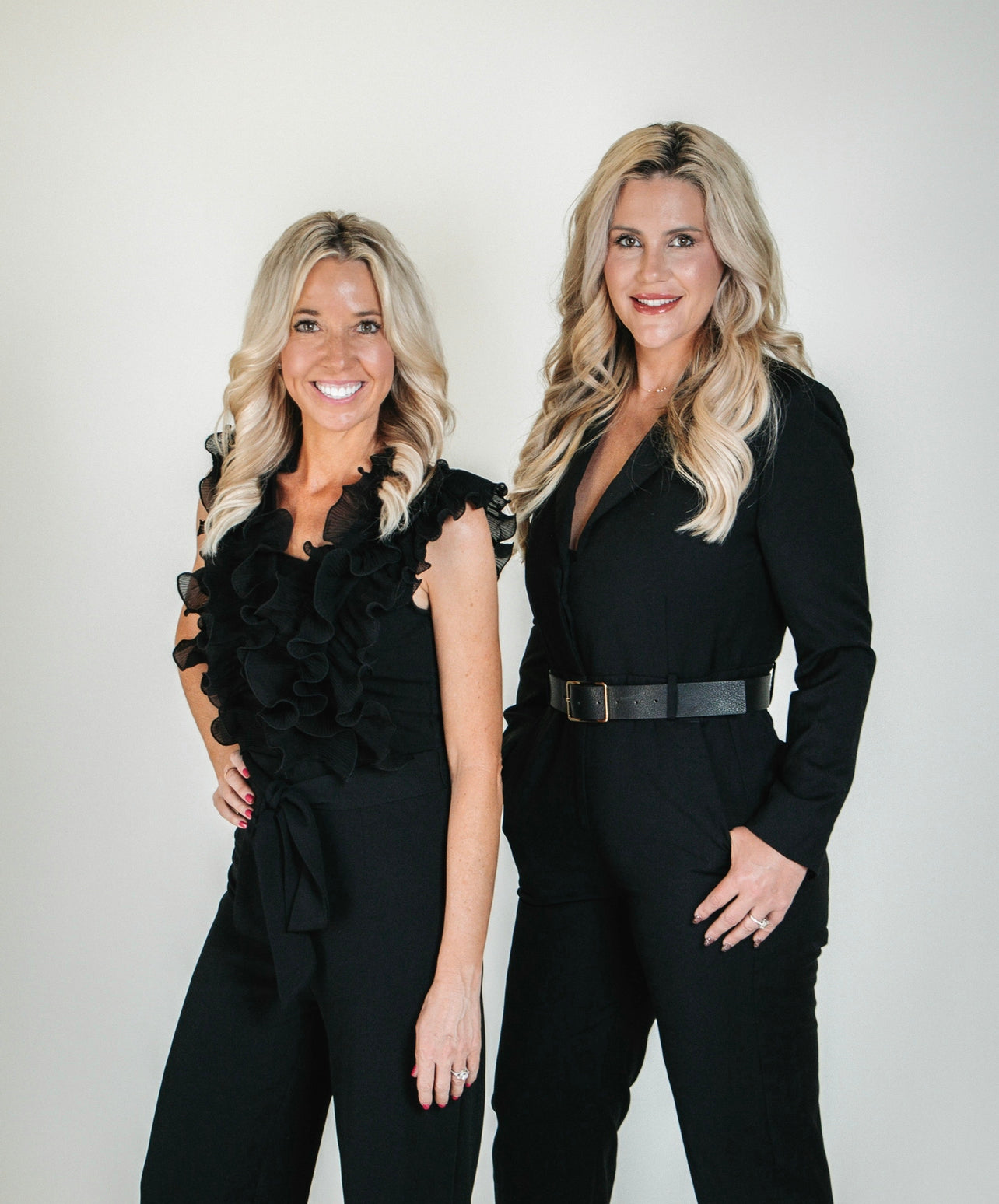
A pair of earbuds is a small place to discover your next business. Kailynn Bowling and her partner, Nikki Carlson, were building chicBuds, an electronics brand that treated personal audio as something a woman might want to wear as well as use. The products included retractable earphones decorated with Swarovski crystals. Then came questions from other founders about getting into stores and magazines. The work behind the product had become a product of its own.
That is the useful twist in Bowling’s career. ChicExecs, the public relations and retail agency she co-founded, grew from experience with the unglamorous business of being noticed, stocked and bought. A sparkling earphone could attract a glance. Building a company around it required rather more paperwork.
Today, Bowling works across brand promotion, product sales and employee development. Her professional base is San Marcos, California. The thread connecting those responsibilities is an interest in what happens between an idea and the people who might give it a chance.
The customer was also the designer
Bowling’s route into this work began in finance. She attended Mt. San Antonio College, entered the mortgage business and progressed from loan processing into corporate responsibilities. She has described the September 11 attacks as a turning point in her decision to pursue marketing, fashion and product design. Her early entrepreneurial work included selling fashions through a shop of her own.
Consumer electronics gave that interest a particular outlet. The premise of chicBuds was that appearance and function could coexist in the same purchase. Bowling’s LinkedIn account of the project describes a gap between the electronics available and the products she and Carlson wanted themselves. Their own tastes became a starting point for design.
“No one offered what we really wanted in electronics, the perfect combination of fashion and function.”
Kailynn Bowling, on the inspiration for chicBuds
The business eventually reached retailers including Nordstrom, Macy’s and Bloomingdale’s. The founders’ company history also records an acquisition by Incipio. Those names describe a journey through distribution as much as design. Somewhere between choosing a crystal and reaching a department store, the founders had acquired knowledge that other businesses wanted.
The shelf became part of the pitch
ChicExecs brought publicity and retail strategy into the same business. Its work extends across press coverage, social media, influencer activity and digital marketing. The appeal of that combination is easy to see from a founder’s position: attention matters, and so does having somewhere for an interested customer to go.
Bowling’s background helps explain why those jobs sit together. A brand owner has to think about the product, its presentation and its availability at once. An article and a buyer meeting can belong to the same commercial problem, even when different specialists handle them. The agency’s structure reflects that connection.
For 2021, ChicExecs reported more than $20 million in retail orders secured for clients and 20 percent overall growth. Those are company-reported, historical figures. They offer a concrete measure of the retail work that sits alongside the more visible business of press placements. In the same year, Bowling and Carlson were named finalists in the San Diego Business Journal’s Business Women of the Year awards.
ChicExecs’ reported 2021 results, announced February 2022.
The distinction between a placement and a sale matters here. Coverage, distribution and customer demand are related activities with different outcomes. Bowling has built her career around bringing them into conversation. The agency’s product origins make that an intelligible choice, rather than a collection of services that happen to fit on one brochure.
A room for the people doing the work
In 2017, the company gave its staff a new setting for that work. Its San Marcos office redesign included a snack bar lounge, swings, bean bags, whiteboard walls, collaboration areas and quiet rooms. Employees had laptops and could move between spaces. Friday was a work-from-home day. The office offered alternatives to conducting an entire working life from one chair.
The quiet rooms are an especially revealing detail. A workplace can celebrate collaboration so enthusiastically that it forgets someone may need to finish a sentence. The design made room for private calls and concentration alongside the communal spaces. Different tasks were allowed to require different surroundings.
Televisions around the office let colleagues watch client appearances. The work could become a shared occasion rather than an item disappearing into a report. For an agency, whose finished output often carries somebody else’s name, that is a way to make the team’s contribution visible.
Bowling’s approach to management also involves structure: clear expectations, communication and mentorship. She has described growing up in a military family as the oldest of six children. In her account, responsibility arrived early. Her management advice pairs encouragement with processes that help people coordinate their work.
“We build each other up.”
The company principle Bowling describes above the conference room
The interview that asks what excites you
One employee’s account gives that philosophy a practical shape. When Lydia Vargo interviewed with Bowling and Carlson, the conversation explored the parts of her career she found exciting. Her résumé had already established her experience. The founders wanted to understand where that experience might lead.
Vargo subsequently worked in public relations, helped lead retail strategy and moved into sales leadership. Her account describes a company where someone’s responsibilities could evolve as the business developed. The person hired for one job could help build another part of the operation. For a prospective employee, that is a more specific proposition than a vague invitation to grow. There is an example of someone moving between disciplines, acquiring responsibilities and staying connected to the same business as her role changes.
ChicExecs describes its employee culture through the idea of intrapreneurship: people bring initiative to a business they do not own. Its workplace profile describes founders meeting new employees, discussing their goals and promoting from within. For Bowling, mentorship therefore has an operational setting. It happens around assignments, conversations and opportunities to take on responsibility.
That approach has a useful consequence for the founder story, too. An agency cannot deliver every promise through its founders alone. As clients and services multiply, the work depends on other people’s judgment. Giving those people room to develop becomes part of how the business functions.
An editorial map of the founders’ businesses and services.
The story has to survive the working day
Bowling also writes about the work she does. Her business articles consider customer loyalty, relationships, credibility and the problem of telling a company’s story. Taken together, they show an executive concerned with what makes a business believable after the introduction has ended.
In her 2018 writing on retail loyalty, she discusses useful follow-up, purchase-based suggestions and reasons for customers to return. There is a pleasingly practical caution in the advice: a coupon for something a customer has just bought can miss the moment. The gesture needs to make sense to its recipient.
Her 2023 article on relationship marketing extends that thinking. She argues for answering customers, requesting feedback and acting on what they say. Relationships develop through repeated interactions. A campaign can create an opening; the business then has to keep responding.
Her writing on thought leadership puts education ahead of the sales pitch. Expertise earns attention by helping somebody solve a problem. Elsewhere, her holiday-marketing advice asks brands to plan while summer is still underway. In Bowling’s working calendar, Christmas can begin while everyone else is considering the beach.
When she turns to brand storytelling, she makes a related demand: the narrative must match how the company operates. Claims about values need corresponding practices. A story about employee consideration, for example, invites scrutiny of employees’ actual working lives. It is a demanding standard for a profession paid to make introductions sound appealing.
More businesses, familiar questions
The partnership has continued to expand. BackHouse Digital Agency launched in 2024, adding a dedicated digital business to the group. ExPR serves experts seeking media visibility, with former news anchor Kristen Wessel in its leadership. The broader company portfolio also includes Birdelo, a public relations technology venture.
The subject keeps changing, but the underlying questions are familiar: who needs to hear about this, what will make it understandable, and how does that attention become useful? Bowling’s product experience remains relevant even when the thing being introduced is a person’s expertise.
In June 2025, ChicExecs addressed business reputation amid AI-generated content and anonymous online reviews. The agency argued for accurate representation and emphasized client trust. Reputation has become another setting in which the relationship between a business and its public description needs care.
Bowling’s career began with corporate work and developed through fashion, electronics and agency leadership. Its most interesting turn remains the moment when other founders began asking how. She and Carlson had learned to move a product toward an audience. They found another business by helping someone else make the journey.