Nick Sheth had a useful observation about the future of shopping: the customers had already arrived. They were opening a retailer’s website on their phones. They were looking up stores. They were deciding what to buy before walking through the door. At Gap, where Sheth worked in digital marketing and business development, the job was to make those habits easier to accommodate. A customer carrying a small screen should not have to carry a company’s organisational problems as well.
“Customers are shopping on the go,” he said while discussing Gap’s mobile website. It is a plain sentence, almost comically modest beside the usual vocabulary of technological change. Its usefulness lies in the order of events. The shopper moves first. The business catches up. Much of Sheth’s career has taken place in that interval, where an appealing possibility encounters the less appealing business of getting things done.
Today he is the founder and CEO of ScaleCreative, a San Francisco creative-production company serving brands, agencies and retailers. The work includes advertisements, emails, website assets and print. His company’s founding proposition grew out of the difficulty he had encountered as a retail marketer: producing more creative work while keeping the cost manageable. The person who once helped a retailer respond to the phone in a customer’s hand now runs a business concerned with the work behind what appears on it.
The customer gets there first
At Gap, Sheth’s mobile-shopping comments were concerned with choice. Someone might browse on a handset and buy in a shop. Someone else might finish the purchase on a computer. Another customer might do the whole thing on the phone. The task was to support those routes without requiring shoppers to adopt the company’s preferred itinerary. People are remarkably unwilling to organise a Saturday around a marketing department’s chart.
Gap’s mobile website covered five brands: Gap, Banana Republic, Old Navy, Piperlime and Athleta. Store finding mattered alongside ordering. So did access to the assortment. These were practical details, each with consequences for the people building and maintaining the experience. A store locator and a product page answer different questions, even when the same customer needs both within a few minutes.
“Customers are shopping on the go.”
Nick Sheth, discussing Gap’s mobile shopping experience
The interesting part of this chapter is how recognisable those concerns remain. A shopper does not experience a channel strategy. A shopper experiences a useful page, a missing detail, a checkout that works, or one more reason to put the phone away. Sheth’s comments kept returning to that ordinary sequence. The technology mattered because somebody was already trying to use it.
A career on both sides of the transaction
Before his retail leadership work, Sheth managed sales, business development and operations at CNET, AltaVista, Overture and Yahoo!, with experience in the United States and Europe. Later came responsibility for global digital marketing and business development at Gap. The career crosses publishing, search, advertising and retail. These businesses meet at the same commercial question: how does somebody find something, and what happens next?
That range gives his move into creative production a particular logic. A marketer can arrange a partnership, select a placement and agree on a campaign, yet still need the actual material that makes the arrangement visible. An advertising opportunity eventually requires an advertisement. Someone has to produce it, adapt it, check it and hand it over. The interesting announcement rarely includes the person chasing the final file.
Sheth’s public LinkedIn profile lists the University of Texas at Austin among his educational affiliations and places him in San Francisco. His professional biography is international in scope, but the work repeatedly returns to retailers and their customers. ScaleCreative’s positioning makes that continuity explicit: its founder’s experience of multichannel marketing supplied the problem the company set out to address.
Two minutes to make a case
In February 2013, Sheth was a judge at a fashion-and-technology Startup Weekend at Westfield Labs in San Francisco. Fellow judges included PopSugar CEO Brian Sugar and Zappos Labs director William Young. It placed the Gap executive among people evaluating new ways to connect shopping and software. The setting offers a compact glimpse of his involvement beyond the boundaries of an established retailer.
A judging panel is an interesting place for a retail operator to sit. A proposal must survive contact with someone who knows how an existing business works. The encounter also runs the other way: an established company gets to see ideas that have not yet accumulated its habits. Sheth’s presence belongs to a period when fashion and technology were finding more occasions to compare notes.
A business built around the next file
ScaleCreative lists 2013 as its founding year. Its account of the company’s origins ties the business to Sheth’s frustration with the cost and volume of creative deliverables. It names Walmart, Sephora, esurance and Neiman Marcus as adopters of its services. The operating arrangement combines a San Francisco base with a global workforce, bringing an international production model to a problem he had encountered inside retail.
The breadth of the work is revealing. In ScaleCreative’s web portfolio, emails for beauty and retail brands sit alongside landing-page assets. Its consumer-products portfolio includes Operation Good Boy’s trade-show display. A company name may appear on a phone in one engagement and across a physical counter in another. Both require somebody to turn a brand’s intentions into material that fits a particular place.
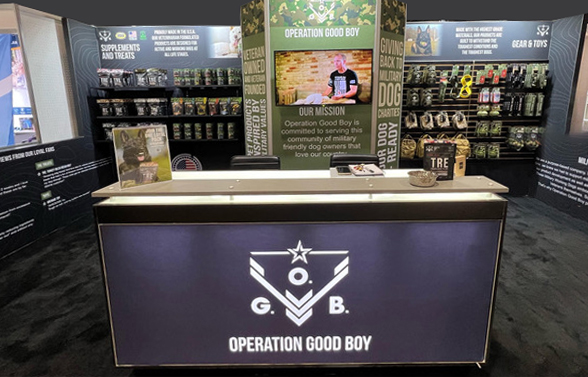
There is a pleasingly unglamorous side to this. A campaign can be discussed in sweeping terms while its production needs remain very specific. The asset has dimensions. The copy has a length. The deadline has a date. A production business has to take those particulars seriously because the finished work will be used somewhere, by someone who has other things to do.
Sheth’s founding ambition, as ScaleCreative describes it, was to make that work available at greater volume and lower cost. That is an aspiration about a team’s capacity as much as its taste. A handsome piece of artwork is useful; a reliable way to keep producing the material a marketing team needs is a different organisational achievement. His business is built around offering that continuing support.
A retail marketer’s production problem becomes a business.
The relationship before the panel
One small public exchange gives the company’s early years a human scale. When Daniel Pearson marked Bamboo’s tenth anniversary in February 2024, Sheth congratulated him and recalled the agency’s support when his own company was getting started. The comment has the texture of one founder recognising another’s place in a business’s history. An early customer can become part of the story long after the first project ends.
“You put your faith in my company 10 years ago when we were just getting started,” Sheth wrote. The emphasis is on faith, a useful word for the first stage of a service business. Before a provider has accumulated years of work, someone must give it a real assignment. Pearson’s anniversary prompted Sheth to acknowledge that decision publicly.
By May 2024, Bamboo was promoting a creative-strategy session featuring Pearson, Sheth and Batch Creative co-founder Eli Schneider. The advertised format included reviewing ads and discussing the decisions behind them. The earlier expression of thanks and the later invitation sit comfortably together: a commercial relationship had also become an occasion to share practical experience with others.
Who gets invited into the conversation?
Another glimpse comes from Aakash Nair, who described Sheth and Lindsey Lutts McGuire as mentors in a March 2025 reflection on his career. Nair recalled being brought into strategic business discussions while managing creative teams and major accounts. He credited the experience with teaching him to understand different parts of a business and to invest in lasting relationships. Those are Nair’s recollections, and they make the leadership story more concrete.
For a younger colleague, being included in a consequential conversation can change the meaning of an assignment. The work on the desk acquires a customer, a cost and a reason. Nair’s account suggests that inclusion was part of what he valued in working with Sheth and McGuire. It is a modest form of influence, measured in what another person remembers learning.
There is also a connection between the two recollections. Pearson appears in Sheth’s account as someone whose early support mattered. Sheth appears in Nair’s account as someone who helped him understand business decisions. The founder has occupied both positions: receiving a chance and helping a colleague learn. Neither episode requires a grand theory of leadership. They give the career a cast of people, each with a particular reason to remember the work.
Put these episodes together and Sheth’s career becomes easier to see. There is the Gap marketer attending to how customers already shop, the judge considering new retail ideas, the founder addressing creative-production demands, and the mentor remembered for opening a strategic conversation. Each involves bringing an idea closer to the circumstances in which it must work. In Sheth’s case, those circumstances include a shopper’s phone, an agency’s trust, a colleague’s development and the next piece of creative waiting to be made.
Follow the work
Explore the company, the career and the conversations.