The bus ride home gave Nhon Ma an education that the classroom could not. At school, he saw classmates with tutoring and resources close at hand. Back in South Central Los Angeles, he saw students for whom that help was harder to reach. The distance between those two experiences would stay with him through Columbia, Google, and the companies he went on to build.
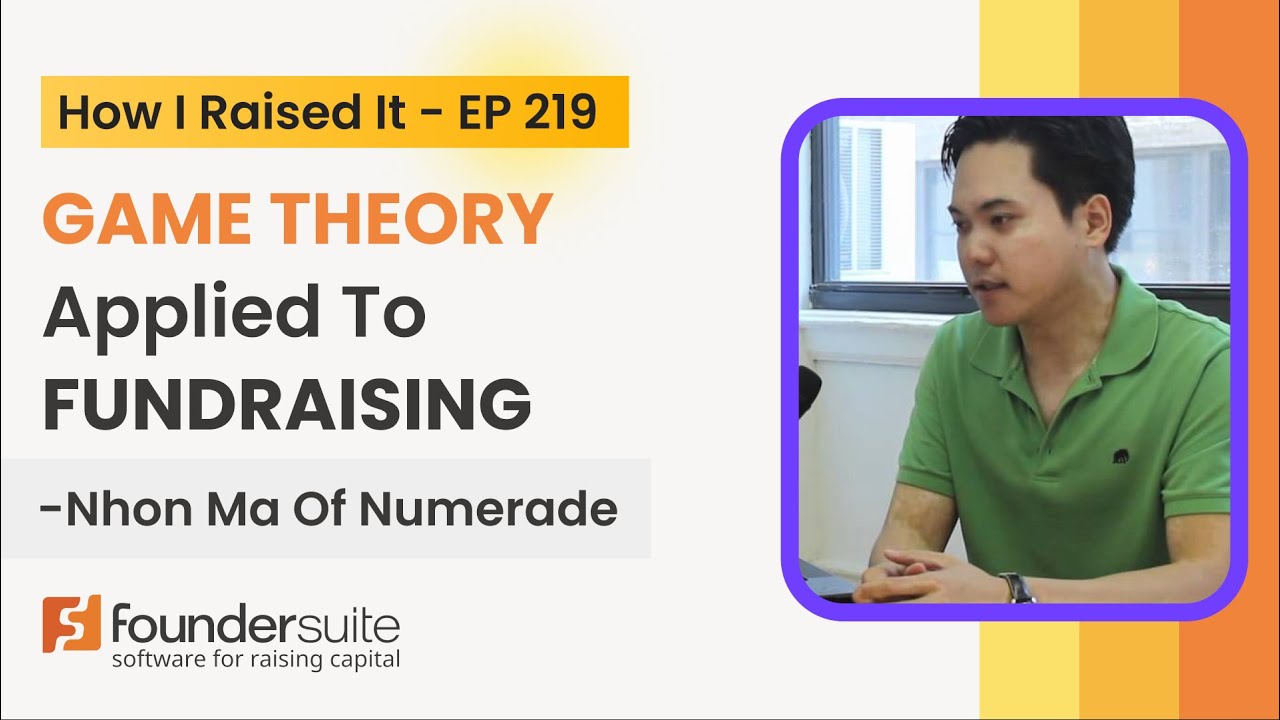
Today Ma is the co-founder and CEO of Numerade, a STEM learning company built around video explanations and AI tutoring. Its subject matter includes the kinds of problems that reward a second look: equations, experiments, steps that seem perfectly sensible until you try them yourself. His interest in giving students that second look began long before the software.
The bus ride between two educations
Ma grew up in Los Angeles, in a family for whom the public school system did several jobs at once. His mother was a Vietnamese refugee who worked as a seamstress. His father was a janitor at the school Ma attended. Education, meals and childcare came through the Los Angeles Unified School District while his parents worked.
Scholarship opportunities helped him reach Columbia. He studied economics and psychology, two subjects that now seem an apt combination for someone concerned with the cost of instruction and the complicated business of understanding it. A lesson can be available and still fail to land. Help can be effective and still be priced beyond the student who needs it.
In his recollections of school, the striking detail is the commute. He could see the resources available to classmates and then travel back into a community where access looked different. The gap had become something he could observe in the course of an ordinary day. No spreadsheet was required.
There is a danger in treating this kind of childhood as the opening scene of a success story, as though a degree and a job settle the matter. Ma has kept returning to the students who still need help. The question survived his own passage through the system: how could the opportunities he received become easier for somebody else to reach?
A waterfall, then a tenfold question
Education technology was not his only entrepreneurial interest. In 2011, Ma was running Tenka, a restaurant-deal site in New York. His Union Square offices consisted of two rooms in a shared workspace, with a waterfall at the entrance audible from his office. A startup with its own waterfall sounds extravagantly funded until one learns that the waterfall belonged to the building.
He was already part of the network of former Google employees finding their way into New York startups. Ma said his Google background had helped him secure funding. That chapter puts a useful wrinkle in the later biography. His career contains commercial experiments as well as a social purpose; he learned the work of building businesses before concentrating on educational access.
At Google, an early assignment involved advertising in traditional media. Ma recalls joining a business review of the print-ad initiative with Larry Page and Sergey Brin. The figures looked encouraging. Page wanted to know how the operation could become ten times bigger.
“This is great progress, now how can we 10X this?”
Larry Page, as recalled by Nhon Ma
For Ma, the meeting changed the scale of what seemed possible. The memorable part was a short question from someone who could have been satisfied with a promising report. Applied to education, that habit of thinking creates a demanding brief. A helpful service must reach more people while retaining the thing that made it helpful in the first place.
His professional record includes a Global Product Lead role at Google from 2012 to 2014. In his later public writing, Ma also describes beginning his career as an analyst, learning to examine evidence and turn numbers into decisions. Those skills would matter when students began using a tutoring product in a revealing way.
The appointment that became a recording
Ma and Alex Lee began working together on education technology in 2013. Their earlier venture, Tutorcast, offered online tutoring. The premise was practical: use the internet to bring instruction within easier reach. Yet live teaching still required a teacher’s time and a student’s availability to coincide.
The students supplied an additional idea. They kept returning to recordings of their tutoring sessions, replaying them more than once. A session that had already happened could still be useful. The founders had evidence that students wanted to revisit explanations on their own terms.
That observation helped lead to Numerade, which launched in 2019 after the founding period listed as 2018 in professional profiles. Short, accessible videos allowed a student to return to a troublesome step without booking another session. The original teacher did not have to perform the explanation again every time somebody needed it.
“Students need to get the reps in,” Ma said in 2021. It is an unusually unfashionable proposition for a technology company: sometimes the useful thing is to do the same work again. The replay button has none of the social complications of interrupting a room full of people.
Repetition is also a useful corrective to the assumption that short video means shallow attention. A short explanation can be approached several times. Its length says little about the amount of effort a student puts into it. In Ma’s version of the business, the interesting action happens when the student stays with a problem.
Putting the school district back in the picture
Numerade’s growth brought investors into that project. In July 2021, the company raised a $26 million Series A. The money supported further development of video lessons and AI tutoring. By then, the company said its services had been used by 20 million students worldwide. Those were reported figures from that period, a snapshot of the business as its ambitions expanded.
Funding for a larger lesson library and further AI development.
Access also took the form of free summer bootcamps, introduced in 2020. By the following summer, the offering included eight-week courses for middle and high school students. It gave the video library a structure: a subject to work through, practice to complete, and other students alongside the learner.
In November 2023, Numerade announced an offer with a direct connection to Ma’s own history. LAUSD K-12 students and teachers could enrol for a year of free Numerade Plus access. The enrolment window ran through the end of that year. For a founder whose family had depended on the district, the destination was familiar.
The gesture was concrete enough to have a duration and an eligibility rule. A mission statement can promise almost anything; an access programme has to specify who can use it and for how long. Here, the childhood institution reappeared as a place where the company could put resources within reach.
A tutor with room for another question
As Numerade developed, AI became a larger part of its offering. AceChat arrived in 2023, adding conversation to a system of educational explanations. Ma describes a tutor that can break a problem into steps and adjust how it explains a concept. The aim is to keep a student working through the material.
There is an old classroom problem underneath the modern interface. A student may need help but hesitate to ask. Perhaps the teacher is busy. Perhaps everyone else appears to understand. An additional question can feel like an announcement to the room, even when it is simply the sensible next step.
Ma’s interest in personalisation follows that situation closely. Different wording, a visual explanation, or another pass through a concept can give the student a way back into the work. The software becomes useful when the explanation is understandable to the person receiving it. That is a more demanding standard than merely producing a fluent response.
A September 2024 partnership with George Fox University extended the access approach to a campus. Students received free use of Numerade’s resources, including its AI tutor, video library and the ability to request custom tutorials. The arrangement moved the purchasing decision away from individual students and into an institutional relationship.
Ma made the connection personal in a public post about the partnership. During college, he recalled relying on crowded group tutoring because private help was beyond his budget. Admission to university had not removed the problem of affording support once there. The memory helps explain why campus access belongs in his story.
The help he wanted to make ordinary
His public work now includes speaking about how students use AI. In March 2025, he appeared on WFSU’s 411 Teen for a conversation about the benefits and problems of AI-assisted study. He has also written for Built In about generative AI and engineers’ continuing education. The audience changes, but the interest in making learning easier to approach remains.
The arc of his career is held together by a fairly ordinary scene: someone understands most of a lesson and needs help with the rest. It is easy to overlook that scene while admiring a funding round or debating a technology. Yet it contains the student’s actual task, which is to make sense of the next step.
Ma has worked on that task through live tutoring, recorded explanations, free-access initiatives and conversational tools. Each format changes when and how help arrives. His own experience gives the question a particular insistence. He knows that getting into the classroom and getting the support to succeed there can be separate achievements.
The bus ride and the replay button belong together. One showed him that help was distributed unevenly. The other showed him that an explanation could keep working after its original appointment ended. Somewhere between those two observations lies the company he chose to build, and the second chance at understanding he wants more students to have.