Neurogazer Turns a 40-Minute Brain Scan Into a Report Card for Who You Might Become
A Johns Hopkins neuroscientist and his CEO brother built a company that reads 169 things out of a single MRI - cognition, temperament, aptitude, risk. From Baltimore, they are betting families will pay to see it.
Most companies working at the intersection of artificial intelligence and the human brain are building for the people in white coats. They train models to help radiologists spot a tumor, flag a bleed, measure the slow shrinkage of a brain over years. Neurogazer, a brain-science company founded in Seoul in 2014 and now expanding from an office on Baltimore's Fells Point waterfront, went a different way. It built its tools for the person inside the scanner.
The company's flagship offering is called the Brain Analysis Service, or BAS. You lie still in an MRI for roughly 40 minutes. Software then reads the images and returns a report on around 169 brain-related attributes - measures the company groups into cognitive ability, personality and emotional traits, behavioral tendencies, aptitude, growth or aging status, and potential brain-health risks. The output is not a stack of grayscale slices for a specialist to interpret. It is meant to be read by you.
The IdeaNeuroscience you can actually buy
Neurogazer has a word for this: neurobusiness. It is a slightly awkward term for a genuinely tricky ambition - taking rigorous brain science out of the university lab and the hospital and packaging it as a service ordinary people can purchase. The company frames its own mission as contributing to the advancement of neuroscience while leading innovation in that new market. In plainer language, it wants a brain scan to feel less like a medical emergency and more like a checkup you choose to have.
That framing explains the customers Neurogazer went after first. Rather than chasing the broad, blurry "everyone," it rolled out by age tier, starting where a brain is most visibly changing. The first release, in January 2023, was for children and adolescents aged 10 to 15, whose brains are still developing. Older adults (60+) and general adults (21-59) followed. The consumer tagline the company has used - know your child's potential - tells you which of those doors it expects families to walk through first.
The problems it is trying to solve are less about medicine than about access and translation. A brain MRI is one of the most information-dense objects in all of health, and almost none of that information ever reaches the person it describes. It gets read for one narrow clinical question and filed away. Neurogazer's wager is that the same scan holds a much wider story - about how a mind is wired, how it is maturing or aging, what it may be good at, and where its risks lie - and that people would value hearing it.
We are making neuroscience more accessible to the masses while empowering people to learn more about themselves and how they think - without any personal biases or agendas. - Neurogazer, mission statement
The FoundersA scientist and his brother
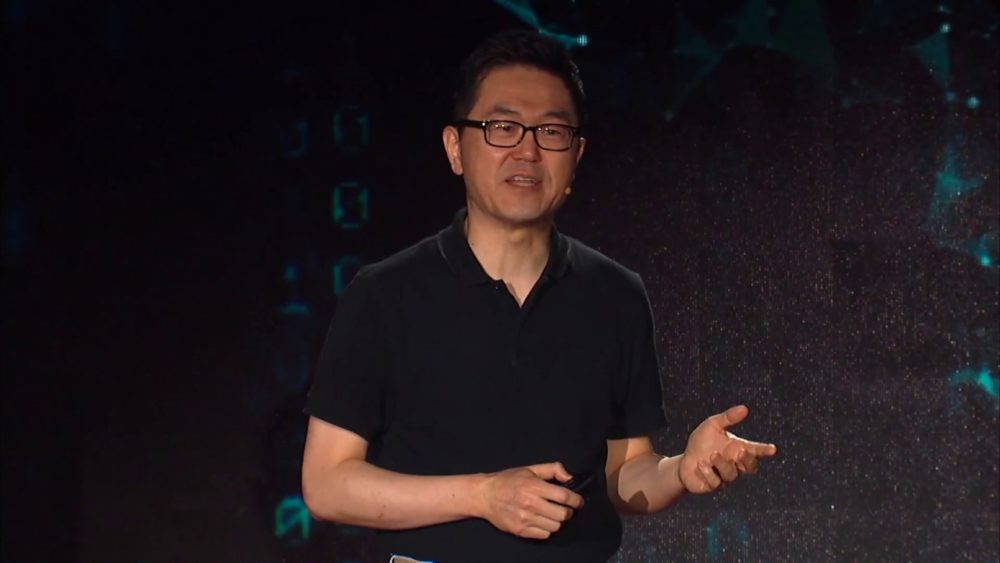
The company's credibility rests on an unusual founding pair: two brothers with complementary skills. Heungyeol Lee, the chief executive, runs the business. His brother, Daeyeol Lee, is the science. And Daeyeol Lee is not a casual academic advisor bolted on for a logo slide. He is a Bloomberg Distinguished Professor of Neuroscience and of Psychological and Brain Sciences at Johns Hopkins University, where he joined the Zanvyl Krieger Mind/Brain Institute in 2019 after faculty appointments at Yale, the University of Rochester and Wake Forest.
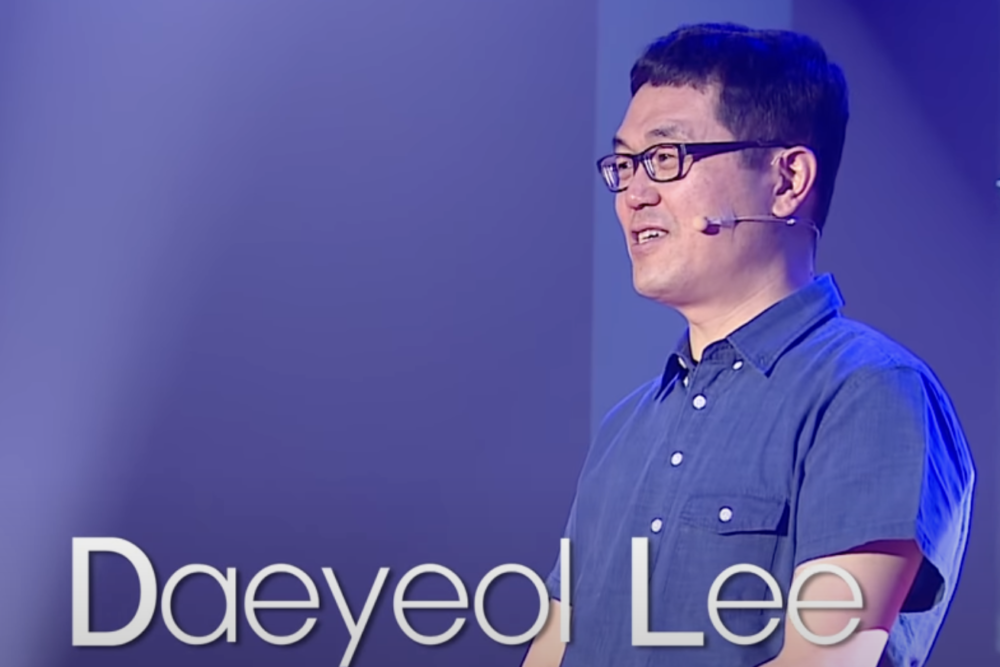
Daeyeol Lee studies the brain mechanisms of decision-making - how the prefrontal cortex and basal ganglia handle reinforcement learning and economic choice. In 2021 he won the Ho-am Prize in Medicine, sometimes described as Korea's Nobel. A year earlier he published Birth of Intelligence: From RNA to Artificial Intelligence with Oxford University Press, a book that traces intelligence from single molecules to machine learning and argues, pointedly, that true intelligence requires life. That is the intellectual weather system Neurogazer operates inside: a founder who spends his career being careful about what a brain can and cannot be said to "know," attached to a company whose product is a confident sentence about your brain.
That tension is not a bug. It is arguably the most valuable thing the company owns. Consumer neuroscience lives or dies on restraint - on not overclaiming what a scan can tell a nervous parent. Having a working professor at the founding table is a built-in brake, and a rare one in a field crowded with demos.
The MachineThree platforms, one scan
Under the hood, Neurogazer organizes an admittedly hard product into three layers. It is a clean structure, and a useful one to borrow if you are ever trying to turn dense data into something a normal person can hold.
Knowledge
The science base. Direction and guidance drawn from neuroscience research - what the brain's signals actually mean.
Research
Data and models. Brain data from structural MRI, functional MRI and diffusion imaging feeds predictive models.
Service
The output. An MRI Analysis Engine and AI Brain Analyzer turn raw scans into personalized, readable insight.
The engine ingests three kinds of imaging - structural MRI (the anatomy), functional MRI (activity), and diffusion tensor imaging, or DTI (the wiring). Those inputs get standardized into the attributes a report is built from. The unglamorous truth of the company is that most of the work sits in that middle Research layer: gathering enough good brain data, and training models patient enough to say something honest about it.
Neurogazer also did the thing most "AI health" startups avoid. It built the hardware end. Its own Neurogazer Brain Imaging Center is equipped with a Siemens Magnetom Vida 3T scanner and can image up to roughly 200 people a month. Owning the scanner means owning the quality and format of the data going into the models - a real advantage when your entire product depends on the images being consistent.
The BusinessTwo doors: the clinic and the consumer
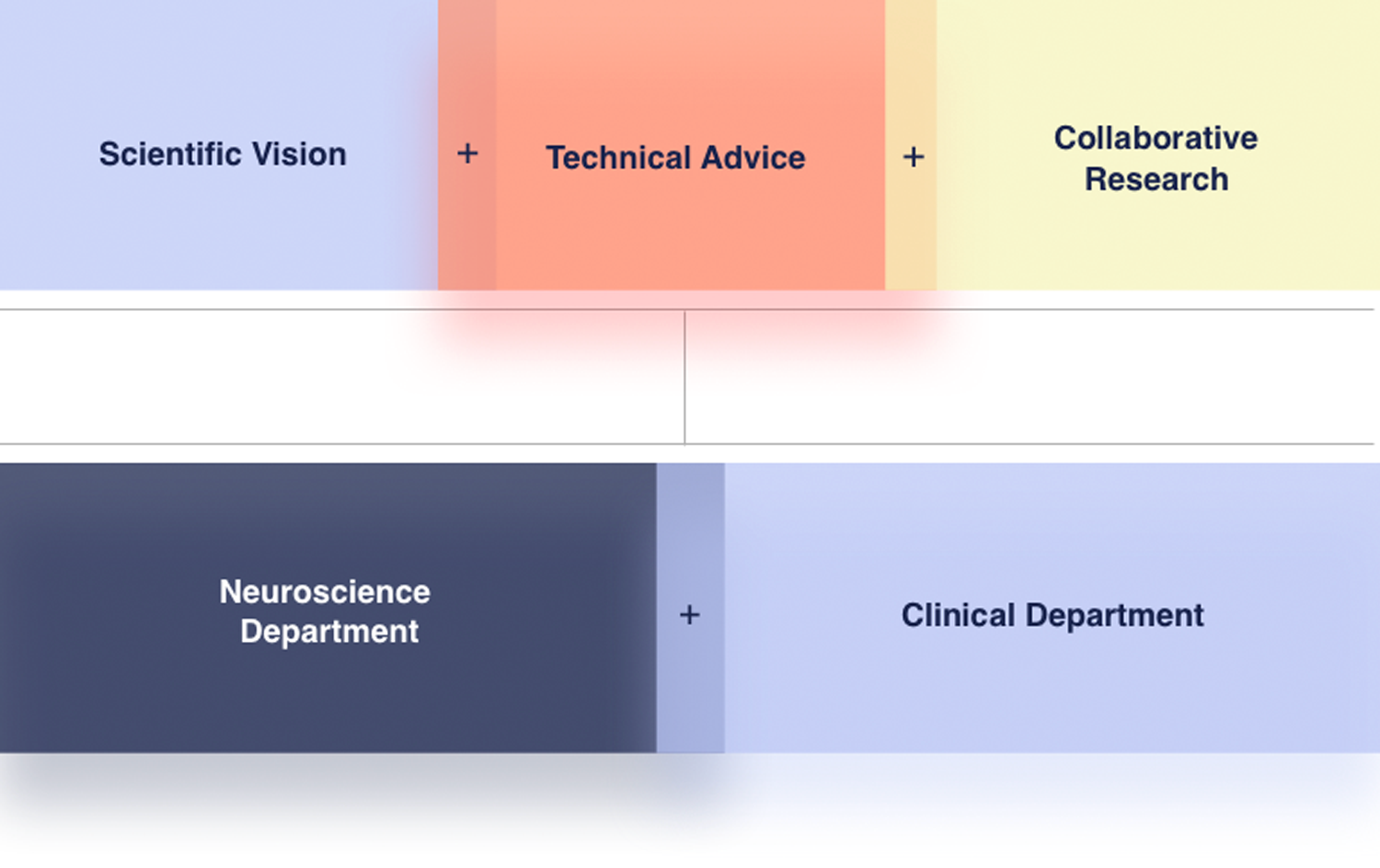
Neurogazer's services split into two categories. There is the Brain Analysis Service for anyone, sold to individuals and families through its imaging center. And there is Medical Software - software as a medical device, or SaMD - built for clinical use, where the same analysis supports diagnosis and prediction of specific brain conditions. In July 2025 the company signed an agreement with Korean clinical partners in Ulsan - Dongcheon Donggang Hospital and Neulsaeron Clinic - to commercialize its brain analysis and run joint research, a first push of the medical side into real practice.
That consumer-first stance is what separates Neurogazer from the better-funded companies it is often grouped with. Clinical neuroimaging-AI firms such as icometrix, NEUROPHET and BrainSightAI are largely building for hospitals and radiology departments. Neurotech names like EMOTIV, Cogstate and BrainCo measure the brain through headsets and cognitive tests aimed at researchers and quantified-self users. Neurogazer sits in a stranger, emptier spot: MRI-grade imaging, sold as a personal report, to people who are not sick and not scientists.
Using machine learning and AI technologies, we empower people to discover who they are. - Neurogazer, on its Service Platform
The BetEarly, or exactly on time?
The honest read on Neurogazer is that it is a small company making a large bet. It has raised roughly $4.34 million - with investors including We Ventures, Yozma Group Korea, Futureplay and Korea's TIPS program - and it runs lean, with a handful of employees. It spent its money on the patient, unglamorous parts: the imaging center, the data, the models. There was no flashy consumer app before the science was ready. The road was not smooth, either; the CEO has spoken openly about a period of serious financial strain.
Even when the company was in crisis due to serious financial difficulties, I never hesitated for a moment about the research support the company is conducting. - Heungyeol Lee, CEO & Founder
Whether consumer neuroscience is a real market yet is a fair question, and one the company cannot fully answer on its own. Brain scans are expensive, MRIs are not something most people do casually, and there are genuine ethical weights to handing a parent a document about their 12-year-old's brain. The single hardest problem Neurogazer faces is not the scan or the model. It is the sentence at the end - compressing 169 attributes into something true, useful, and not overstated. Get that translation wrong and the whole idea curdles. Get it right and it opens a category that basically does not exist.
For readers, there is something to take from Neurogazer regardless of how the bet lands. The three-layer split - a Knowledge base, a Research engine, and a Service layer that talks to humans - is a clean template for anyone turning hard data into consumer insight. So is the discipline of owning your data pipeline before you sell the story. And so, quietly, is the founding structure: pairing someone who knows how far the truth stretches with someone determined to ship it.
Neurogazer, in brief
- What
- AI-driven brain MRI analysis - ~169 attributes from a 40-minute scan
- Who for
- Families (ages 10-15 first), older adults, and partner clinics
- Founders
- Heungyeol Lee (CEO) & Daeyeol Lee (neuroscientist, Johns Hopkins)
- Founded
- 2014, Seoul - expanding in Baltimore, Maryland
- Funding
- ~$4.34M raised to date
Neurogazer is not promising to tell you your future. It is promising to read a scan you would otherwise never see the inside of, and to say something plain about it. In a field obsessed with helping the experts, aiming that information at the patient instead is either five years early or right on schedule. Either way, it is a question worth watching: what should you be allowed to know about your own brain?