A smart window can tell you plenty. Whether it is reporting properly. What its devices are doing. When something needs attention. But the window does not necessarily know which customer bought it, where the order sits in the finance system, or who should receive the service ticket. Those facts live elsewhere. Making them meet is a surprisingly substantial business.
- The work: connect enterprise applications, modernize them, then keep them running.
- The evidence: projects for Stitch Fix, Duraflame, View and Guardant Health.
- The useful twist: a dedicated development team can eventually become the customer’s own.
Neev Systems occupies this space between the tools. Its customers have already bought serious software: Oracle for business operations, Salesforce for customer relationships, ServiceNow for service workflows. The remaining problem is making a business process survive the journey across them. That is where an implementation partner earns its fee.
01 Fifteen systems, one finance team
Consider Stitch Fix. In Neev’s account of the engagement, the retailer’s finance team was working across more than fifteen key systems as the business reached roughly $2 billion in annual revenue. Budgeting, forecasting and reporting needed greater consistency. Growth had exposed the limits of the existing arrangement.
Neev implemented Oracle Cloud Financials and Procurement, extended the standard software and used Oracle Integration Cloud for real-time connections. Its case study reports that process optimization and automation removed work equivalent to four full-time roles. That measures capacity saved; it does not establish that four people lost their jobs.
Stitch Fix’s starting point, as described in Neev’s case study. Complexity had become a daily operating expense.
The revealing detail is the combination. Neev supplied application knowledge and the connections around the application. A finance platform can be perfectly capable while the surrounding process still depends on somebody carrying information from one place to another.
Duraflame had a related problem with a different shape. Its service lines were divided among providers, creating difficulties with communication, delivery and cost. Neev’s engagement covered Oracle Fusion Cloud, middleware and custom applications, including links to banks and electronic data interchange systems. The case illustrates the appeal of giving one provider responsibility across several connected tasks.
02 The missing log matters
At View, the smart-glass manufacturer, the information problem reached into physical devices. Customer support needed device logs alongside Salesforce customer details and Oracle order and shipping information. Neev built a data platform using Azure Data Factory and Snowflake, with reporting and analytics tools including Splunk.
The particularly useful feature was an absence detector. When expected device logs failed to appear, the system could automatically create a ServiceNow ticket. Support could act on a missing signal. New devices could enter the ingestion process through metadata rather than repeated manual setup.
Azure Data Factory retrieves device and application data, including information from APIs and Amazon RDS.
Jerry Achord, identified as View’s director of business intelligence, described a platform that “takes data from many disparate systems” and makes it available to users. The ambition is clear. A support person should be able to find the answer without reconstructing the company’s technology estate.
A support person should be able to find the answer without reconstructing the company’s technology estate.
There is a modest lesson here for anyone buying technology: follow an exception. An ordinary transaction shows what the system expects. A missing log, a duplicate user or a delayed order shows who actually owns the problem.
Another View case makes the same point at a smaller scale. Neev cleaned Salesforce user data, introduced a monthly review and reconciled licenses. It also rebuilt the connection between orders and provisioning, adding testing, validation and reconciliation. Those are useful practices to copy: check who still needs access, check whether the receiving system got the order, and check whether the two records agree. Software ownership includes these recurring chores. An integration that works on launch day still needs someone watching it next month.
03 A team with a handover date
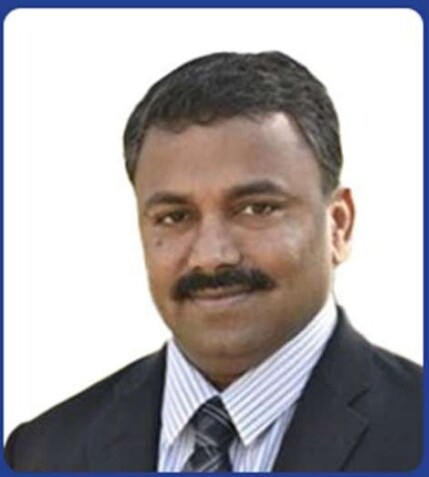
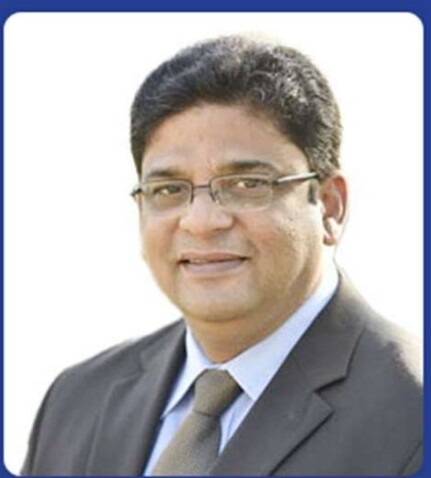
The founders’ backgrounds fit this kind of work. Neev identifies Chakravardhan R Vaddi, also known publicly as Chakri Reddy, as founder, and Srinivas Polsani as managing director and co-founder. Vaddi’s published experience includes enterprise applications, analytics and cloud implementations for manufacturers and retailers.
The firm sells implementation and engineering work, ongoing application management, and dedicated delivery teams. Managed support includes a named-resource model that makes fractional specialist capacity available for a fixed monthly fee. Its virtual captive center service uses a transparent cost-plus arrangement.
In the Inhabitr engagement, Neev says a Hyderabad application-development team grew from four people to ten within six months. After twelve months, the team transferred to the client. Neev reports 50 percent savings for that engagement.
That transfer option makes the offer interesting. A customer can buy help establishing a team while retaining a route to ownership. The arrangement still needs internal direction: someone must define the work, review delivery and prepare to manage the people after the handover.
04 The next support ticket
Neev’s market includes specialist consultancies, large systems integrators and customers’ own engineering departments. Its positioning rests on combining platform expertise, cross-application delivery and continuing support. Workato’s directory independently lists it as a certified Silver partner. Its service range also includes product engineering, analytics and software testing.
Its newer offerings bring AI to familiar operational chores. Release Management as a Service, or RMaaS, assesses Oracle patches, automates tests and supports a readiness decision. The current website describes NIRA, the Neev Intelligent Resolution Agent, as turning managed-services ticket data into an accumulating knowledge base.
For a buyer, the practical test remains concrete. Choose a release, an order or a support request. Establish today’s effort and error rate. Agree who handles failures and what ongoing support costs. Reliable automation depends on usable data, permissions and a business owner willing to settle conflicting definitions.
Neev’s work suggests a useful place to start: the moment information leaves one application and somebody waits for it in another. Find that wait. Give it an owner. Then decide what needs building.
Follow the connections
More from Neev and its public profiles.