The first computer Naveen Rao used did not belong to him. In the late 1970s, his father drove him and his brother from Whitesburg, a small town in eastern Kentucky, to a Radio Shack in Hazard. There, on the shop’s floor models, the boys wrote BASIC. The arrangement had a familiar childhood logic: if the interesting thing is forty minutes away, you make the trip. At home, there was no computer yet. On the shop floor, there was enough machine to begin wondering what one could make it do.
Nearly half a century later, Rao is still turning that question over, though the hardware is harder to carry out of a shop. He has founded three AI companies. Nervana Systems pursued a processor built for neural networks and was bought by Intel in 2016. MosaicML attacked the cost of training models and was bought by Databricks in 2023. Unconventional AI, the company he started in 2025 with MeeLan Lee, Michael Carbin and Sara Achour, reaches below both projects. It asks whether the physical machine on which AI runs has been arranged around the wrong habits.
This is an unusually literal form of starting from scratch. Most debates about AI concern bigger models, better data or faster chips. Rao’s new venture begins with the energy spent turning physical electrical behavior into the neat digital steps that software expects. If intelligence is a physical process, he asks, why make a computer pretend otherwise?
The edge of an idea
Whitesburg gave Rao more than those Radio Shack excursions. He grew up with outdoor sports, Dungeons & Dragons and shelves of science fiction. At Duke University, a lesson on how the eye detects edges pulled him toward neural networks. To recognize an object, a visual system must first notice the little boundaries from which that object is made. The puzzle offered a bridge between a machine he could program and a biological system he could study.
He worked on computer chips at Sun Microsystems, then pursued a neuroscience doctorate at Brown under John Donoghue. After Brown he joined Qualcomm in San Diego, working around neural-network research. His résumé looks like several disciplines taking turns at the wheel, but the route has a steady bearing. Rao kept moving between the brain’s way of processing information and the engineered machines that might do something comparable.
The crossing from research to company came in 2014, when he founded Nervana Systems. Deep learning was beginning to demand specialized computing. General-purpose processors could run the software, but the work imposed awkward costs. Nervana’s answer was to design for neural networks from the outset: hardware and software conceived together, with the chip shaped by the calculation it would perform.
Three passes at the same problem
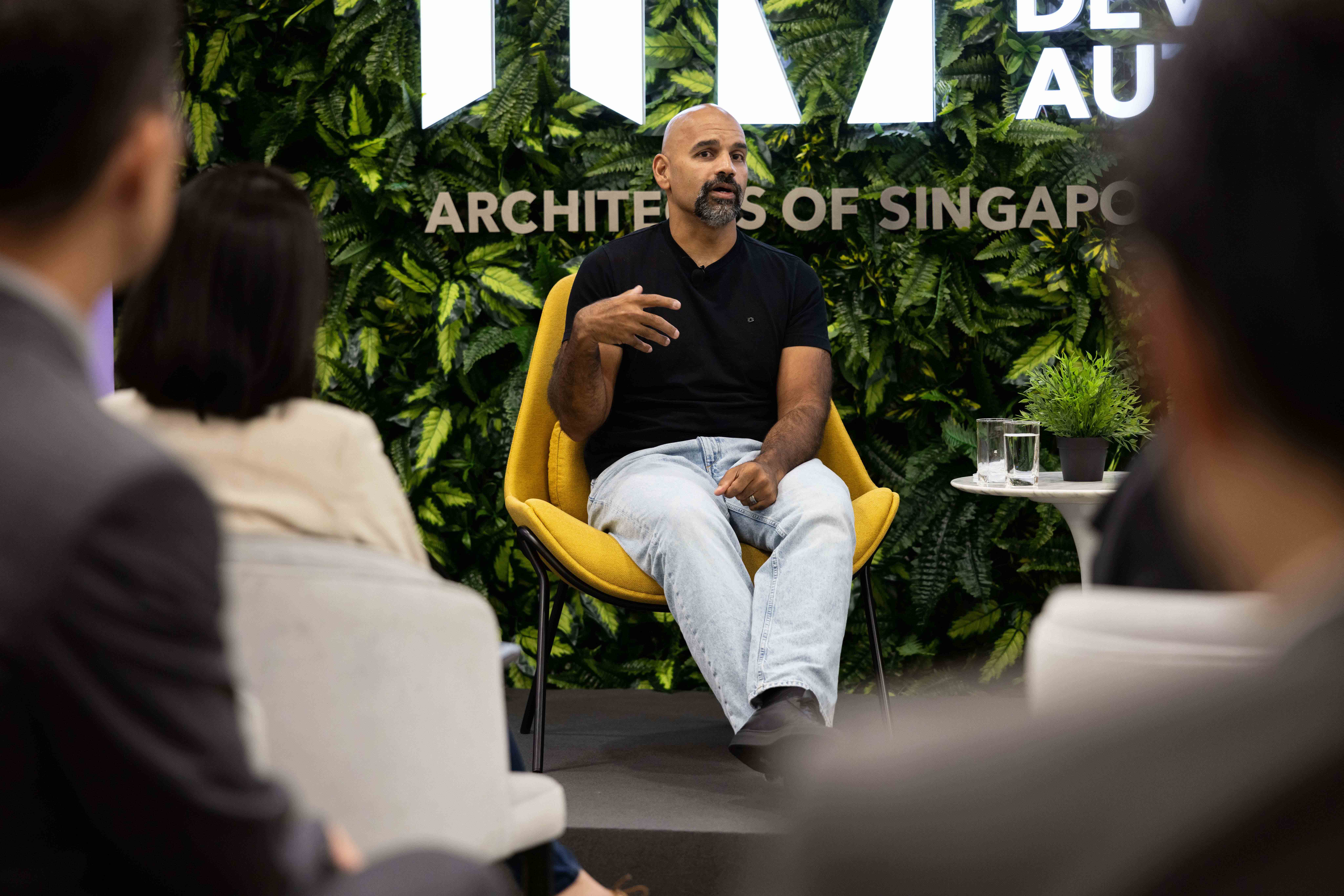
Intel bought Nervana in 2016 and put Rao in charge of a broader AI products group. A startup founder was now inside a company known for making processors at industrial scale. There were advantages: the manufacturing reach that Nervana could never have assembled alone. There were also the ordinary frictions of putting a small company’s idea through a large one’s decision process. Rao later described some meetings with Intel’s old guard as vigorous enough for a fist on the table. He had gone there because he wanted to build; the challenge was getting a giant to move at the speed of a question.
A different bill for intelligence
Rao’s next company shifted attention from the chip itself to the cost of using one. MosaicML helped organizations train and customize large models. It sought to make the work cheaper and less mysterious, an aim that became more urgent as large language models moved from labs into business plans. By 2023, Databricks saw enough value in the platform to acquire MosaicML in a deal valued around $1.3 billion. Rao joined Databricks to lead AI work there.
On paper, the move from processor design to cloud training might look like a pivot. Rao describes it as a trip up the same stack. The model has to run on software; the software has to run on hardware; the hardware must obey physics and pay an electricity bill. Each layer reveals a limit in the one beneath it. MosaicML could reduce the cost of training with better systems, but the rising appetite for AI also made the physical cost harder to ignore.
“Everything must run on something physical.”Naveen Rao, on building intelligent systems
A great deal of computing history has rewarded abstraction. Programmers write instructions without arranging transistors by hand. Engineers design processors that can run many kinds of software. The convenience has been enormous. Yet every layer has a price, and Rao believes AI exposes that price unusually clearly. Neural networks are often described with language borrowed from biology, while their actual execution takes place on digital machines designed to enforce crisp, deterministic states. His current wager is that some of those constraints can be relaxed if the task and the physical device are designed together.
Unconventional AI’s founding announcement used a race-car metaphor. Engineers do not improve a car’s speed by polishing only the steering wheel; they reshape the vehicle against the physics of air. Rao, whose company biography also notes that he races cars, wants a similar conversation between an AI model and its underlying machine. It is an appealing analogy, although circuits do not yield their secrets as readily as a wind tunnel demonstration.
The financing gives the experiment room. In December 2025, Unconventional AI disclosed $475 million in seed funding, led by Lightspeed and Andreessen Horowitz, with other investors including Sequoia and Jeff Bezos. The company put its valuation at $4.5 billion; Rao said he would personally invest $10 million. These are large numbers for a question whose central answer is still under construction. He has said the company faces technical risk rather than market risk. Demand for cheaper AI computation is easy to imagine. Getting a new physical system to supply it is the hard part.
What the oscillators can say
The first public test did not arrive as a finished chip. In June 2026, Unconventional AI released Un-0, an image generator built around a simulated network of coupled oscillators. Picture metronomes on a shared table: each keeps its own rhythm, but the motion of its neighbors can pull it toward a pattern. In Un-0, the interactions among thousands of such mathematical oscillators carry part of the computation. A conventional decoder converts their evolving states into pixels.
The result matters because it turns a broad claim about physical computing into a model that others can inspect. The team released weights and code. On a standard 64-by-64-pixel ImageNet test, its largest reported model reached a Fréchet Inception Distance score of 6.74, a measure used to compare generated images with real ones. That is a research result about image generation in simulation. It does not establish that a physical chip can produce useful AI at one thousandth of today’s energy cost.
There was another practical complication. The original oscillator scheme connected everything to everything else. That becomes unwieldy as a physical machine grows. In August, the team published experiments with sparse connections that removed between half and 98.4 percent of those interactions. In selected comparisons, sparser arrangements also improved model results. The finding is the kind that makes an engineering team lean in: less wiring may bring both a simpler implementation and better behavior, though much more work separates a promising experiment from a manufacturable system.
The company’s researchers include people with different working languages. Rao comes from chips and neuroscience. Lee brings hardware experience; Carbin and Achour are computer scientists. Their collaboration fits his larger belief that the model and the machine should evolve together. This may be the hardest part of the project. A useful physical primitive has to be trainable, controllable and compatible with the messy variety of tasks people now ask of AI. Elegant physics alone will not write the invoice that customers hope to see.
Still in the shop
Rao’s career is often summarized with the exits: Intel bought Nervana; Databricks bought MosaicML; another substantial group of investors has funded Unconventional AI. The numbers are tidy, which makes them tempting as the whole story. But tidy numbers hide a more interesting continuity. The boy at Radio Shack, the student staring at visual edge detection, the founder arguing for a neural-network chip and the CEO studying oscillators all share the same appetite for the machinery beneath an idea.
There is an appealingly human stubbornness to that appetite. Most people accept a computer’s architecture as a given, much as a driver accepts the road. Rao has repeatedly treated it as a design choice. Sometimes the choice is about a chip; sometimes it is about a training platform. Now it is about whether physical dynamics can take on work that software laboriously simulates. The ambition is large enough to sound theatrical. The public evidence, so far, is careful and incomplete: a model, benchmarks, code and a follow-up experiment that poses better questions.
That is where the story stands in 2026. There is no need to pretend that the finish line has appeared. A new computer must still survive the slow tests of engineering, manufacturing and use. Rao’s old trip to Hazard offers a modest image of what comes first. Before there was a machine at home, there was a shop floor, a keyboard and a child who wanted to see what happened when he typed. The scale has changed. The impulse has not.