Naveen Miglani grew up with a reason to get used to unfamiliar places. His father was a diplomat, and family life took him across Asia, Europe and the United States. Different food, different customs, different surroundings: the familiar business advice about leaving your comfort zone arrived, in his case, with the family itinerary.
Born in India and educated in the Philippines and the United States, he has described those moves as an education in diversity. He learned to value differences between cultures, and later made room for different perspectives inside his company. There is a pleasing connection between that upbringing and his eventual line of work: helping information travel across boundaries that organizations have spent years constructing.
Today, Miglani is CEO and co-founder of SplashBI, based in Duluth, Georgia. The company brings data from separate business systems together for reporting, analysis and AI. Its subject matter can sound rather bloodless. Finance. Operations. Enterprise applications. But the recurring question in his career is human enough: how do you help people understand something that arrives in a language, format or department other than their own?
An engineer takes the long way to the answer
His formal education joined two different ways of thinking. He earned a mechanical engineering degree at the University of Santo Tomas and an MBA in information systems and international business at Mercer University. Engineering deals in relationships between parts; international business asks what happens when those parts belong to different places. In retrospect, the pairing suits the work that followed.
His career included Oracle, GE Energy Services and Apex IT, where he served as CEO. At GE, his responsibilities included enterprise application integration. He also became a founder and CEO of EiS Technologies, working in the Oracle ecosystem. Across those roles he accumulated experience in strategy, professional services, alliances and marketing, as well as technology. That breadth matters in enterprise software, where a technically correct answer still has to survive an actual business.
An organization can buy several perfectly competent systems and still struggle to answer a question spanning two of them. Each application may have a sensible account of its own territory. Bring the accounts together, and the difficulties begin. A meeting about performance can become a meeting about whose definition of performance everyone intends to use. The spreadsheet, having been invited merely to help, is suddenly chairing proceedings.
SplashBI was founded in 2014, with Kiran Reddy Pasham as co-founder. Their continuing division of responsibilities is instructive: Miglani is CEO; Pasham is president and chief architect. The business and technical sides have named owners. Building reporting software requires both a reason for a customer to care and an architecture capable of making the promise useful.
- 2014Build the reporting company
- 2017Discuss BI, AI & accessibility
- 2025Put an assistant in the workflow
- 2026Plan changes. Track outcomes.
The audience was always bigger than the analysts
By 2017, Miglani was publicly discussing business intelligence alongside AI and machine learning. An interview shared that August framed the aim in practical terms: better decisions, made faster, using information that people could actually get at. Affordability mattered too. Analytics could give smaller organizations access to capabilities that once looked like the preserve of larger companies.
The point was access in a broad sense. A system can hold the right information and still demand too much specialist work before anyone can use it. Miglani’s interest in making analytics approachable predates the current enthusiasm for asking software questions in everyday language. The interface has changed; the frustration underneath it has been around for considerably longer.
In a 2019 essay, he described the shift toward cloud computing, visual dashboards and self-service analytics. Different departments, he argued, need different reports. Sales and marketing may work toward related goals without needing identical information on their screens. The job of business intelligence is to make those different views useful for decisions, while allowing people to understand the wider business.
That is a modest-sounding ambition with awkward consequences for anyone building the product. Making a chart is one task. Making sure the person reading it can ask the next question is another. His writing kept returning to the movement from information to action, a distinction that becomes especially relevant when software can produce a plausible answer with very little encouragement.
People, partnerships and a photograph in Georgia
The audience widened into people analytics. In November 2020, Miglani was announced as a participant in an interactive webinar with HR analyst Josh Bersin. Their planned discussion covered the increasing importance of people data, the skills organizations needed and where business leaders should direct their attention. It put the CEO in conversation with someone whose work centers on the decisions HR teams have to make.
A later public article on recruiting and diversity addressed the practical work behind employers’ commitments to fairer workplaces. It is another reminder that a metric is usually attached to a decision about people. The numbers may be tidy; the situation they describe seldom offers the same courtesy. Reporting software enters that untidiness whether its designers prefer it or not.
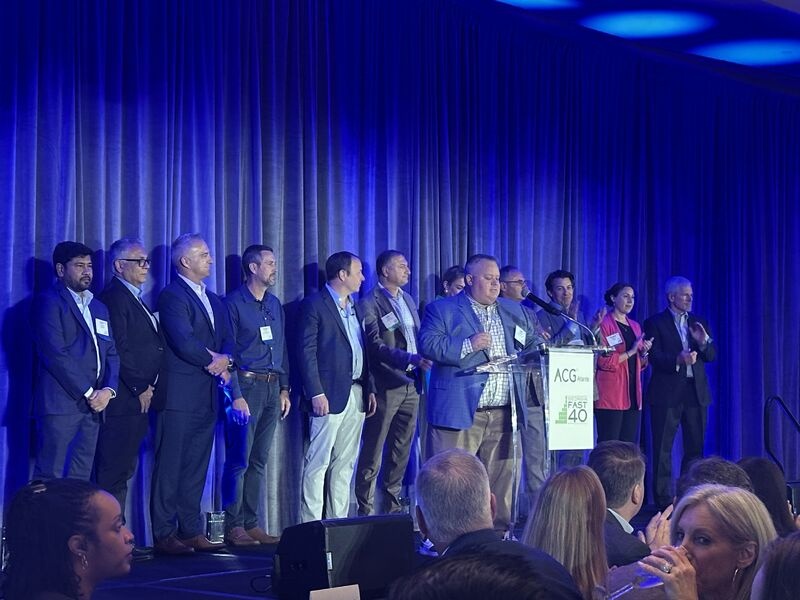
Miglani received Georgia Titan 100 recognition in 2022. Three years later, SplashBI was named a Georgia Fast 40 honoree. The 2025 celebration brought Miglani, Pasham and colleagues together in Atlanta. In the company’s photographs, the result is satisfyingly recognizable: a group of people in event badges, standing close enough to fit into the frame. Growth has a way of ending in a group photograph.
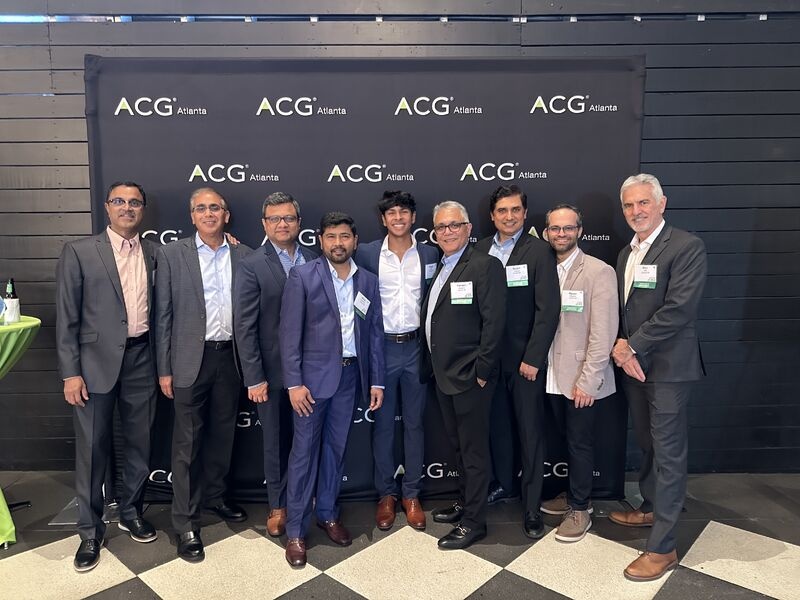
When discussing that recognition, Miglani credited his team and emphasized Georgia’s talent pool. SplashBI described a mix of recent graduates and experienced colleagues. It also pointed to an open learning culture. That combination gives a more grounded account of company building than the solitary founder legend: people arriving with different experience, then doing the work of understanding one another.
AI arrives with a set of house rules
During 2024, SQL Connect introduced FlashAI and Git integration. The features addressed two different kinds of friction: writing queries and working on code together. Miglani’s comments on the release focused on collaboration. Even in a technical product announcement, the subject was how a team could keep its work aligned. Useful software has to accommodate colleagues as well as databases.
SplashAI followed in July 2025 as an assistant built into SplashBI for finance and human capital management. Its advertised purpose was to help people work with data through natural language inside existing dashboards, reports and workflows. A person trying to reconcile information could ask for help in the place where the work already happened. The proposition followed his earlier interest in bringing analytics to business users.
In January 2026, Tahoe V6.1 extended that approach into collaboration environments, including Microsoft Teams. Miglani put the user problem succinctly: “Enterprise teams need insights in context, not more complexity.” The release also included assistance inside dashboards and tools for examining underlying data. His chosen emphasis was revealing. Adding intelligence should make the working day easier to navigate; otherwise the user has acquired another piece of administration.
“Enterprise teams need insights in context, not more complexity.”
Naveen Miglani · January 2026
By August, Tahoe 6.2 offered customers more choice about which AI models and cloud environments they used. It also introduced predictive capabilities through SplashML and support for working with customers’ own data warehouses. Miglani emphasized keeping AI inside the platform’s existing security framework. Someone’s ability to ask a question should continue to depend on the information that person is entitled to see.
That constraint makes for a less theatrical demonstration than an assistant answering everything. It also addresses the conditions under which enterprise software has to operate. A fluent response is only part of the job. Business definitions, access permissions and the route back to the underlying data still matter. His 2026 product language gives those obligations considerable space.
Later that August, SplashBI announced a broader identity as an enterprise data intelligence platform. The company described connecting data, analytics and AI on a shared foundation. Miglani framed the direction as helping organizations understand current activity and anticipate what comes next. The ambition had expanded, but the underlying work remained recognizable: bring separate information together, preserve its meaning and make it easier to question.
There is also a dance school
Away from product releases, Miglani is listed as board chair of KalashramUSA, a school of Kathak dance and performing arts. Its mission centers on the classical dance tradition of North India. Its stated values include preserving cultural heritage, connecting artists with community resources and embracing diversity. It is a concrete cultural responsibility alongside his software leadership.
The connection is worth handling with some restraint. A board chair need not be a performer, and a company executive’s interest in the arts does not require a theory about creativity to justify it. Still, the role adds something useful to the picture. Culture, for Miglani, appears both in his account of growing up and in an organization he helps govern today.
The two settings ask different things of him. One helps people work with enterprise information; the other supports the continuation of an artistic tradition. Both involve institutions that depend on people passing knowledge along. It is an appealing detail in a career otherwise described through systems, reporting and strategy: another place where understanding has to travel from one person to another.
The next question is what happens afterward
On October 20, 2026, SplashBI announced OrgLenz, a platform for workforce planning and organization design. It lets leaders compare proposed changes, calculate their implications and track outcomes against an approved plan. Miglani said customers had been asking the company for workforce planning for years. The release gave those requests a product of their own.
The sequence is telling. First collect the information. Then make it intelligible. Then use it to consider a change, and return later to see what the change delivered. An attractive presentation can survive indefinitely in a shared folder. A plan that keeps meeting fresh data has a less comfortable existence. That discomfort may be part of its value.
Miglani’s public career has moved through engineering, international business, integration, reporting and AI. The vocabulary has changed repeatedly. The useful question has remained close at hand: can the people responsible for a decision understand what they are looking at, and follow it far enough to act? For someone whose early education included learning his way around unfamiliar places, it is a fitting question to keep asking.
Follow the conversation
Interviews, writing and a few places where the work continues.