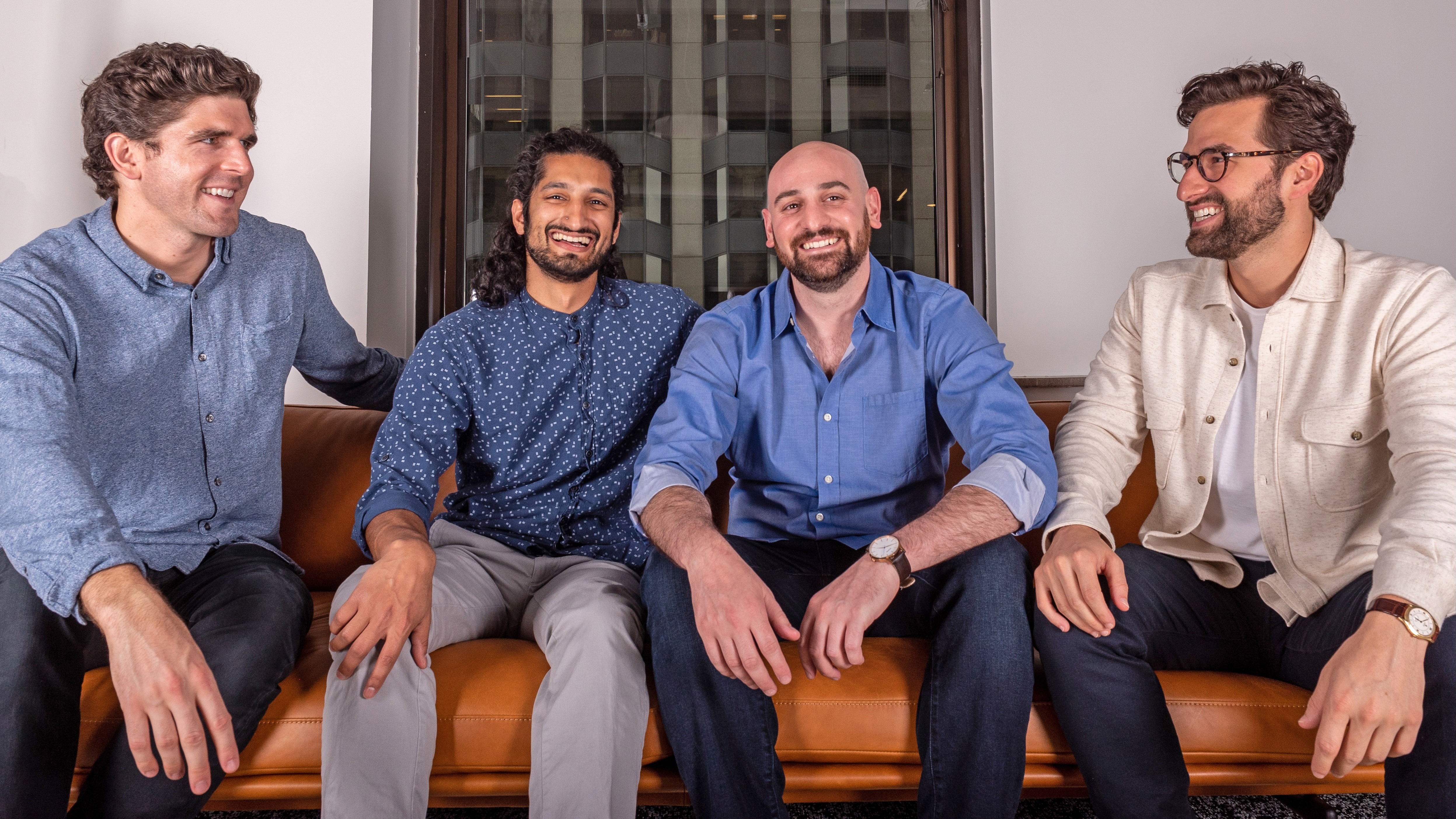
The first Crafty warehouse had four wheels, questionable rear suspension and a Cadillac badge. Nathan Rosenstock and three friends packed a borrowed sedan with kegs and equipment, then drove around Chicago installing office happy hours. The arrangement was delightfully direct: take a kegerator at no upfront cost, commit to buying the beer. The hardware opened the door. The refill kept it open.
Rosenstock had recently left McKinsey, where a problem generally arrived with a conference room and enough slides to make it behave. This problem sloshed when the car turned. He and co-founders Chris Ritter, Jimmy Paul and Ishan Daya had first considered a consumer subscription they called “Birchbox for Beer.” They wisely never launched it. Corporate customers were already pointing to a larger, messier opportunity.
An office that wanted a keg also wanted coffee. Then sparkling water. Then fruit, jerky, chips and the sort of protein bar whose wrapper makes unusually specific promises. One request at a time, the company expanded from an alcohol marketplace into a full pantry service. The founders did not discover a universal passion for administrative groceries. They discovered that somebody had to make the groceries feel effortless.
The snack is the tip of the iceberg
A good office pantry is almost invisible. The cold brew does not run dry. The oat milk is where it ought to be. The invoice resembles the agreement. That calm surface conceals a small republic of decisions: purchasing, delivery, stocking, equipment, product preferences, dietary requests, budgets and the occasional mystery of why everybody suddenly wants the same flavor of seltzer.
Crafty learned to sell the calm. Its people handle delivery and service; its proprietary platform gives workplace teams a view of products, spending and operations across locations. The cupboard became a dashboard. By 2019, when the company formally launched the platform, Rosenstock's physical delivery business had acquired a digital spine.
The sequence matters. Crafty did not begin with software and hunt for something to organize. It began with the ugly particulars of service, then wrote software for the problems its team and customers kept meeting. The screen serves the shelf. Rosenstock still describes Crafty as both a technology company and a service provider, which is less fashionable than picking one label and more faithful to the job.
The next marker was $5 million, reached roughly a year later. Rosenstock has said Crafty was never a typical grow-at-all-costs startup. This is sensible when your product contains actual milk. Logistics has a low tolerance for theater. A delivery happened or it did not. A machine works or it does not. The customer can inspect your execution simply by opening the fridge.
Then every office closed
In March 2020, the tidy logic of the business broke. Crafty served offices; office workers went home. Rosenstock later wrote that the pandemic crushed the business and nearly wiped it out. The company cut deeply, listened to customers and tried to separate its purpose from its delivery mechanism.
One answer was Crafty in a Box, launched in early 2021. Employers could give remote staff credit to order food, drinks and home-office supplies. A pantry company had temporarily become a parcel company. More consequentially, Crafty began working with service providers in other regions. Local rivals became local partners, giving enterprise customers one coordinated program while letting Crafty expand without building a warehouse in every city.
From trunk space to national coverage
Rosenstock called the partnership logic a “1 + 1 = 3” arrangement. Crafty gained geography. Partners gained revenue. Clients gained one layer of accountability across scattered offices. The crisis had forced the company to reconsider which assets it truly needed to own. It emerged with a model more suited to the distributed workplace the pandemic accelerated.
The rebound was quick enough to sound indecent. Crafty reported 800 percent growth between the new box service and its 2022 Series A, expanding from two markets to nearly 30, six of them international. The $10 million round carried particular weight for a team that had recently confronted what Rosenstock called rock bottom. In 2024, JLL Spark joined another $10 million round and a strategic alliance intended to bring Crafty's pantry programs deeper into commercial real estate networks.
Growth changed the scenery as well as the balance sheet. Crafty left the West Loop office its team had nicknamed “Creoria,” a mash-up of Crafty and Peoria Street, for a larger headquarters in the Loop. In 2023 the company appeared on the Inc. 5000 and was named a Chicago Tribune Top Workplace, an award based on employee feedback. For a business that sells a better day at work, the latter carried a useful bit of accountability. The people stocking everybody else's kitchens also had opinions about their own.
Seven offices in two days
For a chief executive who thinks in networks, Rosenstock remains suspiciously fond of showing up. During a New York trip in 2025, he and his team visited seven client sites in two days. They walked the spaces, met on-site staff and looked for both the effect of the service and the work still undone. “You've got to lead from the front,” he wrote afterward, adding that he gets energy from the place where service meets the customer.
His observations from that trip reveal the scale of Crafty's ambition. Rosenstock sees the office as a “third place” for New Yorkers whose homes can be small and whose city is unusually social. Coffee, lunch and the pantry become part of the argument for gathering. The point is not that a granola bar repairs corporate culture. It can, however, create a pause, a ritual and an accidental conversation. In an office, modest objects acquire social duties.
This is where his education makes an intriguing cameo. Rosenstock studied Chinese language and culture at Northwestern, with additional study in Beijing, before entering consulting. It is not the usual syllabus for a logistics founder. Yet Crafty sits at a useful intersection of interpretation and operations: read how people behave, notice the rituals around consumption, then build a system sturdy enough to support them.
The customer asking for coffee after beer may be showing you the larger market.
When the office vanished, Crafty changed delivery models without abandoning connection.
Dashboards improve when leaders keep returning to the physical service they describe.
A platform with crumbs on it
Crafty now describes a footprint of more than 750 office locations, over 45 cities and 300,000 employees supported. Customers named by the company include DraftKings, Robinhood and Zillow. Its funding history includes the 2022 Series A, the JLL Spark-backed round and a $13.19 million convertible note reported in March 2026. The borrowed Cadillac has been replaced by a network, though the fundamental promise remains almost comically domestic: the kitchen will be ready.
The next problem is less about whether people work remotely or in an office than how employers manage a shifting mixture of both. Rosenstock's answer is central control with local execution. One platform sees the program; partners and Crafty teams make it real. As workplaces splinter across cities and schedules, he wants the food experience to feel coherent without feeling standardized into sadness.
He also watches the contents of the shelf. In his recent writing, taste is giving way to function: protein, fiber, prebiotics and drinks that arrive carrying the rhetorical confidence of a laboratory. An office pantry that once resembled a convenience store is beginning to resemble a grocery aisle arranged by benefits. For Crafty, each shift in appetite is both a merchandising question and another data point.
That data now includes intent, not merely disappearance. Crafty's employee-voting feature lets workers signal what they want before a workplace team orders it. The distinction is small and valuable. An empty shelf tells you what people consumed, but not what they wished had been there. Rosenstock's larger project keeps returning to this translation problem: turn preference into information, information into a service plan, and the service plan back into an experience that does not feel engineered.
There is a pleasing circularity to Rosenstock's career. Consulting taught him to see systems. Delivery taught him that systems eventually meet a loading dock. Crafty works because it respects both truths. Its software can explain what happened, but somebody still has to put the cold brew in the refrigerator.
The Cadillac photograph survives because founders enjoy a humble origin, but also because it captures the essential joke. The company began by filling a car beyond good judgment. Its mature business is about preventing everything else from being filled beyond good judgment: shelves, budgets, vendor lists and the working day itself. Rosenstock found a serious company inside the office snack. He simply had to look behind it.