The trees needed water. The water needed power. Nate Walkingshaw had built products, led software teams and helped take a company through an IPO, but the conifers on his family farm had a less negotiable agenda. They required irrigation. Running deep wells cost money. Making the farm work more efficiently became a problem he could put his hands around.
He built a hydro turbine to generate electricity. Then another difficulty appeared: keeping that electricity until he needed it. A useful improvement to a farm had become a question about storage. Follow that question far enough and you arrive at Torus, the energy company he co-founded with Gilbert Lee in 2021.
It is an appealingly inconvenient origin story. A founder goes looking for a better way to water trees and acquires an education in the electrical grid. The farm remains a good place to begin understanding Walkingshaw because it brings his ambitions down to earth. Before there were utility agreements and a large manufacturing plant, there was a bill to reduce and a piece of equipment to make.

The trouble with an elegant idea
Walkingshaw likes combining older inventions with contemporary controls. A flywheel stores energy in rotation: electricity drives a rotor, and the stored motion can later be converted back into electricity. The principle predates the app by a comfortable margin. His interest lay in making it useful as part of a modern power-management system.
“I love old innovations intertwined with modern technology,” he says. That preference helps explain Torus. Its machinery belongs to the physical world, while its usefulness depends on knowing when to absorb power, when to release it and how to coordinate with other equipment. A spinning rotor alone cannot answer all those questions.
The distinction matters as his company evolves. Torus now combines its Spin flywheel with its Pulse battery and controls. The flywheel responds to rapid changes; the battery supplies energy over longer periods. Different pieces have different jobs. A household irrigation problem has expanded into equipment for utilities, industrial sites and data centers.
Rapid response
Longer duration
There is a temptation to make this a tale of a single invention answering every energy problem. The more interesting development is Walkingshaw’s willingness to keep changing the answer. He began with a personal need, built around a mechanical idea and ended up pursuing a system in which that idea works alongside other technologies.
A software executive with a workshop habit
Energy was a new industry for him. Product development was familiar territory. In 2011 he started Brightface, a business focused on mobile and web applications. Its Cycleface product was acquired by Strava. He later led Tanner Labs, the research and development operation at O.C. Tanner, before joining Pluralsight as chief product officer in 2015.
Pluralsight’s appointment announcement described a newly created role responsible for product development and innovation. It also pointed to his work at Tanner Labs, where his team had launched two web applications in the previous year. His brief was to bring customer-centered thinking into an expanding technology-learning business.
His responsibilities subsequently widened to chief experience officer, bringing together product, user experience, engineering and content. Walkingshaw and Lee worked at Pluralsight through its 2018 IPO. By the time they started Torus, they had already spent years dealing with the difficult human arrangements behind a supposedly simple product experience.
- 2011Brightface: mobile and web products
- 2015Pluralsight: chief product officer
- 2017Product Leadership: a book with two co-authors
- 2021Torus: energy storage and management
In 2017 he published Product Leadership with Richard Banfield and Martin Eriksson. The title places the emphasis where his interviews tend to put it: on the people making decisions together. A framework can organize the work. It still needs colleagues willing to question one another and customers willing to explain what has gone wrong.
Would you survive the layover?
One of Walkingshaw’s hiring questions is wonderfully untechnical. Imagine being stranded in an airport with a prospective colleague for 24 hours. Would you still be friends? He calls this the layover test. Anyone who has contemplated an airport carpet at three in the morning will appreciate the rigor of the exercise.
His point is that working relationships have consequences. He looks for optimism, creativity and people he would be proud to introduce to his family. Those qualities sit alongside professional competence. Product teams spend long stretches working through uncertainty together; the way someone behaves during those stretches becomes part of the product.
He is equally direct about the conduct he expects from leaders. “Don’t be a jerk,” he says. Underneath the informality is a practical view of collaboration: kindness and humility help people exchange information, while preparation gives them something useful to exchange. A room full of expertise can still be a miserable place to reach a decision.
That attitude also makes room for an uncomfortable possibility: the founder may be wrong. Walkingshaw’s work repeatedly returns to discovery, the business of observing what customers actually need before committing to an answer. Enthusiasm supplies a reason to begin. Feedback supplies reasons to change.
The customer gets a vote
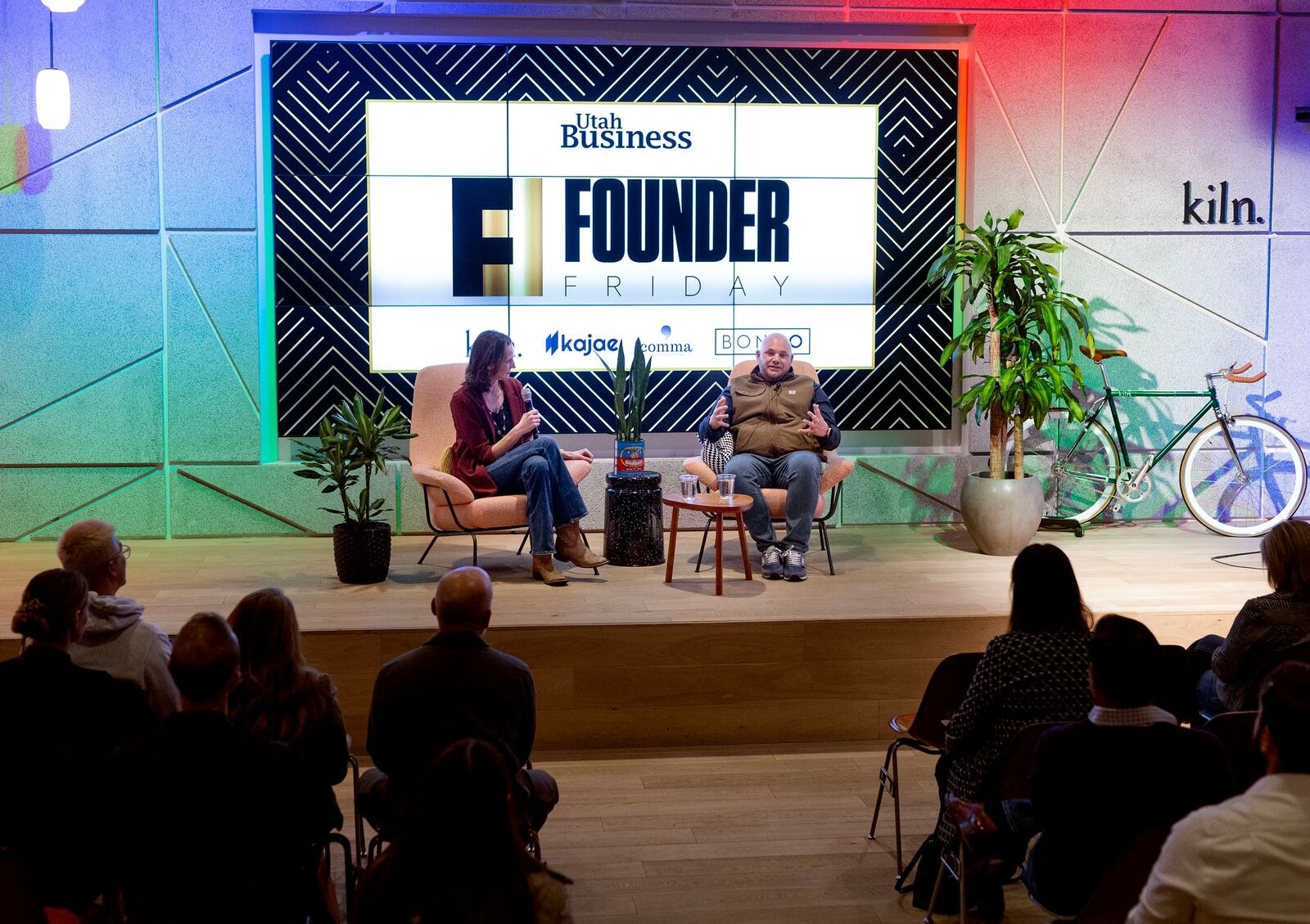
At a Founder Friday conversation in November 2024, he described three measures he follows: likelihood to buy, length of stay and Net Promoter Score. Each concerns what happens after a company presents its work to somebody else. None can be settled by the enthusiasm of the team that made it.
“All your answers live in questions,” he says. It is a compact expression of his method, and an awkward instruction for anyone hoping that leadership consists of always having the answer ready. Asking well means leaving enough space for a customer or colleague to deliver an answer you had hoped to avoid.
“All your answers live in questions.”
Nate Walkingshaw
He encourages teams to pay particular attention to negative feedback. That takes some appetite for discomfort when the object being criticized has absorbed months of work. A shipped feature gives its creators a natural occasion to celebrate. The customer is under no obligation to join the party.
Machinery gives this philosophy an expensive setting. Changes take time to design, manufacture and test. A useful answer may arrive much later than it would in software. Walkingshaw brought product-discovery habits into Torus, but a workshop imposes its own pace. Conviction has to coexist with the patience to find out whether a design works.
The grid had a few questions of its own
Entering energy also challenged the outsider’s confidence that established businesses were simply moving too slowly. Walkingshaw has described learning how much utility veterans could teach him. The grid required a deeper education than he and his partners initially imagined. Existing operators became people to learn from and work with.
That change is central to the scale of his ambition. A device can help one property use electricity differently. Working with utilities creates the possibility of coordinating many properties. It also introduces expectations about reliability, approvals and responsibility that extend far beyond the owner of a single installation.
In September 2025, Torus announced a $200 million investment from Magnetar and an expanded memorandum of understanding with PacifiCorp covering up to 500 megawatts of demand response capacity. An agreement describes the intended scope of work; it should be read separately from equipment already installed. For Walkingshaw, the direction was clear: build with the grid’s operators.
The same announcement described systems that combine flywheels, batteries, security and software management. The proposition had grown beyond energy independence for a house. Torus was selling a way for facilities to coordinate their power needs with the wider network. His audience now included the people responsible for keeping that network operating.
A factory is a fairly substantial promise
By July 2026, Torus said its GigaOne facility in Salt Lake City was in full production. The company reported nearly 300 employees and a 76 percent increase in output since the plant came online six months earlier. Those are company-reported figures, attached to a particular moment in a continuing build-out.
Its manufacturing plans also included a technician training program with Salt Lake Community College. New technicians would spend five days building production-quality Torus Stations before their first shift. The detail suits Walkingshaw’s interests: understanding a product through the experience of making it, with the learning attached to a specific task.
His ambitions for Utah go beyond locating an office there. He has said he wants to build a Fortune 100 company in the state, with the jobs and teaching that would accompany it. That remains an aspiration. A factory gives the aspiration a physical address and a growing list of practical obligations.
There is something revealing about the distance between the farm and the factory. Walkingshaw began by trying to manage his own power more efficiently. The job now asks him to understand the needs of technicians, customers, investors and utility operators, each with a different view of what successful equipment must do.
The trees offer an oddly useful reminder. They do not reward a persuasive presentation. They need the irrigation to work. For all the changes in scale, that plain demand still runs through Walkingshaw’s story: make something that solves the problem in front of it, then listen carefully when the next problem arrives.
Continue the conversation
WORK, WRITING & INTERVIEWS