At JD Machine in Pleasant View, Utah, the problem was electricity that almost worked. Six brownouts in one summer stopped high-value electrical discharge machines. Recovering could take three hours. In 2024, an outage damaged a CNC machine. For a precision manufacturer, the trouble with a short interruption is how long it stays with you.
- Torus pairs spinning steel with chemical batteries to handle different kinds of power trouble.
- Factories get voltage support and lower demand peaks; utilities get flexible capacity.
- Qualifying Wattsmart installations trade upfront capital expense for a monthly service subscription.
This is a useful way into Torus, the Utah company founded in 2021 by Nate Walkingshaw and Gilbert Lee. Its hardware can look like another collection of energy cabinets. Its proposition becomes clearer beside a stalled machine: protect the work already underway, then make the same equipment useful to the utility outside.
Six brownouts, one expensive lesson
JD Machine makes parts for aerospace, defense, medical and energy customers. Its equipment needs more than enough electricity over a day. It needs acceptable voltage while a particular cut is happening. Torus’s case study describes voltage correction, peak shaving and up to 15 minutes of battery backup per meter. That duration belongs to this installation, rather than every system Torus sells.
“Even without the bill savings, we would still do this deal”
Jared Wardle, production manager, JD Machine
There is a distinction here that energy marketing can obscure. Lowering a bill and preventing a machine stoppage are different jobs. A customer may value either one enough to buy. Torus packages them together, which helps explain why its customer stories range from machining shops to La Diana Market, where a power interruption threatens refrigerated inventory, and a regional 911 dispatch center.
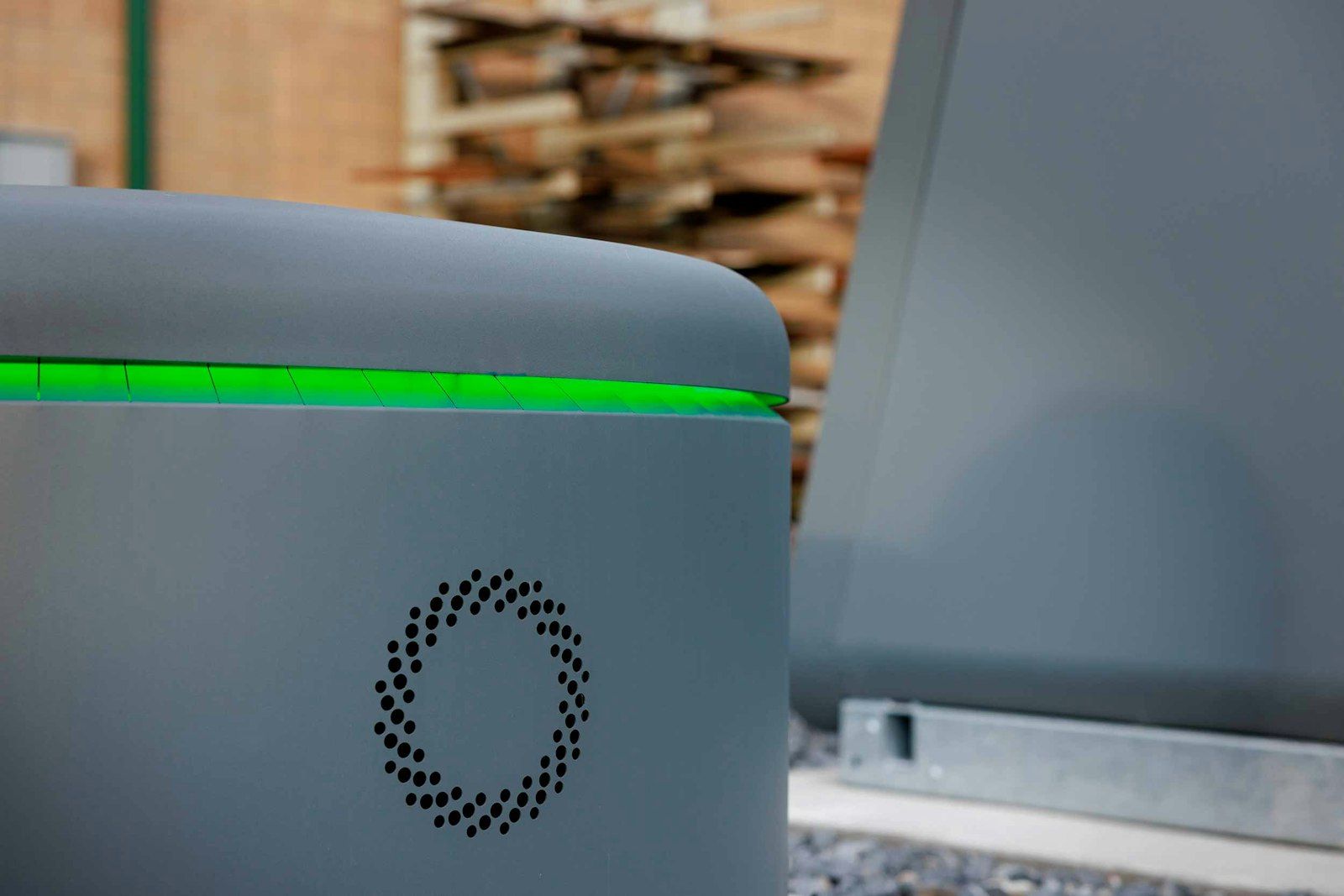
The wheel takes the first punch
A flywheel stores energy as motion. Electricity accelerates a rotor; slowing it releases energy through a generator. The trick is old. Torus’s application is to put that mechanical storage alongside chemical storage and assign each the work it suits.
Spin, the flywheel product, handles sharp bursts. Torus currently specifies a 10C discharge rating, equivalent to a full discharge in six minutes, and a 25,000-cycle design life. Those are manufacturer specifications. The six-minute number is particularly helpful: it tells you what kind of tool this is. A flywheel can be busy protecting machinery without being the thing that runs the building all evening.
Short bursts · mechanical storage
Sustained loads · LFP battery
Conceptual division of work; bars do not represent measured durations.
Pulse supplies the longer delivery. It uses lithium iron phosphate batteries in modular pods. Torus says letting Spin absorb rapid load swings reduces stress on the chemical cells. The company’s differentiation rests on this division of labor, plus the controls around it, rather than a claim that batteries have become unnecessary.
Battery systems such as Tesla Megapack are alternatives for commercial and utility storage. Active Power sells flywheel UPS equipment. Torus occupies the space where customers want a hybrid storage package with installation, security and continuing operation from the same provider. The right comparison depends on whether the buyer needs energy shifting, brief ride-through, or both.
One installation, two customers
The complete package is called Torus Station. Lasso, its software, forecasts facility demand and schedules charging and dispatch. Shield supplies cyber and physical protection. Overwatch monitors the equipment and coordinates response. These names describe recurring work: somebody must keep a remotely controlled electrical asset available after the installation crew leaves.
The utility relationship makes the business more interesting. A factory ordinarily pays for equipment that serves its own production. A utility wants resources it can call when demand rises or grid conditions deteriorate. Storage behind the factory’s meter can serve both, provided the operating agreement makes room for each obligation.
Under qualifying Rocky Mountain Power Wattsmart arrangements, Torus describes installations with no upfront capital cost to the host and a monthly service subscription. The customer gains power-quality support and demand management. The utility gains dispatchable capacity. “No upfront capital” is a financing arrangement with eligibility and ongoing obligations, so the useful question is the complete contract cost.
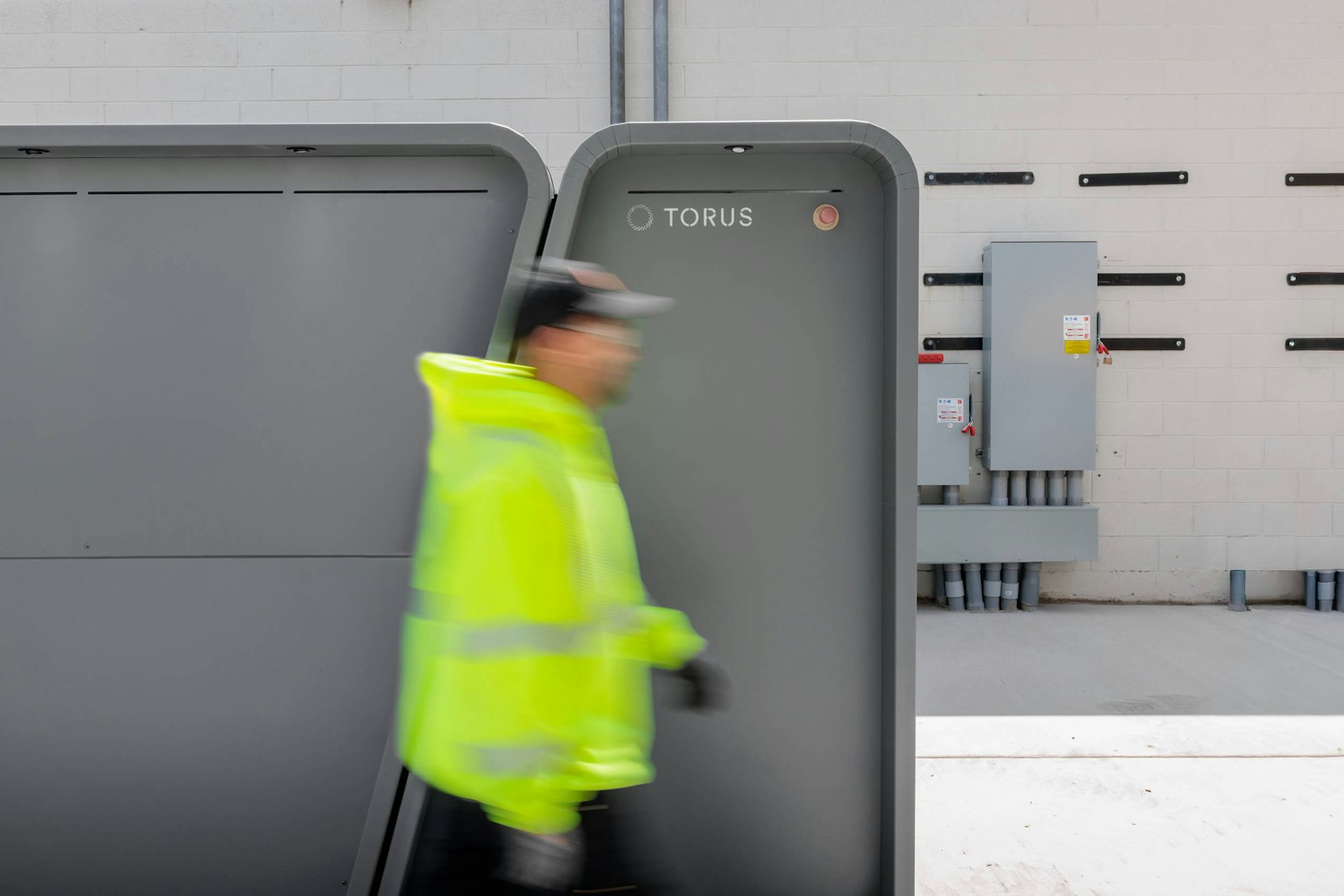
Steel needs capital
Torus’s expansion has required more than software economics. In April 2024 it announced a $67 million package comprising new equity, converted notes and a loan facility. In September 2025 came a $200 million Magnetar investment. In April 2026, Trinity Capital committed up to $35 million in equipment financing to support manufacturing expansion at GigaOne. A commitment is not the same as cash already drawn.
Utility commitments need equally careful reading. Torus’s September 2025 announcement described a PacifiCorp memorandum covering up to 500 MW of demand response, following an earlier 70 MW agreement. That identifies the scale of the relationship; it does not establish that 500 MW was already operating. Deployment, factory capacity and contracted opportunity are three separate measures.
There is also a useful price fossil. In June 2023, the Salt Lake Tribune reported $38,000 to $55,000 for an early residential Torus package that included solar installation. That is a historical bundle, not a quote for today’s industrial Station. The change in context matters: a household buying solar and a utility coordinating factory storage are purchasing different things, even when a flywheel appears in both.
Start with the interruption
The lesson a facilities manager can copy is to diagnose the interruption before shopping for storage. Examine voltage disturbances, restart time, damaged equipment and demand charges. Size protection around the loads whose failure costs money. Then ask whether a utility program can reward the flexibility those assets provide.
The economics depend on tariffs, dispatch terms and the site’s actual load. A facility with modest demand charges has a different calculation from a machine shop with costly stoppages. Extended outages require sufficient stored energy or another supply. A spinning rotor cannot create electricity. Torus’s useful insight is more specific: the first few moments of a power problem can deserve their own machine.