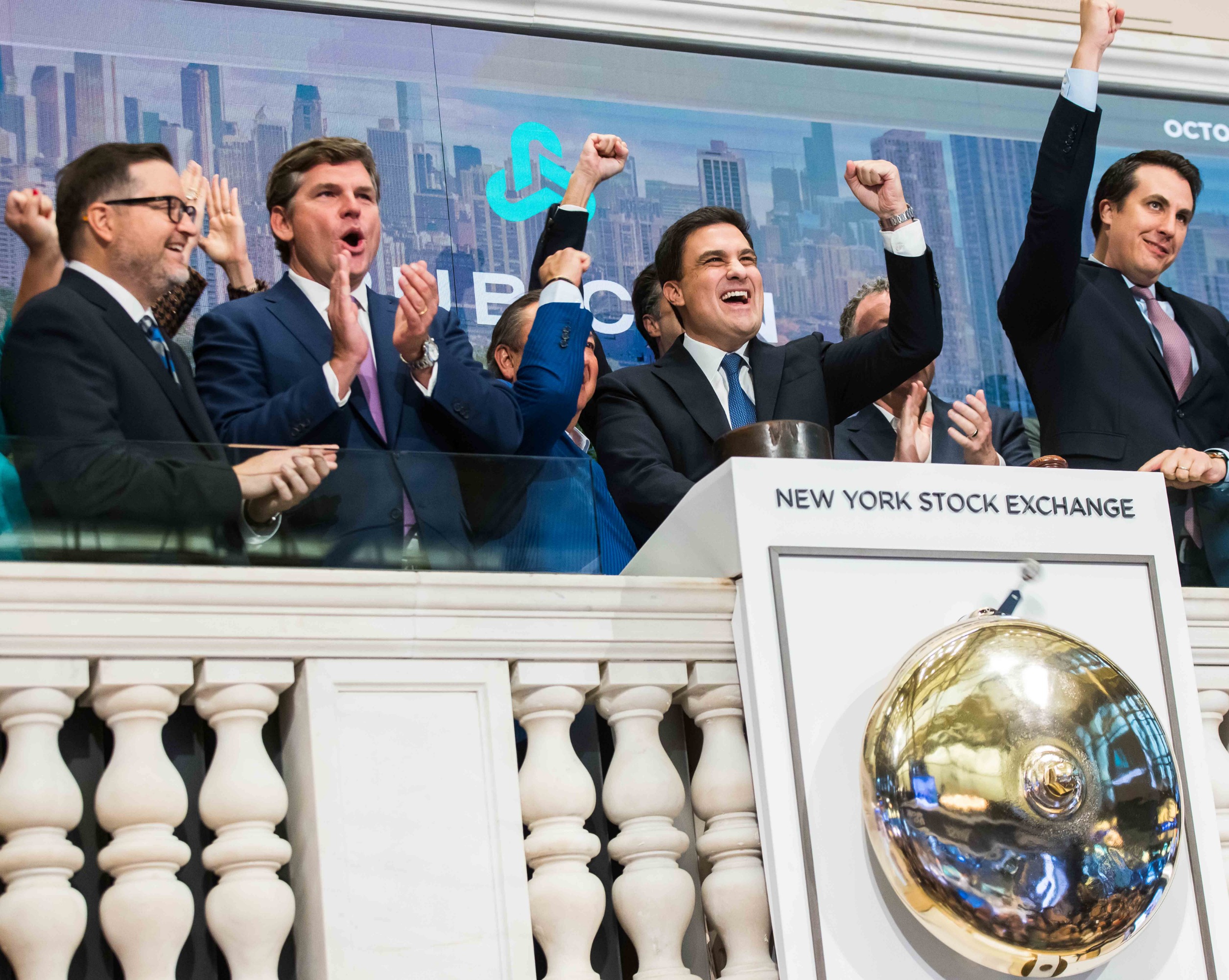
The bell makes a splendid photograph. On October 18, 2022, Nate Morris stood at the New York Stock Exchange with his fists raised and his colleagues applauding. Rubicon, the waste and recycling company he had helped build, had reached Wall Street. For an entrepreneur whose starting material was other people’s rubbish, the setting offered a pleasing change of scenery.
There was a wrinkle in the occasion. Five days earlier, Morris’s tenure as chief executive had ended. The company’s chief technology officer, Phil Rodoni, had succeeded him. Rubicon had begun trading in August, and its shares had already suffered. The celebration and the difficulty belonged to the same business. A fair account of Morris needs both in the frame.
His career has since acquired another stage: national politics. A Republican Senate campaign in Kentucky gave way in 2026 to a nomination for U.S. ambassador to Colombia. Throughout those changes, he has returned to a familiar proposition: someone from a working family in Kentucky can build something that earns a hearing well beyond Kentucky.
The union hall in the background
Born in Lexington in 1980 and raised in Louisville, Morris grew up with a single mother and help from his grandparents. His grandfather, Lewis Sexton, had led UAW Local 862. The family’s connection to work was tangible: an auto plant, a union, people doing jobs that required turning up. Those roots became a recurring part of Morris’s explanation for choosing an industrial business.
He has described his upbringing as an education in effort and in the importance of overlooked work. In his telling, Kentucky also taught him to resist the notion that good ideas require a coastal address. That conviction supplied a personal stake in Rubicon. The drivers and small operators he hoped to enlist were people whose work he wanted technology investors to notice.
Washington entered his life early. He graduated from George Washington University in 2003, was elected to Phi Beta Kappa, and worked in government settings that included Congress and the Department of Labor. Further study took him to Princeton and, later, Oxford’s business school. His education crossed between public policy and business; his subsequent career would keep crossing back.
The combination helps explain his fluency with two audiences. A founder has to persuade customers and capital providers that something ought to change. A political candidate must persuade voters of much the same thing. Morris spent years developing the first argument before asking the public to consider the second.
A national contract for the local truck
Rubicon took shape during the financial crisis. Morris developed the idea in 2008; he has dated its legal formation in Kentucky to 2009. Marc Spiegel, a friend from high school, was his co-founder. The familiar origin figure is a $10,000 line of credit. The less photogenic ingredient was a willingness to examine the paperwork behind a collection route.
As a graduate student, Morris had looked at an industry still using older computer systems, fax machines, spreadsheets and telephone calls. He saw room for a platform connecting customers and service providers, alongside better information about what was being collected. The ambition was to make an everyday industrial transaction easier to understand and organize.
Consider the small hauler with trucks in one market. A national retailer needs collections across many markets. Rubicon’s network could assemble local operators into a broader service offering. The independent company gained access to work it could struggle to win alone; the customer gained a way to coordinate its waste arrangements. There was still a truck and someone doing the collecting. Software had a job between them.
A simplified view of the original model. The collection work remained physical.
Morris also argued that waste decisions should account for the material’s value after collection. Better information could make recycling options easier to identify. The environmental ambition and the business proposition supported one another: understand the waste, contain costs, and give customers more useful choices about where their materials went.
At a 2022 conversation with Andy Serwer, he described the opportunity in terms of applying a digital model to an ancient problem. By then, Rubicon’s offering extended into municipal software as well as commercial waste services. The audience might have been discussing technology, but the subject retained the practical stubbornness of a full bin.
Caesar, with a collection schedule
Morris has said he was reading Plutarch while the business was developing. The name Rubicon appealed to his interest in history and the idea of an irreversible step. It was an unusually classical introduction to a collection schedule. The name made his intentions plain before the sales presentation began.
His public vocabulary could be large, but one line brought it down to street level: “I haven’t met anybody who’s pro-garbage.” Waste gave him a way to discuss environmental improvement with people who might disagree about other environmental questions. A customer could care about cost, a hauler about revenue, and a city about its operations. Each had a reason to listen.
In 2020, Morris explained that Rubicon linked part of employee bonuses to waste reduction across clients. Some customer contracts also tied compensation to diversion from landfill. Those were concrete attempts to make the company’s stated environmental objective influence how it earned and distributed money. An intention becomes more interesting when someone attaches a payment to it.
“It’s hard to bet against garbage, garbage is going to happen.”
Nate Morris, July 2022
The market delivers its own review
Recognition arrived well before the listing. Morris joined Fortune’s 40 Under 40 in 2014 and entered the Kentucky Entrepreneur Hall of Fame in 2019. For a founder promoting a business in an unfashionable category, such attention helped bring the idea into more fashionable rooms. It also raised the expectations attached to the enterprise.
Rubicon became publicly traded through a combination with Founder SPAC in August 2022. The transaction put a market price on a story that had spent years being explained in private meetings. The shares closed their first trading day at $6. By the time the CEO succession was announced that October, they were trading in the low dollar range.
The leadership transition was specific. Rodoni, who had been chief technology officer since 2015, became CEO effective October 13. Morris continued for a period as chairman and strategic adviser. Founding a company, running it, and remaining associated with it had become different responsibilities, with different dates.
The difficulties continued after his departure. In June 2024, the NYSE suspended trading and began delisting proceedings because Rubicon had fallen below a requirement for average market capitalization of at least $15 million over 30 consecutive trading days. The exchange’s notice specified removal from listing in July. The opening bell had been a milestone; maintaining the listing proved another test.
Morris has defended the company he built. Looking back in 2025, he acknowledged that he wished some things had turned differently and argued that the market window had deteriorated before the transaction closed. His assessment remained firm: “I stand by everything we did 100%.” That confidence sits alongside a record that gives investors and voters ample grounds for questions.
- The idea develops; Rubicon is legally formed.
- Rubicon begins trading on the NYSE.
- Morris’s CEO tenure ends; the bell ceremony follows.
- NYSE trading is suspended after his departure.
- He withdraws from Kentucky’s Senate primary.
- He appears for a Colombia nomination hearing.
A grandfather’s name on the award
There is another way to follow the family thread. The Morris Foundation’s Lewis Sexton Scholarship Fund supports children of UAW Local 862 members or retirees who plan to attend college in Kentucky. In 2019, three graduating seniors received $5,000 each. The awards connected the grandfather’s union to another generation’s education in a particularly direct fashion.
Morris also supported a fellowship giving a University of Kentucky student access to the Presidential Fellows Program in Washington. He had participated in that program himself while at Princeton. Such projects gave his recurring language about opportunity a set of names, institutions and destinations. The route he valued could be opened to someone else.
His business interests continued through Morris Industries, founded in 2010. In September 2024, the holding company announced the addition of Republic Financial, moving into insurance and related financial products. Republic would retain its brand and management team. The announcement described another established sector in which Morris believed there was room for new ideas.
Washington, by a different route
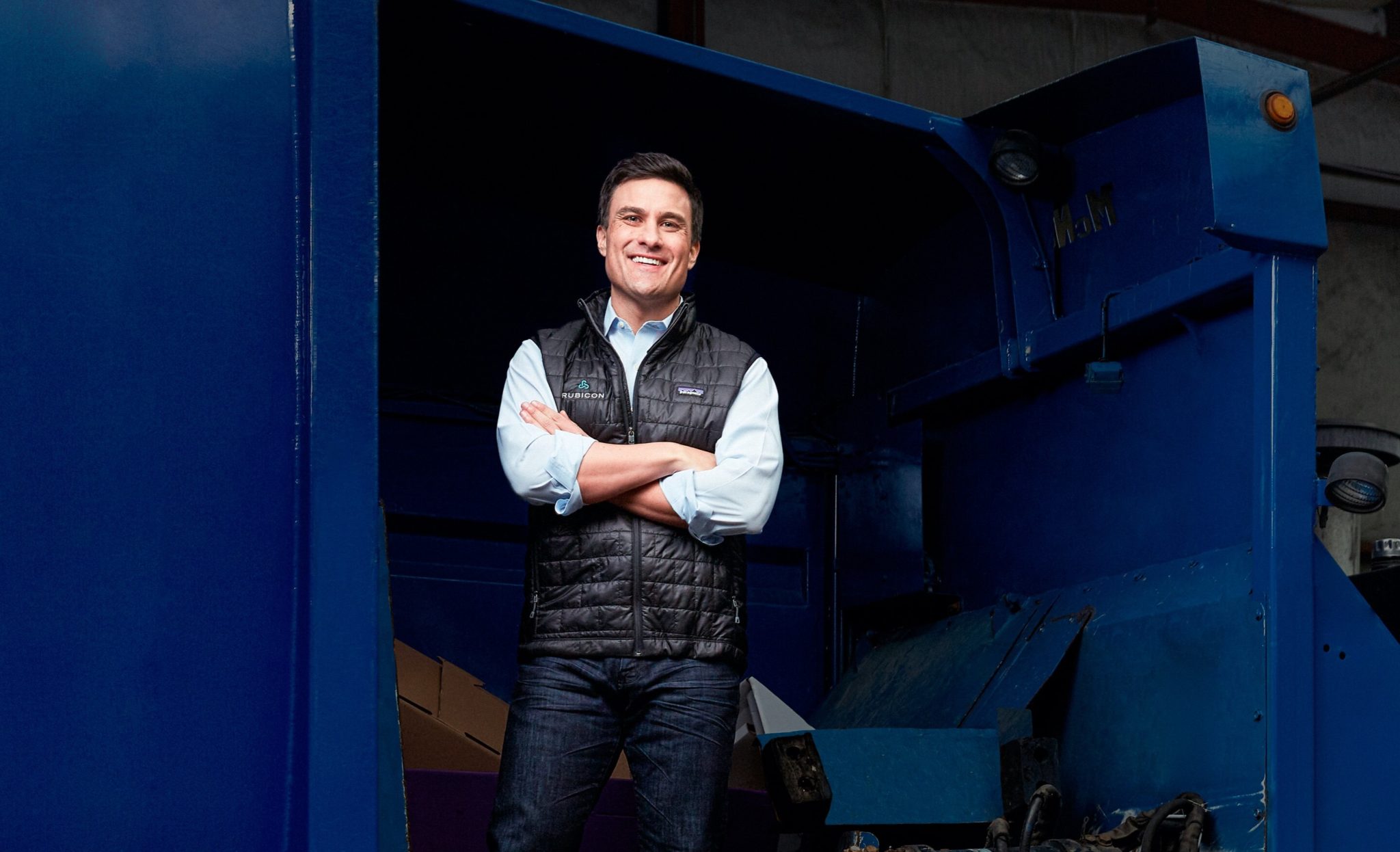
By June 2025, he was asking Kentucky Republicans to consider him for the Senate seat Mitch McConnell was leaving. He announced on Donald Trump Jr.’s podcast. In launch advertising, he rode a garbage truck and turned his industry into a political metaphor. Few candidates arrive with a campaign prop so closely related to their résumé.
His pitch emphasized his business background and support for Donald Trump. Yet his relationship with politics predated the candidacy: he had interned in McConnell’s office and had long been involved in Republican fundraising. The outsider argument concerned elected office, rather than an absence of political connections. In January 2026, Elon Musk gave $10 million to a super PAC supporting him.
The campaign changed direction in May. Morris withdrew and endorsed Andy Barr. In June, he was nominated to become ambassador to Colombia. On August 5, he appeared before the Senate Foreign Relations Committee, with his wife Jane and their son JR attending. He presented his family background and business experience as preparation for the proposed diplomatic role.
His stated priorities, if confirmed, included cooperation against narcotics trafficking and illegal immigration, expanded economic opportunity, and service to Americans living in or visiting Colombia. The nomination remained pending in the reviewed Senate-process tracker. A new audience would have its say before he could take up the post.
It is a considerable distance from a Kentucky waste startup to Embassy Bogotá. Morris has made a career of arguing that familiar arrangements can be changed by someone willing to enter an uninviting business. His own record supplies the ambition, the achievement and the awkward follow-up questions. Garbage was always going to happen. What followed the pitch required rather more persuasion.
Follow the business, watch the conversations
More from Morris and the people who have interviewed him.