At the original Bareburger in Astoria, the busboy had ideas about marketing. Nabeel Alamgir cleared tables, then spent his spare time working out objectives he could put in front of the CEO. It was an ambitious extracurricular activity for someone whose immediate responsibilities involved other people’s plates. It also suggests that his later career began well before anybody gave him a title that sounded like it.
He eventually became Bareburger’s chief marketing officer. By 2019, he was co-founding Lunchbox, taking a restaurant operator’s frustration into the software business. A meal might carry the restaurant’s name, but the digital relationship around it could belong to an intermediary. Alamgir wanted operators to have more say over what happened between a customer getting hungry and becoming a regular.
That concern has outlasted his time as Lunchbox’s CEO. He became executive chairman in March 2025. In September 2026, another company he co-founded, Fin.com, emerged from stealth with $20 million in seed funding. Its business is moving money across borders. Follow the route from a cleared table to an international payment, and a recurring interest appears: the cost of all the steps in between.
An education at table level
Alamgir was born in Bangladesh and grew up in Kuwait before moving to New York as a teenager. Queens gave him a place among people who had arrived from many other places. The borough’s food, languages and overlapping communities became part of his account of belonging. He has described himself as a shy student who learned English by watching mafia movies.
Martin Scorsese is an unusual language tutor. The films supplied English, and presumably rather more dramatic negotiating techniques than most classrooms recommend. The detail survives in accounts of Alamgir because it is funny and particular: an immigrant teenager learning how people spoke by watching people who rarely spoke quietly. His public life would eventually involve a considerable amount of talking.
The restaurant offered another education. At Bareburger, he moved from the floor into the corporate business and ultimately marketing. Seeing the same operation from different jobs gave him access to questions that cross a company’s internal boundaries. A marketing decision eventually has to reach a kitchen, a till and a customer. Someone has to make the promise on the screen work during service.
There is also a distinction between having opinions about restaurants and spending years inside one. Alamgir had done the latter. When he began working on software, the people he hoped would buy it were doing work he recognized. That experience gave his sales pitch a concrete starting point: here is a problem we have both had to deal with.
- Bangladesh → KuwaitThe early years
- Queens → BareburgerBusboy to CMO
- 2019 · LunchboxRestaurant software
- 2025 → 2026Chairman; Fin.com launch
Who gets to know the regular?
Consider the peculiar economics of a restaurant’s loyal customer. The restaurant makes the food. Its staff handle the details that make someone want to return. Yet if the next order comes through a marketplace, the platform can sit between the business and the person who likes it. Recognition becomes harder to carry from the dining room into a phone.
Lunchbox addressed that problem through restaurant-branded ordering and tools for marketing, loyalty and customer engagement. Its proposition depended on a familiar desire: operators wanted their digital business to feel like their own. As the company developed, catering and larger restaurant groups became important parts of its work. The checkout was attached to a wider set of operating needs.
Alamgir’s experience did not mean he thought every restaurant should buy his software. When the team behind New Jersey’s Korai Kitchen inquired about Lunchbox, he advised using the native ordering tools they already had. A single location did not need the same machinery as an enterprise chain. “You can do a lot with what you have,” he said.
That is an instructive moment in a founder’s sales story. Selling technology requires believing in it; understanding the customer sometimes requires recommending less of it. The useful product depends on the size of the operation, the work already being done, and whether another system will make that work easier. A software subscription is quite capable of becoming another chore.
“I’m a visual thinker, a visual person.”
Nabeel Alamgir
The money arrives. So do the hard decisions.
Raising money brought its own education. Alamgir has described 72 investor rejections before Lunchbox secured $2 million in seed capital in 2019. By the time the company pursued its Series A, he had developed a much larger network of investor relationships. The $20 million round, led by Coatue, arrived in 2020.
The appearance of a startup mattered to him, too. Although his story was rooted in Queens, he chose Manhattan for Lunchbox’s first corporate office and publicly wondered whether the address would help signal that the company was real. It is a revealing admission. An entrepreneur selling restaurants greater independence was also thinking about the conventions that made investors comfortable.
Alamgir has described using visualization to make ambitious goals tangible, including imagining Lunchbox’s name on a Manhattan building. There is something endearingly literal about putting a future business on the skyline before it can afford the space. An imagined sign can clarify a destination. It cannot do the hiring, make the product reliable or pay the rent.
Round sizes, not revenue, valuation or personal wealth. Later strategic funding is excluded.
In February 2022, Lunchbox announced a $50 million Series B. Its plans included growing the team and serving a broader range of restaurants. Funding made those plans possible. It also increased the number of decisions whose consequences would be felt by employees as well as founders and investors.
By July, the company had cut a third of its workforce. Alamgir acknowledged that Lunchbox had grown too quickly. Engineering, customer success, marketing and delivery were affected. The reduction sits uncomfortably beside the funding announcement, as it should. People had joined the business on the strength of its plans; some would now have to make new plans of their own.
An honest account of his career has to keep those two versions of 2022 together. The capital raised was real. So were the jobs lost. Later investment and new products cannot erase that period. They add another responsibility to the next expansion: understanding what the organization can sustain, and who bears the cost when its expectations outrun its capacity.
A missed friend, a new product
A smaller venture began with a less expensive disappointment. Alamgir left Miami and discovered that Danny Pizarro, chief marketing officer of the Salty Donut, had been nearby. They had missed an opportunity to meet. Anyone who has discovered a friend’s travel photographs a day too late can appreciate the irritation.
He and technical co-founder Shadman Rakib developed FoodFriends.io to help restaurant professionals find peers in the same city. Rakib built it in 21 days before its 2024 launch. The service shared city-level presence rather than exact locations. The ambition was easy to grasp: make the existing network a little more useful before everybody went to the airport.
This is a different scale of problem from enterprise ordering, but it fits Alamgir’s tendency to start with something close at hand. A professional relationship needs an occasion to become a conversation. A restaurant’s regular needs a convenient way to return. In both cases, a connection already exists; the proposed product removes something that gets in its way.
Back to building
In March 2025, Lunchbox named restaurant executive James Walker CEO and moved Alamgir into the executive-chairman role. The change came alongside a strategic investment from Shift4. Alamgir’s stated focus became AI, automation and the evolution of the platform. He had reached the point where running the company and concentrating on what it should build became separate jobs.
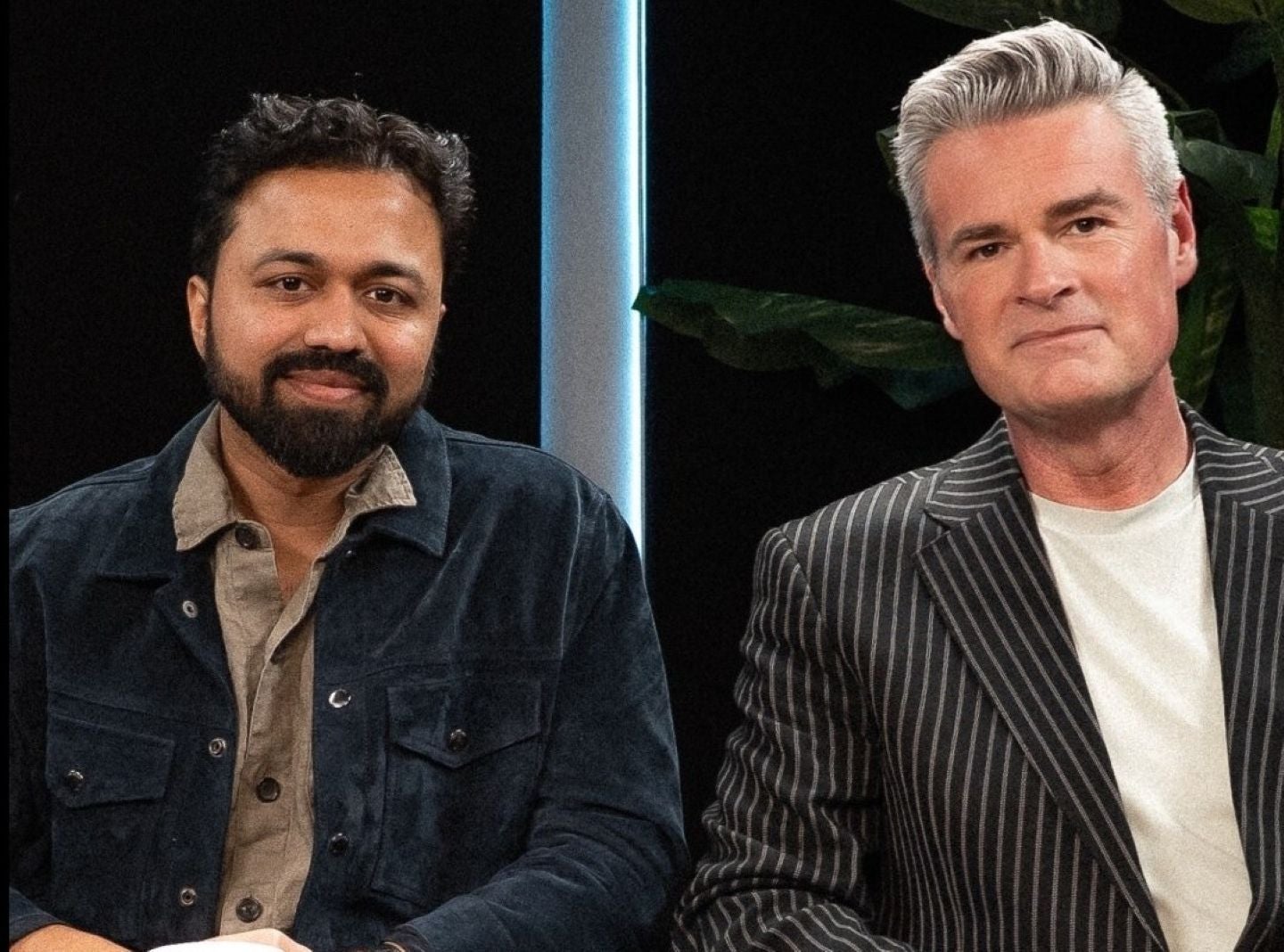
By September 2026, his work also included Fin.com, co-founded with Mustafa Dar. Alamgir is its co-founder and CEO. The company builds infrastructure for businesses to collect, convert, hold and pay out money internationally. Its approach connects stablecoin settlement with local payment systems, placing another kind of transaction at the center of his working life.
Fin.com announced a $20 million seed round led by Expa and Uber co-founder Garrett Camp, with Coinbase Ventures among the participants. The company said it had completed seven acquisitions and intended to expand its network by acquiring established local operators. That strategy places a value on people who already know the markets in which they work.
For Alamgir, whose own childhood crossed Bangladesh, Kuwait and the United States, international money movement has a personal context. Both founders have connected the business to experiences of sending money across borders. The change of industry is substantial. The question underneath it has a familiar shape: how much difficulty accumulates between someone making a payment and someone receiving its value?
There are quieter details alongside the ventures. Alamgir uses physical task boards and a label maker, an agreeable concession from a software founder to the pleasures of a thing that clicks. He publishes writing about frameworks and systems. The elaborate ambition and the small practical aid seem comfortable together. A company may have international plans; a Tuesday still needs organizing.
His career began with attention to work that other people could overlook. The busboy noticed marketing. The marketer noticed the ordering system. The restaurant founder moved toward payments. Each move has widened the field, while leaving him with an obligation familiar from the dining room: somebody at the other end is waiting for the thing they asked for.
Keep the conversation going
His companies, writing and conversations.