A curious thing can happen when someone links a Wise dollar account to another financial service. The name that appears may be Community Federal Savings Bank. Wise’s own instructions explain this possibility, almost as an aside. It is a small interruption in an otherwise smooth digital experience: you chose one company, and another company’s name turned up.
That little surprise is a useful entrance to CFSB. The New York bank supplies some of the machinery that financial technology companies need to move money and issue cards. Its business helps explain a familiar puzzle: how a financial app can feel entirely new while relying on an institution with a bank charter.
- CFSB combines everyday banking with infrastructure for fintech products.
- Wise, Airwallex and Synctera document different parts of its role.
- A 2026 regulatory order exposed the demands that payment growth places on controls.
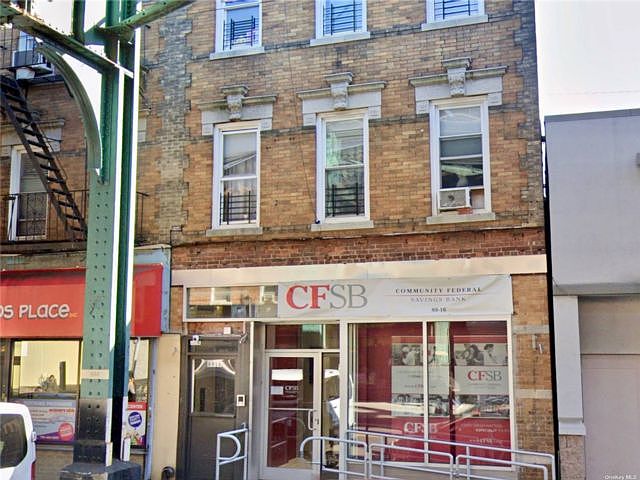
The geographical mismatch is part of the appeal. CFSB was established in 2001, and its listed headquarters is on Jamaica Avenue in Woodhaven, Queens. Yet the business it describes reaches financial technology companies serving people around the world. A local address can sit behind a global service. For anyone trying to understand financial infrastructure, counting storefronts is a poor substitute for examining what runs through them.
The name in the background
Consider Airwallex. In February 2022, it introduced a virtual Visa card for U.S. businesses. Customers could create cards to pay vendors and online merchants, with single-use and multiple-use options. Airwallex supplied the experience. CFSB issued the card under a Visa license. The launch described spending in more than 140 currencies.
Three organizations, one apparently simple action. This division of labor is central to CFSB’s place in the market. The customer-facing company builds a product around a particular audience. The bank supplies banking capabilities. The card network connects the transaction to acceptance. Each occupies a different layer of the same purchase.
CFSB’s own client roster stretches across payment and financial services, displaying names including Payoneer, Greenlight and Highnote. A logo does not explain a contract, so those relationships should not be treated as identical. The concrete examples matter more: Wise describes account linking; Airwallex identifies a card issuer. “Fintech partnership” can mean several quite different jobs.
A bank, offered in pieces
The developer pages make the proposition unusually tangible. CFSB links documentation for entities and accounts under ATLAS, alongside separate ACH and instant payments APIs. A product team can see the categories of work it must connect: identify a party, establish an account, send or receive a payment. The documentation turns an abstract banking relationship into integration work.
Lending follows a related logic. CFSB markets an end-to-end platform for marketplace lenders, bringing application, underwriting, origination, funding and compliance into one gateway. The advertised advantage is coordination. A lender designing the borrower experience can integrate services across the loan lifecycle, including the payment infrastructure used to fund a loan.
Alongside that software-facing work sits an ordinary banking business. CFSB offers personal and business checking and savings, transfers and bill payments. Its commercial lending menu includes mortgages, lines of credit, equipment financing and letters of credit. Property collateral ranges from multifamily buildings to industrial and mixed-use real estate. The API business shares an institution with borrowers who need financing for physical things.
The unglamorous work of launching
In September 2021, Synctera announced CFSB as the fourth community bank in its bank-fintech marketplace. CFSB president Martin Hyman described “a full solution option,” covering processing, reconciliation, operations and compliance. Those four nouns deserve attention. Reconciliation, especially, is unlikely to sell a consumer on an app. It matters intensely to the people responsible for making the records agree.
The partnership addressed a coordination problem: fintech companies needed a licensed bank relationship, while banks could reach customers through software partners. CFSB’s pitch combined banking expertise with technical access and personal collaboration. In that market, the comparison is with other sponsor-bank arrangements; Synctera’s announcement also named Coastal Community Bank, Lineage Bank and Regent Bank.
The economic logic is a combination of banking and financial services. Lending produces interest income; payment and card relationships add service activity. For a prospective partner, the practical calculation extends beyond an integration. Someone must operate the program, handle exceptions, reconcile records and maintain controls as the customer base changes. A launch date measures only the beginning of that commitment.
“This will provide a full solution option”Martin Hyman, CFSB president · Synctera announcement, 2021
When the volume outruns the controls
On April 24, 2026, CFSB consented to an OCC order addressing anti-money-laundering compliance deficiencies. The regulator found that growth in payment processing since 2020 had exceeded the development of suitable controls. Among the findings: alert-triage automation closed cases needing further review, and customer diligence and independent testing were inadequate. CFSB neither admitted nor denied the findings.
The order required corrective work, including outside reviews and stronger staffing. A spokesperson subsequently told Banking Dive that the bank had been improving its framework before the order and had made “significant investments” since mid-2024. That is the bank’s account of its response, rather than evidence that remediation was complete.
LaunchConnect the product.
OperateKeep the controls current.
Read past the button
The lesson a builder can copy is procedural: put responsibilities on paper before promising convenience. Ask who reconciles transactions, who investigates exceptions and how monitoring changes when a product enters another market. CFSB’s history suggests that those questions belong in the product discussion from the beginning.
For a business evaluating CFSB, the fit depends on the intended service: payment connections, a card program, lending infrastructure or conventional financing. Technical access is useful when the operating arrangement can support it. Complex international activity demands corresponding knowledge of customers and transactions. A well-designed interface cannot do that work by itself.
For readers using those products, the same habit is useful: look for the named institution and the specific service it provides. A card issuer, an account provider and a software platform perform different functions. Identifying each one makes the arrangement easier to understand, particularly when the brand on the screen differs from the name attached to the banking service.
That is why the unfamiliar bank name matters. It points to the institutions and responsibilities behind the experience. Follow it, and the story of a payment becomes considerably more interesting than a button changing color.