In 2010, n-Space shipped seven games. For an independent developer, that ought to have been a rather pleasing sentence. Finished software. Recognizable brands. Work delivered. By October, however, the Orlando studio was operating with a core team after layoffs, waiting for negotiations to become contracts. A licensing deal had collapsed. The games were finished; the income needed to keep making games was not secured.
- The craft: licensed games and original ideas, with a knack for Nintendo handhelds.
- The customer: publishers buying development expertise, then players buying the resulting games.
- The catch: shipping a project did not guarantee funding for its successor.
- The ending: closure in 2016, followed by the console release of its last RPG.
n-Space occupied a particular place in the games business. It could make a famous property work on hardware that required different compromises. Activision, Disney, THQ and others brought brands and publishing machinery. n-Space supplied the people who turned those opportunities into playable software. Sometimes it brought an idea of its own. The arrangements produced a portfolio in which Duke Nukem and Rugrats could be neighbors without either apparently complaining.
Its history is worth reading even if you have never held a Nintendo DS. Any business that lives between commissions will recognize the predicament. The last successful delivery proves you can do the work. It does surprisingly little to establish who will pay for the next one.
The first game was on the box. It was never in the box.
Erick S. Dyke, Dan O’Leary and Sean Purcell founded n-Space in 1994. Their background included military simulation and work on Sega’s Desert Tank. They understood three-dimensional worlds before putting one on a home console became routine. A Sony development deal helped launch their new venture.
The first project, Razor Wing, was shown at E3 in 1995 and pictured on PlayStation packaging as a forthcoming game. Then Sony cancelled it. A later company interview described overlapping projects and internal changes at the publisher; Razor Wing was roughly three months from completion. The surviving game was somebody else’s. n-Space’s next release was TigerShark, published in 1997.

Licensed work followed. Publishers already had characters audiences recognized; n-Space had the expertise to build their games. Dyke later explained that established properties let a team concentrate on gameplay rather than inventing an entire world. Original concepts offered more freedom, alongside more financial risk. Choosing a license could therefore be a creative decision as well as a commercial one.
Nintendo needed a twist. n-Space brought a ghost.
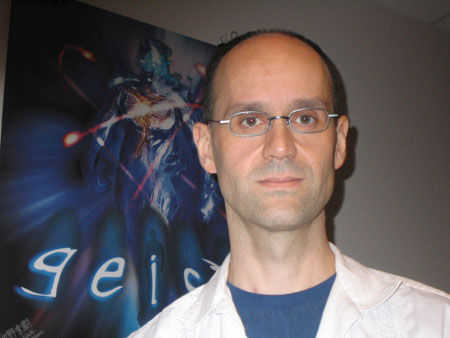
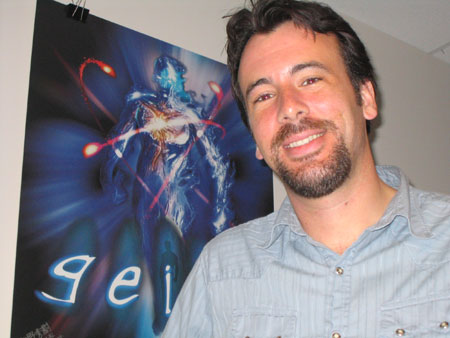
Geist offered a more peculiar proposition. Instead of merely firing a gun, the player could inhabit the person holding it. Instead of treating the scenery as scenery, the player could possess objects. The first-person perspective became a way to move between bodies and things. A ghost, conveniently, has few objections to an unconventional career path.
In a 2005 interview, Dyke described the start: “we self-funded a prototype.” The eventual Nintendo collaboration supplied creative and technical input as well as publishing. The game arrived on GameCube in 2005. It gave n-Space a visible original concept alongside its licensed catalog.
The design had taken a circuitous route. Creative director Ted Newman later recalled early production with Namco, an amicable separation over differing views, and a Nintendo-funded experimental phase devoted to possession-based multiplayer. That sequence matters: the pitch was something people could try, and the eventual backer could test the feature it cared about.
The financing had an ownership consequence. Nintendo controlled the Geist franchise. For n-Space, the agreement meant being able to develop the game while a partner handled publication and promotion. For Nintendo, it meant control over the property’s future. An original idea and an independently owned franchise are different assets; Geist makes the distinction unusually easy to see.
A release calendar is not a cash forecast
The Nintendo DS gave n-Space another useful niche. Its credits included handheld versions of Call of Duty and GoldenEye games; later, it developed Skylanders entries for Nintendo 3DS. These were platform-specific productions. A publisher could reach an additional audience without asking its main console team to acquire a different set of hardware skills.
Such specialization also ties a studio to decisions made elsewhere. In the 2010 crisis, management said it had supported 70 to 90 employees for months without funding. Projects had finished, prospective deals had slipped, and a licensing agreement fell apart. The immediate failure was the bridge between assignments.
A record output year still led to layoffs. Completed projects and contracted future work measure different things.
By April 2011, a report of the company’s blog update put the rebuilding team at about 60 people. In 2012, Square Enix published its original 3DS action RPG Heroes of Ruin. The studio had survived the earlier crisis. Survival, however, had prompted a reassessment.
“It put all of our eggs into one basket.”Dan O’Leary, on dependence on Wii, DS and traditional publishers, 2012
For another studio, the lesson is to examine whether apparently different clients expose it to the same downturn. Five projects can share one platform, one retail market or one funding climate. The practical response is a cash forecast that survives delayed deals, with prototypes and staffing commitments sized accordingly. Busy calendars can conceal correlated risk.
The Dungeon Master meets the software menu
Dan Tudge, whose experience included directing Dragon Age: Origins, became n-Space’s president in 2013. Sword Coast Legends followed in October 2015, published by Digital Extremes. Set in Dungeons & Dragons’ Forgotten Realms, it combined a campaign with online play and tools for a human Dungeon Master to guide adventurers.
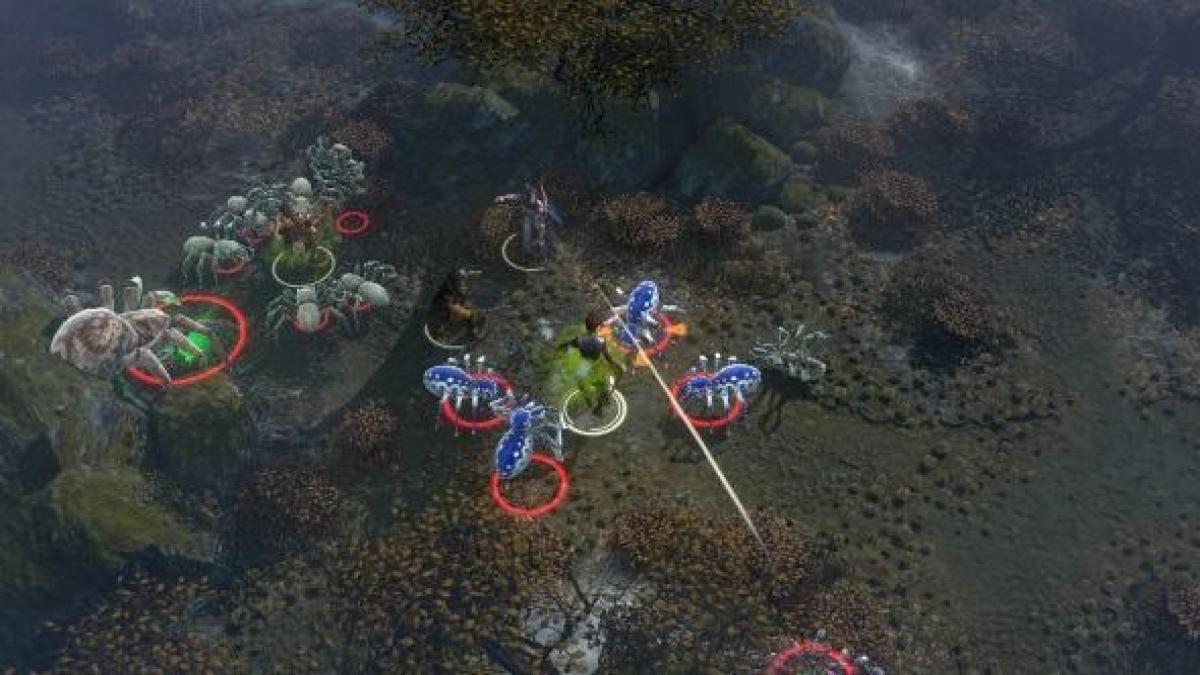
The standard PC edition launched at $39.99. Its attraction was specific: four players could adventure while a fifth adjusted encounters. Players could explore together rather than surrendering every surprise to a fixed script. For people who liked guiding a group, that was an appealing job description.
It was also a difficult promise to satisfy. Game Informer’s review found the creation toolkit too restrictive; Destructoid criticized its distance from tabletop expectations. Familiar D&D branding invited comparisons with a system in which a human can improvise almost anything. A software menu has to decide, in advance, what that anything includes.
Tudge acknowledged disappointed players with “We hear you.” Plans included free community updates and the Rage of Demons expansion. The response made customer feedback part of the next development phase. It also illustrates a condition every creator should test early: whether buyers want the accessible version of an experience or its full freedom. Those are different design briefs.
A finished game can outlive its maker
On March 29, 2016, artist Ben Leary made n-Space’s closure public. Digital Extremes subsequently said the console versions of Sword Coast Legends had been completed. The game reached PlayStation 4 and Xbox One in July at $19.99, including Rage of Demons. The studio’s ending and its product’s release occupied different dates.
- 2016The developer closes.Console release follows in July.
- 2017The publishing contract ends.Sales scheduled to stop after December.
- 2018The multiplayer servers close.Offline content remains for Steam owners.
The later losses were distinct, too. A December 2017 announcement said sales would end as the publishing contract expired. An official notice then scheduled multiplayer servers to go offline on July 25, 2018, preserving offline content for existing Steam owners. Building, selling and operating a game require different continuing arrangements.
Today, n-Space’s value to a reader lies in its games and in the decisions behind them. A playable prototype helped secure a publisher. Licensed work supported experiments. Hardware expertise opened doors. The same history suggests checking how long that door stays open, who owns what passes through it, and whether the next project is actually funded. A ghost can borrow another body. A studio still needs its own payroll.
Explore the games and the people
Follow the historical company profiles, revisit the design conversations, or watch the mechanics at work.