There is a particular indignity in being asked to repair a robot that might eat you. You have instructions. You have a job to finish. You also have a large mechanical rabbit occupying rather too much of your personal space. In Five Nights at Freddy’s: Help Wanted, Steel Wool Studios made an ordinary maintenance task feel like an argument with your own hands. You know what to do. The interesting question is whether you can persuade yourself to do it.
- Five Pixar artists started Steel Wool in 2012; their first publisher pitch needed a smaller budget.
- Early VR experiments ranged from miniature warfare to Mars exploration.
- Help Wanted led PlayStation’s May 2019 VR download chart.
- The business now spans premium games, franchise collaborations and enterprise interactive work.
That rabbit explains more about Steel Wool than a list of software tools could. The studio builds situations in which character, scale and interaction do the work together. Its most familiar assignment is expanding Freddy’s worlds. Its earlier games suggest that the underlying fascination predates the animatronics: what happens when an audience gets to enter a place, change something and suffer the consequences?
The first idea was too expensive
Steel Wool began with Sequoia Blankenship, Andrew Dayton, Jonathan Hoffman, Joshua Qualtieri and Jason Topolski, five artists with Pixar backgrounds. Their 2013 introduction had the cheerfully unhinged tone of people who had decided that a demanding day job left far too much time for sleep. They were making games after hours. Pixar was neither affiliated with nor endorsing the venture.
The practical beginning was less glamorous. In an early interview, Dayton explained that the first game they wanted to make exceeded the budget available from prospective publisher Ripstone. They reconsidered the scope, proposed something smaller and pitched at co-founder Joshua Qualtieri’s loft. A handshake followed. The change of mind came before the celebrated headset experiments: make a project a partner could actually fund.
“Steel Wool Games is basically our sandbox to create our own worlds.”Andrew Dayton, 2013

The eventual debut, Flyhunter Origins, reached Steam in December 2014. Its hero, Zak, is a spaceship janitor with ambitions considerably above his pay grade. Missing insects send him into an adventure. It is a comic platformer, a long way from the Pizzaplex, though the unfortunate employee would become a surprisingly durable motif.
A battlefield, a planet, a pizzeria
The founders had a word for their sensibility: “grimsical.” Dayton described funny, whimsical worlds with gritty undertones. Cute things were permitted. Comfortable circumstances were optional. Quar: Battle for Gate 18, released in April 2016, made the point with anteater-like soldiers fighting a war. VR let players inspect the battlefield as a miniature or get down among the combatants. Scale became something you could manipulate.
That September, Mars Odyssey offered a different use of the same medium: a short visit to the red planet with full-scale NASA landers and rovers. A battlefield and a rover have little in common as stories. Both reward the feeling of being able to judge an object’s size and position for yourself.
HTC’s publicly announced Series A investment. Capital for studio development, rather than a disclosed budget for any individual game.
HTC backed the studio with a $5 million round announced in August 2016. Its annual report also records a smaller investment the previous year. A headset company funding experiences for its hardware is an intelligible arrangement: people need a reason to put the thing on. Steel Wool was experimenting with several reasons.
The distance is the product
With Help Wanted in 2019, those experiments met a franchise that already had people waiting to be frightened. Scott Cawthon created Five Nights at Freddy’s; Steel Wool helped turn its characters and situations into a collection of VR experiences. Creative director Topolski’s launch explanation focused on the player’s sense of protection. A screen gives you somewhere safe to sit. A headset places the pizzeria around you.
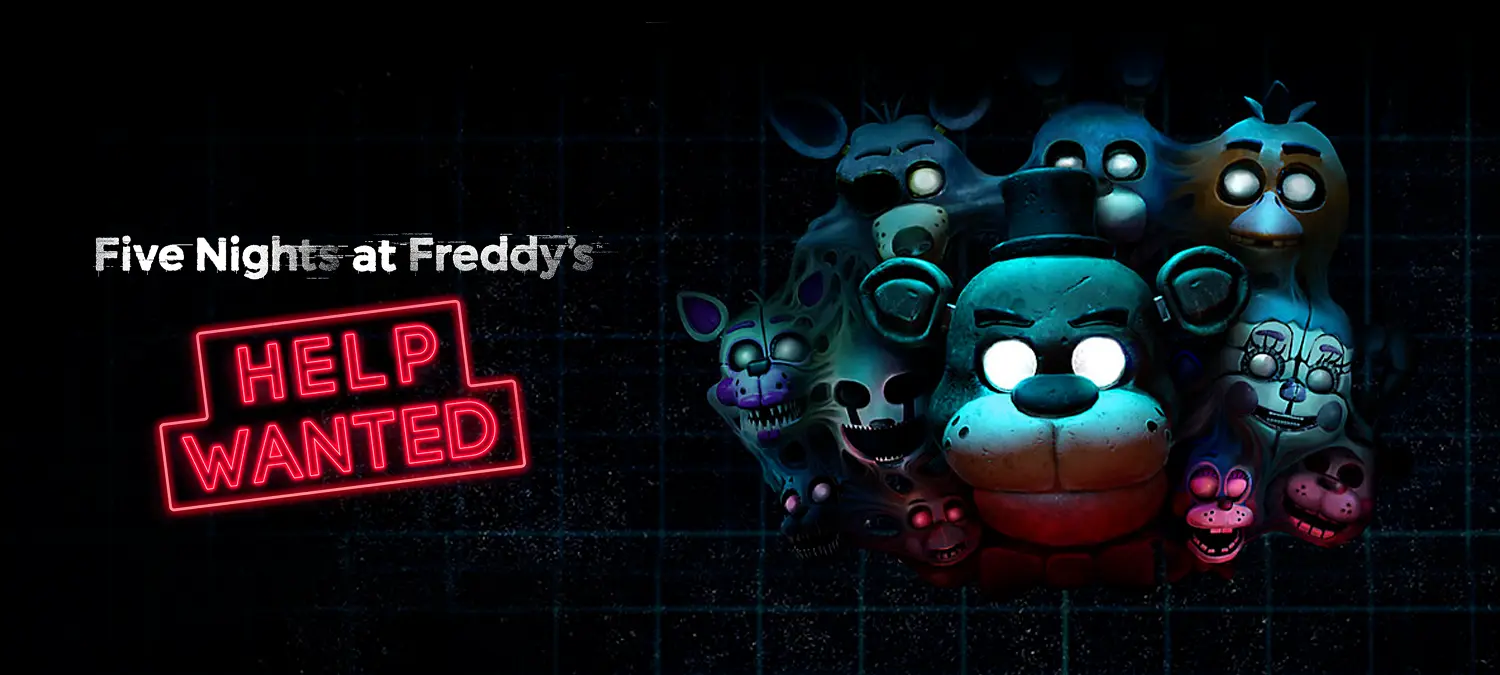
The mechanics made that change tangible. Players could operate doors and lights, handle objects and repair characters. Sony’s preview described a Bonnie repair sequence in which following instructions became difficult because the character loomed so close. A familiar face had acquired a body, and the body was in the way.
The commercial signal was specific: Help Wanted ranked first in Sony’s May 2019 PS VR download chart and fourth in its full-year chart. Those rankings establish demand on that storefront. They do not supply a company valuation or a global sales total. Even within those limits, they show that the idea found an audience.
How many ways can a bad shift go wrong?
Steel Wool’s later Freddy’s games explore different answers. Security Breach, released in December 2021, gives Gregory a large entertainment complex to navigate. Cameras, distractions, hiding places and limited stamina make movement a calculation. Freddy becomes a guide and protector who needs recharging. The mascot can help you, provided you remember that assistance has a battery.
Help Wanted 2, released in December 2023, returned to the minigame structure with six categories, including food preparation and backstage work. The studio said replayability was a primary goal: many tasks present different requirements on subsequent attempts. On PS VR2, headset rumble adds physical punctuation to frightening moments, while an eye-tracking fortune teller plays with the player’s gaze. These are useful examples of designing around a device’s capabilities.
There is work outside Freddy’s, too. Hello Neighbor VR: Search and Rescue uses a squad of children with different gadgets to solve physical puzzles. The studio also describes enterprise work in virtual training and therapy. The shared competence is making an interactive environment respond convincingly; the purpose of the interaction changes with the customer.

The invoice after the jump scare
Players buy finished games through digital stores and other retail channels. Publishing partners supply another side of the business: Ripstone on Flyhunter, HTC on Quar, ScottGames on Secret of the Mimic. The last of those launched in June 2025 and carries a US Steam list price of $39.99 at the time of writing. Distribution, franchise rights and development are distinct pieces of the arrangement.
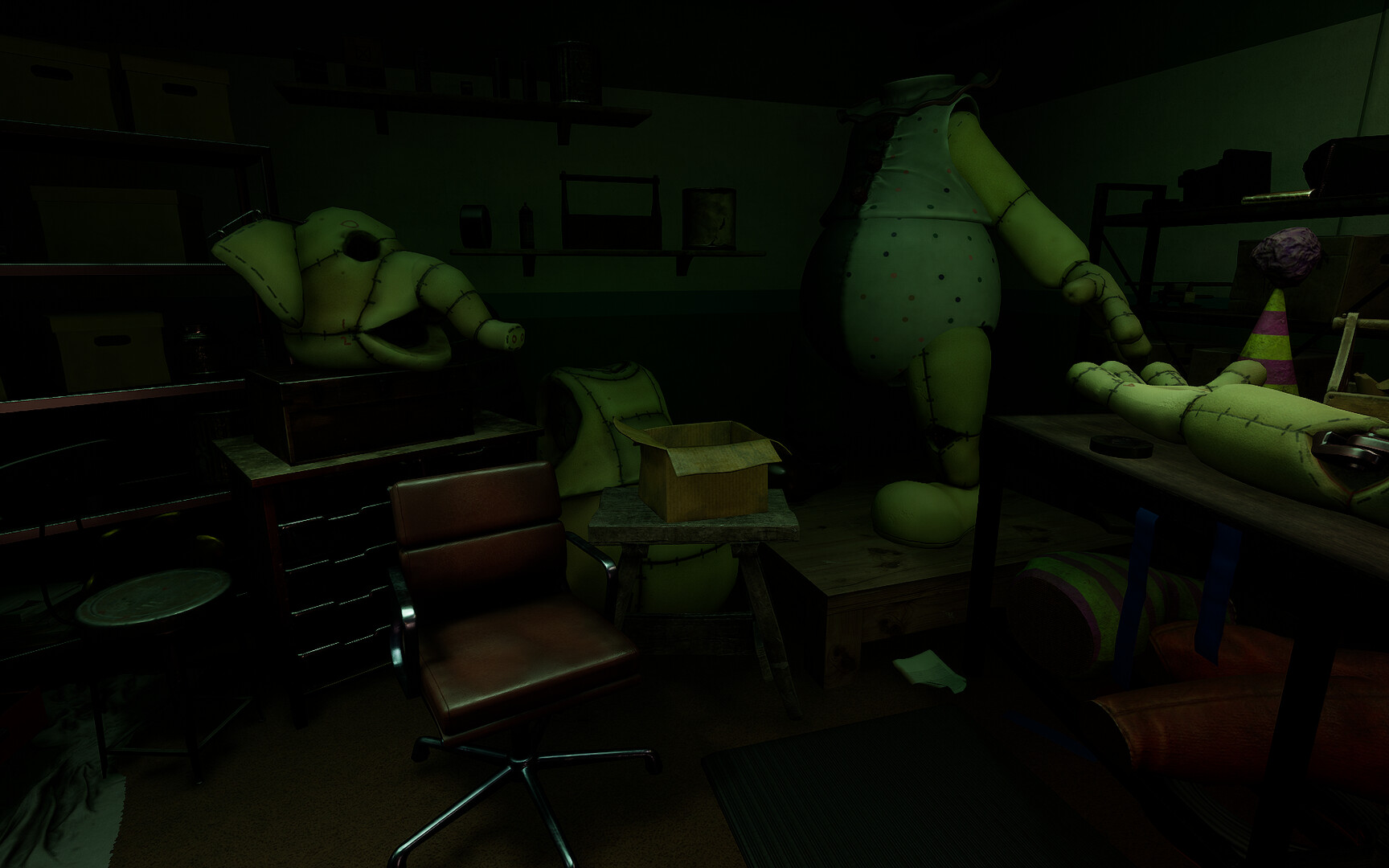
The cost of delivering the illusion includes maintaining it. In Security Breach’s June 2022 patch notes, the studio listed enemies that failed to patrol or search hiding places, progression problems and localization corrections. A monster that cannot look for you is a fairly expensive piece of scenery. These were operational failures in the rules that made the world credible.
The studio’s June 2025 launch announcement for Secret of the Mimic likewise promised AI, audio, loading and performance fixes. By May 2026, its PC VR update was still addressing interactions, crashes and situations that could prevent progress. The date on the trailer begins a second job: keeping the advertised experience working.
The platform expansion is also concrete. Xbox Series X|S and regional Switch releases followed in late 2025 and early 2026; PlayStation VR2 and Steam PC VR followed in 2026. More ways to buy a game mean more versions of the experience to support. The newer VR port, for example, instructs players to use in-game locomotion rather than walk around physically, because leaving the player boundary can break interactions.
What to borrow from the haunted workshop
Steel Wool occupies the overlap between independent development, franchise entertainment and VR craft. Its animation background helps explain the attention to character and atmosphere. Its catalogue demonstrates repeated attempts to make those qualities playable. The useful distinction is the combination: a recognizable world, a reason to interact and enough technical discipline to preserve the effect.
For another creative business, the first lesson is almost embarrassingly practical. Cut the first project until someone can finance it. Then identify the part of the new medium that changes the experience. In Steel Wool’s games, physical scale, hand movement and gaze can change what a familiar character means. Simply moving artwork onto another device would miss the opportunity.
That approach depends on the audience wanting the experience and having suitable hardware. A franchise’s recognition cannot guarantee reliable controls, comfortable movement or repeat value. Steel Wool’s own product details make the conditions visible. A frightening rabbit needs a working repair sequence. A second shift needs something worth doing again. And the smallest game you can finish may be the one that lets you build the larger world later.
Clock in, if you dare
Explore the game shelf, studio news and Secret of the Mimic on Steam. For a look at the mechanics, watch the Help Wanted 2 gameplay trailer or visit the official YouTube channel.