Consider a dragon on a train. The dragon belongs to Skyrim; the train belongs to a commuter. For those two things to meet, somebody had to make Bethesda’s sprawling role-playing game work on Nintendo Switch. Iron Galaxy helped do that. It also helped implement motion controls and amiibo support. The familiar world acquired a different set of manners.
That is a useful place to begin with Iron Galaxy, because its work often appears beneath somebody else’s name. The player buys the game, admires the landscape and skips the credits. Somewhere in those credits sits a studio whose assignment was to make the whole arrangement possible on another machine.
- The customer: publishers and developers needing engineering, ports, creative support or a lead development team.
- The range: a portfolio of 80+ titles, from helping existing games reach new platforms to building original ones.
- The tension: valuable skills and famous partners did not prevent staffing cuts in 2025 and 2026.
The game behind the game
External development is easy to describe badly. “Outsourcing” can suggest a sack of tasks handed over a wall. Iron Galaxy’s portfolio shows something more varied: a technical contribution here, a platform adaptation there, and sometimes responsibility for the finished game. The distinction matters. Helping a production is different from owning its direction.
The commercial customer is usually another company. A publisher wants an existing game to reach another audience; a studio needs additional expertise without building every discipline internally. Iron Galaxy supplies development work. Players receive the result through the partner’s release. The company also makes original games, so its business spans service assignments and creations of its own.
A port, in particular, tests the charming assumption that software is portable merely because it is software. Hardware has constraints; controls have conventions; players have expectations. On Switch, Skyrim’s motion controls and amiibo features gave the adaptation a reason to belong on the device. An adequate translation has to understand the destination.
Different jobs. Different scopes. The same credits screen.
Two buttons, twenty-one characters
Then there is Divekick, a fighting game reduced to two buttons and no directional inputs. Iron Galaxy partnered with its creator at One True Game Studios to bring a fuller version to market. The joke in the title doubles as an explanation of the controls. You dive. You kick. Your opponent, regrettably, has been given the same privileges.
Removing buttons leaves the business of reading another person: distance, timing, hesitation. Iron Galaxy’s listed work included character art, testing, publishing and rollback networking, the technology used to make online matches behave more smoothly. The apparent simplicity required a rather unsimple collection of skills.
Killer Instinct asked for a different kind of judgment. Xbox handed Iron Galaxy lead development from the second season onward. The studio lists 21 additional characters, two seasons and a subsequent update, alongside Windows and Steam versions. Here, the assignment was to expand an established personality while preserving the contest players cared about.
It returned for the 2023 anniversary update, including combat tuning and interface work. Those projects make the company’s positioning concrete: its technical work sits beside experience in fighting-game design, live updates and player feedback. This is a portfolio-based reason to consider it, rather than a claim that nobody else possesses those abilities.
The credit tells you who helped. The interesting question is what they were trusted to change.
A promise with a payroll attached
Dave Lang founded Iron Galaxy in 2008 after experiencing employers closing or disintegrating around him. In a 2020 GDC podcast excerpt, he described wanting somewhere he could keep making games with his friends. His ambition was unusually domestic for an industry so fond of conquest.
“I want to build a place that you can retire from if you wanna retire from.”
Dave Lang / GDC podcast, 2020

That ambition gives the studio’s culture a practical test. Can the workplace support an ordinary life while making demanding software? Its published inclusion programs describe manager coaching, diversity scholarships and employee resource groups. Those groups also contribute perspectives to development, including the problem of character options failing to represent the people playing.
Inclusion, viewed this way, has a production consequence. A customization system embodies somebody’s assumptions about bodies, identities and appearance. Giving more people a voice in that system can change what gets made. The studio’s policies are useful evidence of intent and process; they cannot, by themselves, settle every employee’s experience.
The day the city went quiet
Rumbleverse made the original-game side of the business visible. Published by Epic Games, it put melee combat inside a battle royale, with players climbing and fighting around Grapital City. Iron Galaxy built the world in Unreal Engine 4 and developed the networking, traversal and character customization. Here the studio had a whole city’s worth of decisions to own.
The service closed on February 28, 2023, roughly six months after launch. Players who had spent money were offered refunds. The developers’ open letter hoped the idea might return in another form. That hope deserves to remain a hope; affection for a game does not amount to a scheduled comeback.
The closure came before the staffing cuts. In February 2025, Iron Galaxy announced that 66 developers and support staff were leaving. Its statement described sacrifices to keep the team together and said the slow industry recovery had exhausted its room to maneuver. It continued serving partners, but could no longer preserve the same workforce.
Rumbleverse’s live service closes.
66 staffing reductions announced.
Further cuts; market assumptions change.
In April 2026, the company announced another reduction. Its explanation contained the decisive change: it would treat current market conditions as permanent rather than wait for business to return to normal. The statement did not supply a total, and the earlier 66 should not be mistaken for the size of this later round.
The business lesson is an inference from that sequence, not an accounting diagnosis. Multiple clients can spread project risk while remaining exposed to the same spending climate. A services studio can be useful to every customer on its list and still face less work. No contract mix makes the customer’s budget irrelevant.
Seven platforms, one familiar feeling
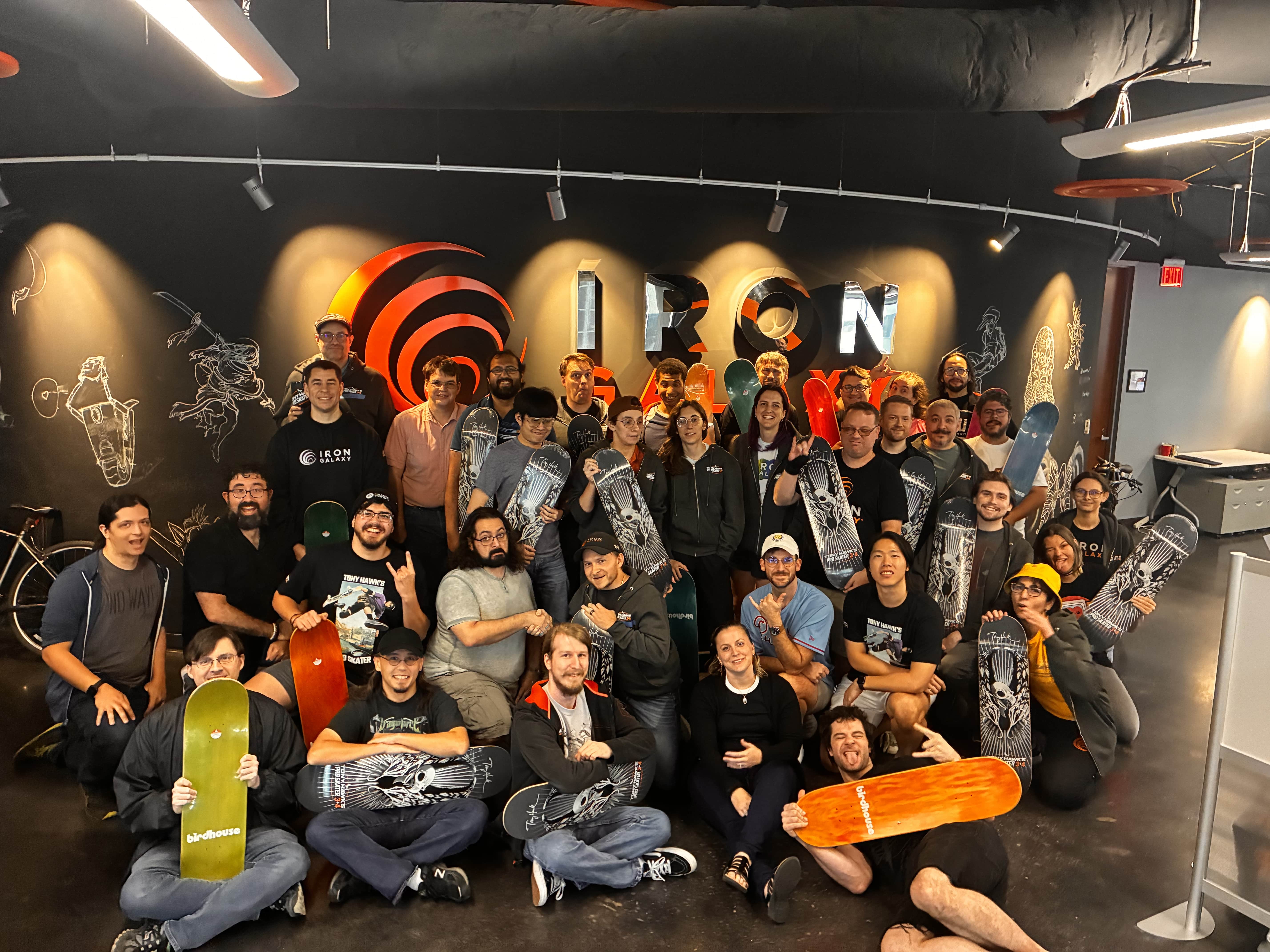
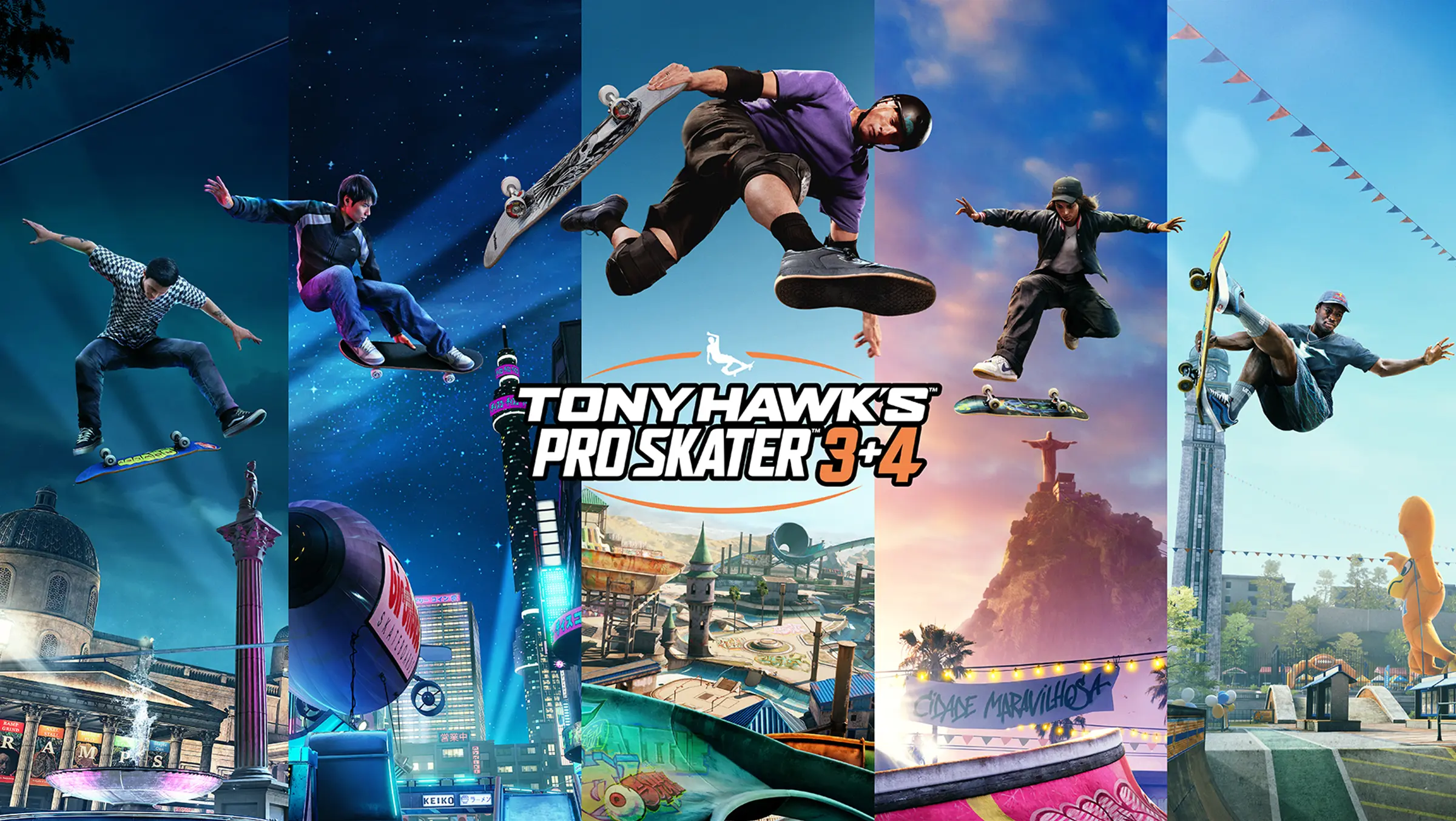
July 2025 also brought Tony Hawk’s Pro Skater 3 + 4, with Iron Galaxy as lead developer and Activision as publisher. The studio’s launch retrospective described delivery on seven platforms. The remake added new parks and skaters while revisiting games whose pleasures many players already knew by muscle memory.
A remake has two audiences, sometimes housed inside the same person: the player who wants the old feeling and the player who wants something worth buying today. Decisions about new content and presentation have to negotiate between them. Iron Galaxy’s range, from combat timing to platform migration, makes that negotiation a plausible assignment for the studio.
It operates in a market with capable alternatives. Virtuos offers ports, remakes, engineering and full development too. A publisher may also do the work internally. Iron Galaxy’s case rests on the fit between a particular assignment and its demonstrated experience. A portfolio is more helpful than a sweeping promise to handle anything.
For a potential partner, the useful questions follow directly: Which discipline is missing? Who owns the build? What hardware and performance targets define acceptance? How will changes flow between teams? These are editorial recommendations for buying development work. They make the brief assessable before enthusiasm takes over the meeting.
Useful is a verb
In January 2026, Iron Galaxy launched Deathtrap Dungeon inside Fortnite. A team had experimented with UEFN, the development environment for Fortnite experiences, and produced a base-defense game using traps, turrets and magic. Players can enter island code 7883-5730-9097. The announcement explicitly separates the project from Epic sponsorship or endorsement.
This is a modest, copyable habit: evaluate a new tool by making something people can actually use. For other founders, the larger habits are equally concrete. Name your contribution precisely. Keep evidence of shipped work. Ask whether your apparently different customers all depend on the same source of spending.
External development works when scope, integration access, funding and responsibility are clear enough for two organizations to build together. It struggles when a partner is expected to rescue an undefined assignment, or when the budget disappears. Iron Galaxy’s development craft helps solve production problems. Its recent history shows why the commercial problem needs its own attention.
Go back to the dragon on the train. The player sees an old world in a new place. Behind that small convenience sits the business Iron Galaxy knows: making a game belong somewhere else. The company’s continuing challenge is to make that work support a place where people can belong, too.
Official website · Project portfolio · Studio journal
LinkedIn · X · Instagram · Facebook · Bluesky
Watch: Making THPS 3 + 4
Watch: Creating the Water Park level
Listen: Dave Lang on job stability