A music lesson has an awkward ending. The teacher has demonstrated the passage. The student has played it back. For a moment, both people know what needs to happen next. Then the student goes home. Musico has built a business around preserving that moment: the explanation, the sound and the small instruction that makes tomorrow’s practice possible.
- For music teachers, studios and schools with students of their own.
- Digital notebooks hold lesson material, recordings and reminders.
- Subscriptions sell organization, reusable resources and teaching support.
The company’s proposition is practical. A lesson should leave behind something more useful than a memory of a lesson. Its online workspace gathers teaching material around the student, giving the teacher a place to prepare and the learner a place to return. The interesting unit here is the relationship between two people, continued across the days when they are apart.
A notebook that can play back
Musico’s website describes hundreds of prepared lessons that teachers can adapt with their own clips, recordings and notation. The teacher’s expertise supplies the choices: which example matters, which passage needs another attempt, which explanation belongs beside the music. The software gives those choices a durable home.
Think of the difference between handing someone a recipe and leaving them a recipe alongside a demonstration of the troublesome step. Musico applies that second idea to instruction. A digital notebook can preserve context that a short handwritten assignment struggles to carry. It makes the lesson available again without requiring the teacher to give it again.
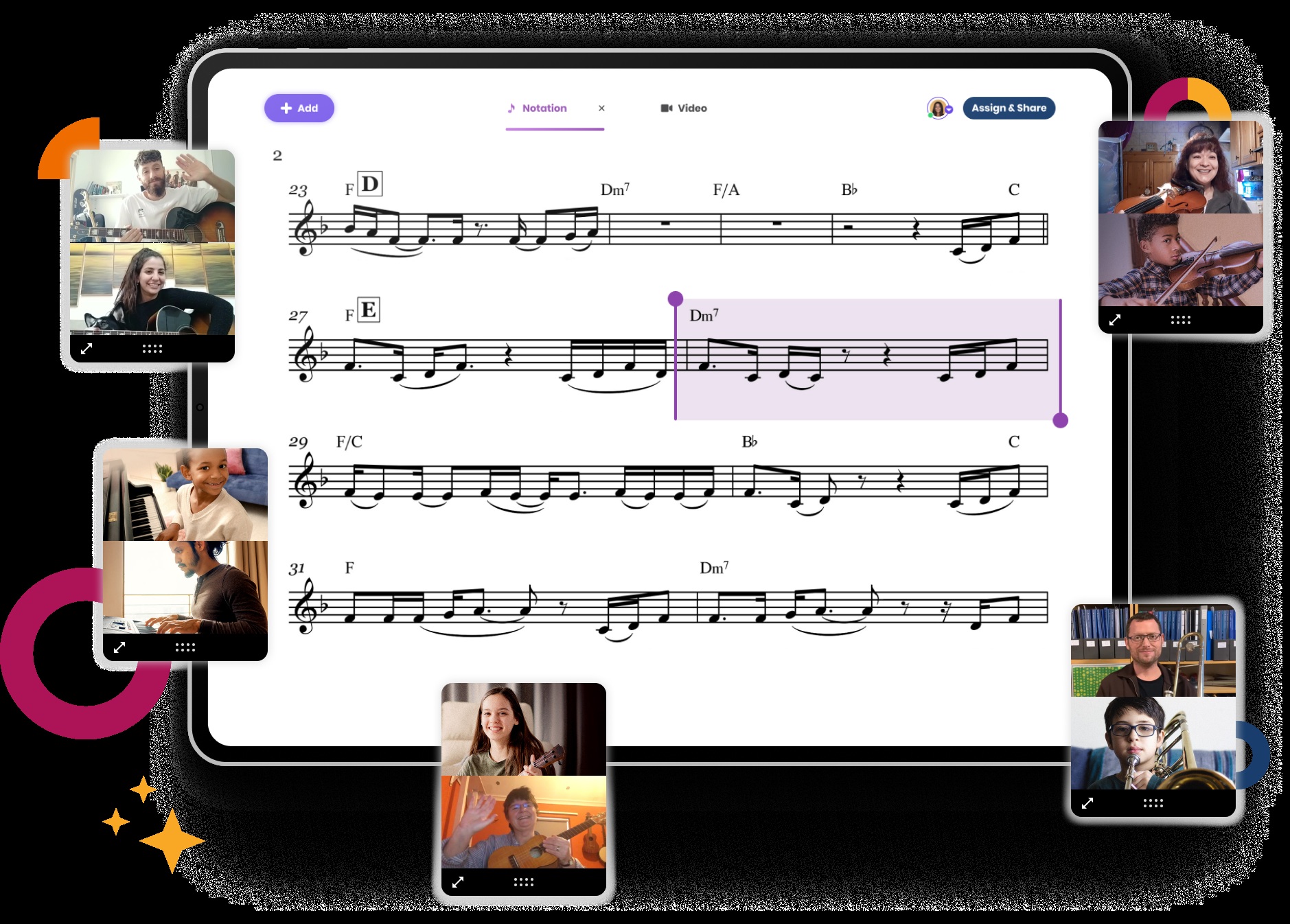
Its FAQ describes practice controls including loops, tempo changes and the ability to adjust individual parts. In the company’s violin example, a learner can isolate a line or hear it against another instrument. That is a specific kind of assistance: making the musical surroundings easier to inspect, then letting the student play.
The same FAQ describes tracking time spent playing. For a teacher, that creates a starting point for the next conversation: what did the student actually work on? Minutes alone cannot tell you whether a phrase sounds convincing. They can help locate the effort. The musical judgment still belongs in the lesson, where a teacher can listen, ask questions and adjust the assignment.
The real competitor is the scattered lesson
Music teachers already have ways to send files and make video calls. What becomes cumbersome is the stitching: a score here, a recording there, an assignment somewhere in a message thread. Musico’s advantage, when the workflow fits, is reducing that assembly work. One organized lesson becomes easier to revisit and adapt.
This puts it in a busy category of specialist teaching software. Doozzoo was founded by Christoph Pelz and Thomas Gier around the shortcomings they saw in ordinary conferencing tools. Muzie.Live also describes building around the needs of music educators. Musico occupies this same practical territory: software made for a teaching activity with particular materials and habits.
A useful outside description appeared in the Iowa Music Teachers Association’s summer 2020 newsletter. It listed Musico as a tool for managing online instructional resources. That modest description clarifies the job beautifully. Resources are already valuable. Their arrangement can determine whether anyone uses them.
The school buys a shared memory
The public pricing page offers an individual teacher subscription at $20 a month, or $198 a year. It advertises unlimited students. The school offer starts at $50 a month and adds shared teaching resources, teacher accounts and assistance with adoption. These are published offers; the FAQ also contains a different, seat-based price structure.
The distinction between the plans is revealing. An individual teacher needs a working notebook and a personal library. A school needs material to move between teachers, plus help getting everyone comfortable with the system. Training and content migration are part of the advertised school package. Adoption itself becomes something the company sells.
“It saves me so much time and I feel so organized!”Amie Webster / school owner, company-published testimonial
School owners’ comments on Musico’s website emphasize organization and reduced teaching stress. Those are testimonials, rather than measured outcomes. Still, they identify the purchase from the buyer’s side: a school is paying to make a complicated working day easier to manage. Better retention is the company’s ambition, not a result that follows automatically from installing software.
The chess lesson in the music business
Co-founder and CEO Yonatan Pistiner offered an unexpected explanation of remote education in a September 2021 interview. During the pandemic, he took chess lessons online and began learning from teachers in different countries. The experience changed his expectations about where good instruction could come from.
“Covid accelerated a process that was already underway,” he said. His argument was that students and teachers had become more familiar with digital learning. Musico’s support for in-person, remote and hybrid lessons placed it inside that change. The company was selling continuity across formats as well as across the week.
Pistiner also named AltaIR and Digital Disrupt as investors. Digital Disrupt lists Musico in its portfolio. The useful point is the company’s chosen customer: educators and schools with teaching to deliver. Its business model charges for their working environment, keeping the teacher central to the experience.
Copy the habit before buying the software
There is a transferable idea here for anyone who teaches. Save one explanation that students repeatedly need. Attach it to a clear assignment. Put both somewhere the learner can reliably find them. Reuse the material, then improve it when the next student reveals what was confusing. Musico packages that habit into a product.
The conditions matter. A teacher must maintain the material; students must return to it. A school whose principal need is accounting should assess that separately. A group seeking remote ensemble performance should test its actual setup: the published FAQ describes built-in video lessons for individual sessions. Organized material cannot, by itself, make every teaching format work.
Musico’s most persuasive idea remains small enough to picture: a student opens the notebook at home and finds the lesson still there. The teacher’s work has somewhere to go after goodbye.