Jared Falk's route into online education passed through Vancouver's Chinatown with a load of ducks. Working for his family's farm, he would arrive with product to sell and try to drive home without any. There was nothing abstract about the transaction. Someone had to want what he was offering. Later, when he began selling drum lessons through a computer screen, that requirement remained inconveniently intact.
The distance between a duck farm and a music lessons app looks considerable. In Falk's case, the work overlapped. He taught drums, played gigs and sold the family's poultry. Today he leads Musora from Abbotsford, British Columbia. His business has grown around a deceptively ordinary question: how do you persuade someone to pick up an instrument, then pick it up again tomorrow?
A spectacular performance can make the first part look easy. The second part is where the teacher earns a living. Beginners have schedules, doubts and plenty of other ways to spend an evening. Falk has spent more than two decades trying different ways to reach them. Along the way, the packaging has included downloads, DVDs, books, YouTube videos, live streams and an app. The drumsticks have required fewer upgrades.
The boy with the imaginary drum kit
Falk was born in Abbotsford in 1981. The invitation to become a drummer arrived in grade ten, when he noticed another boy air drumming. A pair of pencils could apparently provide an afternoon's entertainment without completing any schoolwork. He went home and asked his parents for drums. They eventually obliged, and he started playing at fifteen.
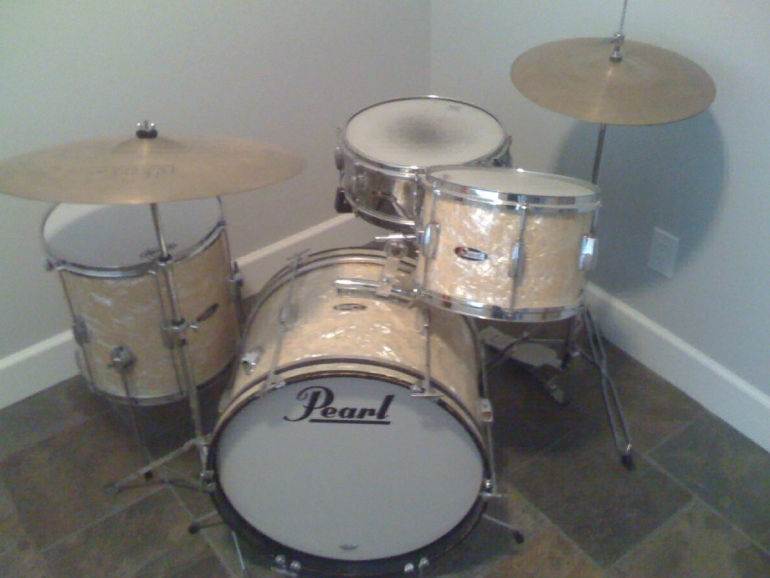
His parents also gave him a separate room to practise. For a new drummer, this was a considerable vote of confidence; for everyone else in the house, it was sensible planning. He played in church and in bands, finding his way through different musical settings. Teaching began when someone asked him to help a younger player after a Sunday service.
That first student, Jason Kliewer, would remain part of the story. Falk later credited Kliewer's practice with making a beginner teacher feel more accomplished than he deserved. The pupil eventually founded Casey Drums, and Falk acquired a kit he built. A lesson had become a friendship, then an instrument the teacher could play. It is a pleasingly literal example of a student making something of the experience.
Forty students, one web-savvy pupil
Falk toured while young, then chose to spend more time at home. His former teacher Lionel Duperron was reducing his teaching commitments and passed students along. Falk's roster grew to around forty. He was still working another job. Teaching that many people meant encountering the same early obstacles repeatedly, and finding himself explaining the same fundamentals again.
One pupil brought a different kind of expertise. Rick Kettner knew web development and internet marketing. He had posted a video about heel-toe bass drum technique on the Pearl Drummers forum. People downloaded it in such numbers that the bandwidth bill became a problem. The clip had to come down. An enthusiastic audience, it turned out, could be quite expensive.
Falk proposed a partnership: he would teach on camera while Kettner handled the technical work. The company's early online community, BreakSticks.com, dates to 2003. Railroad Media followed in 2005. Their one-handed drum roll lesson was filmed in a shed on the family farm. The proposed classroom had no particular need for a classroom building.
Yet the internet was not ready to carry every part of the business. They moved into physical DVDs and lesson packages. It is an instructive wrinkle in a technology company's biography: going online did not mean staying there at all costs. A disc that arrived in the mail could be more useful than a download that tested a customer's connection and patience.
“I think the most important thing is to just care.”
Jared Falk, on teaching
The price of giving lessons away
In 2007, FreeDrumLessons.com put a substantial collection of lessons online without charging students. YouTube provided the video hosting. The free material also introduced potential buyers to the paid lesson packages. A drummer could learn something useful before deciding whether to spend money. For someone without the money, the lesson was still there.
The idea asked the business to trust its own teaching. A sales pitch could describe a clear explanation; a free video could supply one. The distinction matters in music, where watching an accomplished player and understanding how to attempt the same thing are separate pleasures. One produces applause. The other may persuade a person to sit down and practise.
Falk's ambitions were already fairly plain. He wanted to teach more drummers and liked sharing information with the community. The business side brought less romantic obligations: managing employees, paying bills and tending online discussions. An educational website can be open at any hour. Its customers do not necessarily restrict their questions to office hours either.
A school that could answer back
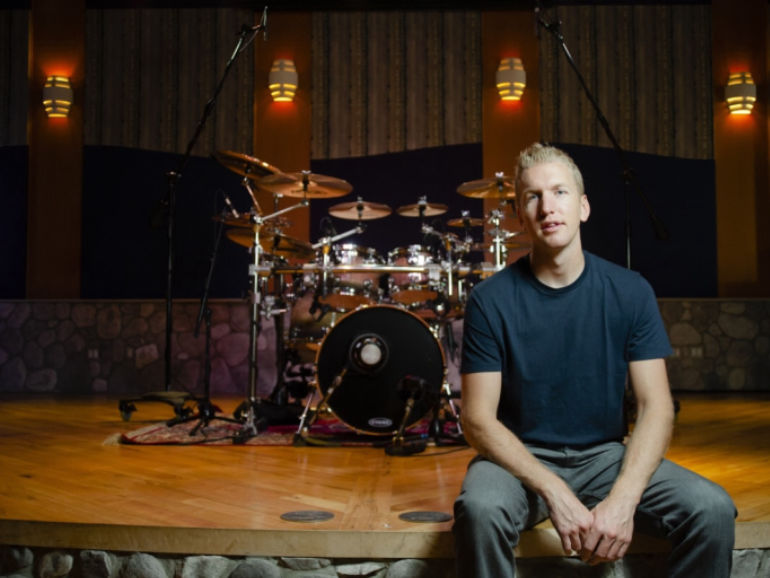
Drumeo brought the work under a single identity. Its official timeline dates the launch to 2012. The name compresses “drum education online” into something that fits comfortably above a video. More consequential was the shift in the relationship with students. A purchased package could end with a delivery. A membership gave the teachers a reason to keep showing up.
Early Drumeo offered seven live lessons a week. Students could see instructors return rather than merely acquire another stack of material. The business was developing a rhythm of its own: teach, respond, find the next question. The educational product included the ongoing connection, which is harder to put in a cardboard shipping box.
The roster expanded beyond Falk. Drumeo hosted players including Benny Greb, Anika Nilles, Russ Miller, Tommy Igoe and Dennis Chambers. Those names offered students access to musicians whose approaches differed from one another. A teacher's explanation can be perfectly sound and still fail to click for a particular pupil. A second explanation gives that pupil another way in.
Falk's place in that arrangement changed too. He became responsible for a business that could introduce other teachers, rather than appear in every lesson himself. That is a substantial adjustment for someone whose own face helped build the audience. The point of gathering accomplished musicians is to let the students hear them.
The collector who worries about unused drums
Falk remains a player with a collector's appetite. His equipment account includes Yamaha kits, the Casey kit built by his first pupil, and a blue-sparkle 1964 Camco. He has joked that his Paiste cymbal supply rivals local music shops. A person who teaches restraint in practice can evidently make an exception for another interesting drum.
His writing for Paiste is similarly informal. He declines the polished professional biography in favour of talking directly to the reader. The satisfaction he describes comes from students progressing to gigs, recording sessions and teaching others. He invites people to talk to him. The manufacturer calls him an educator, an unusually economical description for a biography with so much hardware attached.
There is a tension beneath the collecting. An instrument is easy to buy and rather harder to keep using. Falk has publicly worried about drums and pianos gathering dust. From that perspective, a music education company has a continuing obligation after the excitement of the purchase. The customer needs a reason to return to the room where the instrument lives.
What makes someone come back to play tomorrow?
A recurring concern in Falk's teaching and Musora's stated mission.Learning to leave a little out
For Falk, a large video library brings another problem: the student's time. In a conversation about building a learning community, he questioned the appeal of advertising thirty hours of instruction. That much material also represents thirty hours the learner must find. A catalogue can look generous from the publisher's chair and intimidating from the practice stool.
He described looking for the points where students get stuck, asking departing members what was missing and seeking feedback after people joined. He also pointed to video games, which introduce small tasks and acknowledge early accomplishments. Music presents plenty of difficulty without making the first useful achievement unnecessarily distant.
That suggests a demanding editorial job for the teacher. An exercise needs enough explanation to be attempted, enough challenge to matter and a place in a sequence the student can follow. Leaving material out can require better judgment than adding another lesson. The person who once repeated the basics to forty students now has to consider how those basics travel without him beside the kit.
- 2003BreakSticks
Online community - 2005Railroad Media
DVD lessons - 2007FreeDrumLessons
Free video library - 2012Drumeo
Online drum school
Back in the room
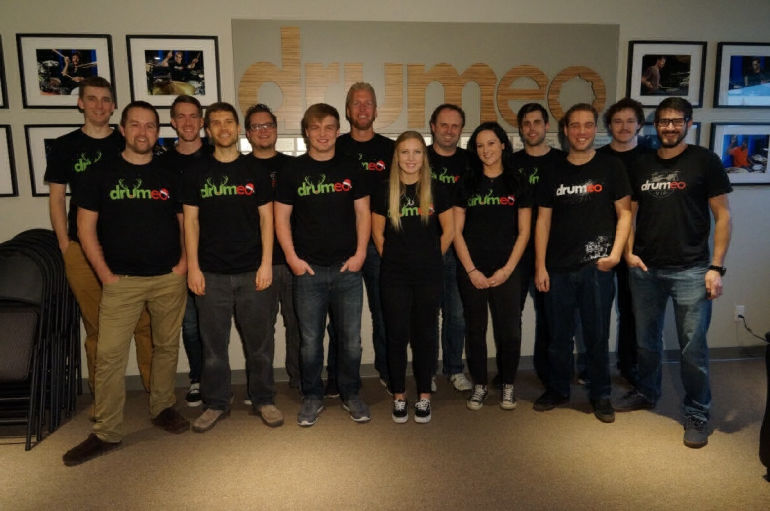
Musora now brings drums, piano, guitar, singing and bass into the same business. Falk is its CEO. Its current company account reports more than 100,000 active students across five instruments. Those figures describe the company, rather than an audience for Falk alone. Teaching on that scale depends on many people doing work the viewer may never see.
His public studio tour offers a glimpse of that wider operation: rooms for different instruments, offices and an artist green room. The distance from the farm shed is visible in the facilities. The reason for inviting people inside remains familiar. The equipment and the rooms exist so somebody can make a lesson, and somebody else can use it.
On October 24 and 25, 2026, Falk is scheduled to join Dave Atkinson and Kyle Radomsky at the UK Drum Show in Liverpool. Their learning lab puts attendees behind electronic kits for interactive workouts. The programme includes grooves, coordination and a one-handed sixteenth-note workout. After years of screens, the teacher and students will share a room.
It is a fitting scene for a business that began with one teacher's limited supply of hours. The internet helped Falk reach people he could never have taught locally. In Liverpool, the task becomes immediate again: offer an explanation, let someone try it, and see what happens when they play.
Keep the lesson going
- Explore Musora’s music lessons ↗
- The Musora company profile ↗
- Watch Drumeo on YouTube ↗
- Jared Falk’s YouTube channel ↗
- Listen: A Constant State of Progression ↗
- Listen: Falk on DrumHeads Media, January 2026 ↗
- Inside the collection: Falk’s 2015 equipment interview ↗
- The UK Drum Show learning lab programme ↗
- Follow Jared on LinkedIn ↗
- Instagram: @jaredfalkdrummer ↗
- X: @Jared_Falk ↗
- Jared on Facebook ↗