A math quiz is an unusual thing to take to McDonald’s. Muhammad Irfan Zafar had reasons to try. At the start of 2020, the founder of Lahore software company ArhamSoft announced an agreement linking its education project, Mathlete, with the restaurant business. The invitation to students was cheerful and direct: practice, compete, win something. Arithmetic had acquired a marketing partner.
For a software executive whose working life included banking systems, university teaching and overseas clients, the combination made a certain sense. A useful product needed people to use it. Students needed reasons to keep working at difficult questions. A familiar brand offered another way into their attention. The project joined an educational purpose to the ordinary business of getting an idea in front of an audience.
Zafar’s career is most interesting at these meeting points. He worked between classrooms and commercial teams, between a company in Lahore and customers elsewhere, between a student’s present skills and a future job. Mathlete made those connections unusually easy to see. It also supplied a rather good answer to anyone who thought a software founder’s interests should stop at the office door.
“I live IT.”
Muhammad Irfan Zafar
The classroom came first
Before ArhamSoft, there was a sequence of jobs involving both technology and instruction. Zafar coordinated professional development programs in IT at Petroman in the late 1990s. He then worked as an IT consultant at Habib Bank Limited, followed by a faculty appointment in information technology at the University of Central Punjab from 2003 to 2007. These were different workplaces with different demands, well before the Mathlete announcement.
His education continued through that period. He studied computer science at Al-Khair University and later completed a master’s degree at the University of Central Punjab. Technical credentials accompanied the degrees: Microsoft professional and developer certifications, then BizTalk Server certification. The list belongs to a working technologist acquiring particular tools, with the classroom and the commercial world close together.
ArhamSoft began in 2007. Zafar also worked as a principal software engineer at Mermaid A/S during 2007 and 2008. The overlap is a useful reminder that a founding year is a neat marker placed on a much less tidy working life. A company can begin while its founder is still carrying other responsibilities. The calendar rarely arranges itself into chapters for the convenience of a future biographer.
at UCP
established
venture
and GDC
An invitation to try again
Mathlete, launched as an ArhamSoft venture in 2019, made an explicit invitation to students: use quizzes to develop analytical, logical, critical and creative thinking. The project called itself “Let’s Play Math!” The punctuation was doing some work. An exclamation mark is a modest piece of equipment, but mathematics can use a welcoming committee.
The platform’s contest instructions described a practice mode. Before entering the competition, students could become familiar with the question types, scoring and ranking criteria. An access code then opened participation in McDonald’s MATHmania. There was a sequence to the experience: understand the game, become comfortable with its rules, then enter the contest. Practice had a place of its own.
That design gives the educational ambition a concrete shape. A competition asks for performance. A practice mode gives someone room to prepare for it. Prizes add an immediate incentive to return. The arrangement put learning and participation into the same experience, with the student able to see what the next step required.
In September 2021, ArhamSoft announced a Pakistan Digital Award for Mathlete. The recognition followed a July ceremony in Karachi. Zafar described the project’s purpose in terms of preparing young people for future careers. His attention extended beyond the score on the screen to the skills students might eventually carry into work.
and scoring rules
with an access code
and prizes
A founder with his eye on the classroom
The education interest appeared outside Mathlete too. In 2019, Zafar served on the jury for a startup idea competition at the International Conference on Open Source Systems and Technologies in Lahore. His participation included discussing connections between academia and the IT industry. It was familiar ground for someone who had worked on both sides of that relationship.
In 2021, he joined an ICOSST panel on Pakistan’s knowledge-based economy. Other panelists included academics and technology executives. The conversation brought company leaders into the same setting as researchers and students, where questions about future work could meet questions about what was being taught and developed.
There is a practical continuity here. Teaching puts a person in contact with people learning a subject. Commercial software puts that knowledge to work under different constraints. A student competition occupies some territory between them: it asks participants to produce something, make choices and accept an evaluation. Zafar kept returning to settings where that passage from learning to application was under discussion.
Lahore, looking outward
While Mathlete addressed students in Pakistan, ArhamSoft pursued business beyond the country. In October 2021, it announced plans to exhibit at GITEX at Dubai World Trade Center. Zafar connected the company’s repeated presence there with its ambition to expand in the Middle East. Meeting customers and potential technology partners was part of the work.
He put the immediate purpose plainly: “We are eagerly waiting to connect with IT consumers and tech partners from around the world.” It is a useful sentence because the operative word is connect. Software could be built in Lahore; business still required introductions, conversations and a reason for another organization to trust the team behind it.
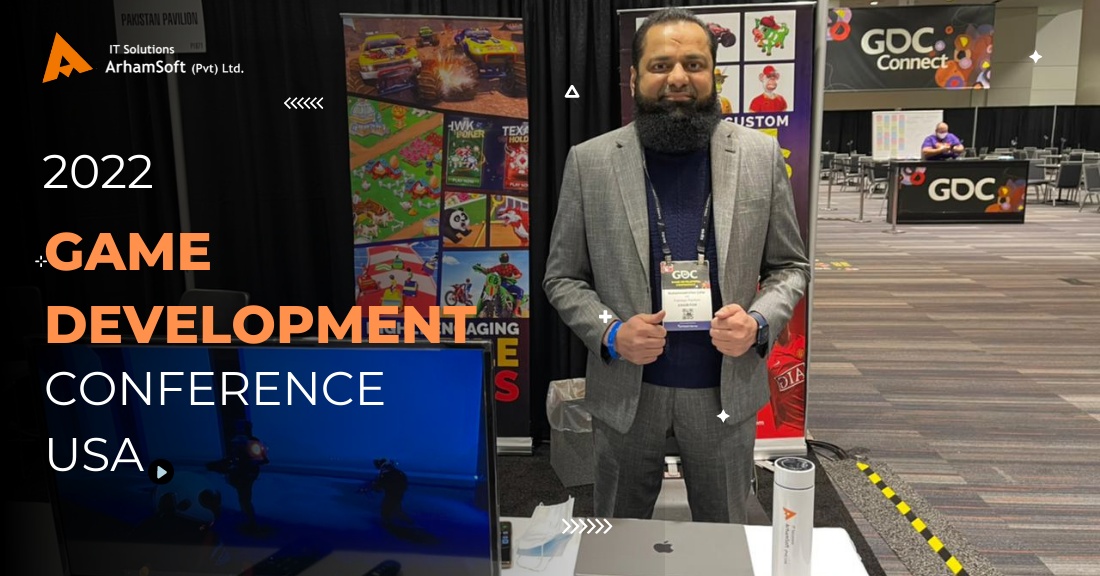
The next March, he represented ArhamSoft at the Pakistan Pavilion at the Game Developers Conference. The event ran from March 21 to 25, 2022. In his account afterward, he described discussions with visitors, clients and prospective customers about game technology and business ideas. The company’s work included game development alongside web, mobile and desktop applications.
The GDC photograph places him amid the equipment of that commercial life: a conference badge, displays of games and a booth. It is a less ceremonial image than an award presentation, and for that reason a useful companion to one. There is work to be introduced. Someone has to stand beside it and talk.
The people already in the market
Zafar’s comments on Facebook Marketplace reveal another aspect of his business thinking. Asked about the platform’s arrival in Pakistan, he recognized its potential to change local commerce. He pointed to the convenience of bringing user needs into one place, alongside the capabilities of Facebook’s algorithms and artificial intelligence.
He was more cautious about the suggestion that intermediaries would disappear. Middlemen, he argued, were deeply established in the local business model. Their role was more likely to develop than simply vanish. Digital tools would enter a market that already had people, relationships and ways of doing business.
That is an observant distinction for a software entrepreneur to make. A new interface can change how a transaction begins without settling every question about who makes it happen. Zafar’s view allowed room for adaptation. It treated the existing participants as people who might find a place in the changing market, rather than as scenery awaiting removal.
A trophy with a training agenda
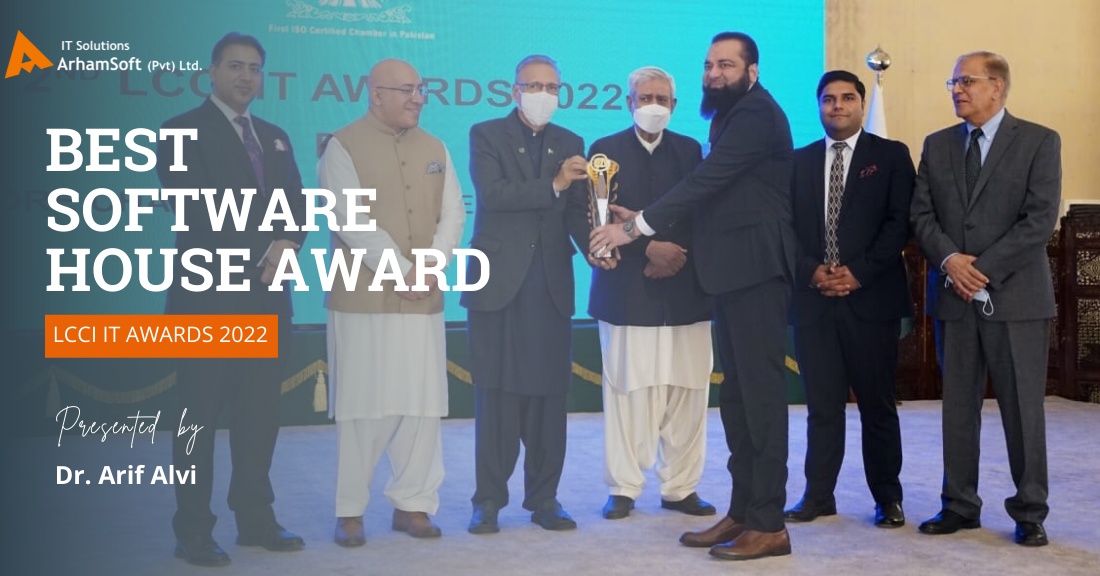
On March 8, 2022, Zafar accepted a Best LCCI Software House Award for ArhamSoft from Pakistan’s president, Arif Alvi. The company was among several recipients in that category at the Lahore Chamber of Commerce and Industry’s second IT awards. The wider ceremony recognized 26 companies.
His response connected the award to a specific set of activities: increasing IT exports, bringing graduates into the industry through internships and training programs, and encouraging women’s involvement in IT. He described the occasion as meaningful for the people associated with ArhamSoft. The language of company recognition opened onto questions of participation and employment.
Placed beside Mathlete and the university conferences, that response gives his ambitions a consistent direction. Software exports required capable teams. Graduates needed opportunities to become part of them. Students needed preparation before either was possible. Each activity addressed a different point along that path.
The chance a colleague remembered
Another assessment came from Bassam Razzaq, writing a farewell to ArhamSoft. Alongside thanks to his team and colleagues, Razzaq singled out Zafar for seeing potential in him and offering a chance to enter the industry. It was a personal recollection of something that company histories tend to count only as hiring.
The detail matters because it puts a person inside the larger ambitions. Graduate programs and industry connections eventually become somebody’s first assignment, first team and first professional teacher. Razzaq remembered the people who helped him grow. Zafar appeared in that account as someone who had opened a door.
ArhamSoft announced Zafar’s death on November 24, 2022. Today, the company names Muhammad Adil Irfan as CEO and explicitly connects its direction with the founder’s legacy. The work continues under another leader.
For Zafar’s own story, the math quiz remains a revealing place to finish. He helped make an invitation to students that was easy to understand and offered something to do next. Practice a question. Enter a contest. See how you get on. Across a career of teaching, engineering and company building, he kept making room for people to take that next step.