The reviews were terrible. Arbisoft had four weeks to build a BlackBerry version of KAYAK’s iPhone app. Yasser Bashir’s team delivered a test build, then discovered that it had reached the public. Customers were unimpressed. Bashir feared the contract was finished. KAYAK co-founder Paul English had a different response: use the feedback and improve it. Within three months, the app had become BlackBerry’s number-one travel app. A trial assignment had turned into an education in how a client could behave when something went wrong.
There is something revealing about a founder remembering a bad release. Corporate histories tend to arrive freshly ironed. Bashir’s story has a crease in it, and the crease helps explain the rest: the work continues after the first answer proves inadequate.
01 / BEFORE THE TITLEThe engineer came first
At ten, Bashir and his brother received a Commodore 64 from their father. Later came computer science at the Lahore University of Management Sciences, where he belonged to the inaugural undergraduate computer-science cohort. The university identifies him as a 1997 graduate. Stanford followed, with a master’s degree. The route gave him experience of both Pakistani and American technical education before Arbisoft existed.
His early career included WorldWerx, followed by engineering leadership and a venture called AlgoTrek. By 2007, he was co-founding Arbisoft with colleagues including Umair Shah. Today, Bashir remains CEO and Shah is chief people officer. The partnership has lasted through changes in devices, programming tools and the economics of software.
Software careers have a peculiar promotion ladder. Becoming responsible for more engineers can mean spending less time doing engineering. Bashir’s public work suggests a continuing reluctance to disappear entirely into that arrangement. He still experiments, writes about technical choices and makes his own diagrams. The executive title seems to have acquired an engineer who keeps bringing homework.
02 / THE COMPANY AS A SYSTEMWhat happens when the boss lets go?
Arbisoft’s growth makes the question practical. The company now describes a workforce of more than 750 specialists. Bashir’s own account records a historical high above 1,000 people. Those figures describe different things: today’s published team size and the high-water mark of a longer journey. Neither turns a crowded organization into an easy one to run.
His stated values are trust, effort, excellence, creating value and collaboration. They are ordinary enough words to fit on almost any office wall. The interesting question is what an organization does with them when schedules tighten or a customer becomes anxious. A principle earns its keep when using it costs something.
Bashir’s reading gives a clue to the company he wants. His selection of books that changed his thinking includes Frédéric Laloux’s Reinventing Organizations, with its interest in self-management. It also includes Donella Meadows’s Thinking in Systems. Together, they suggest an interest in the connections between people, incentives and decisions, rather than a belief that every answer should travel through the chief executive’s desk.
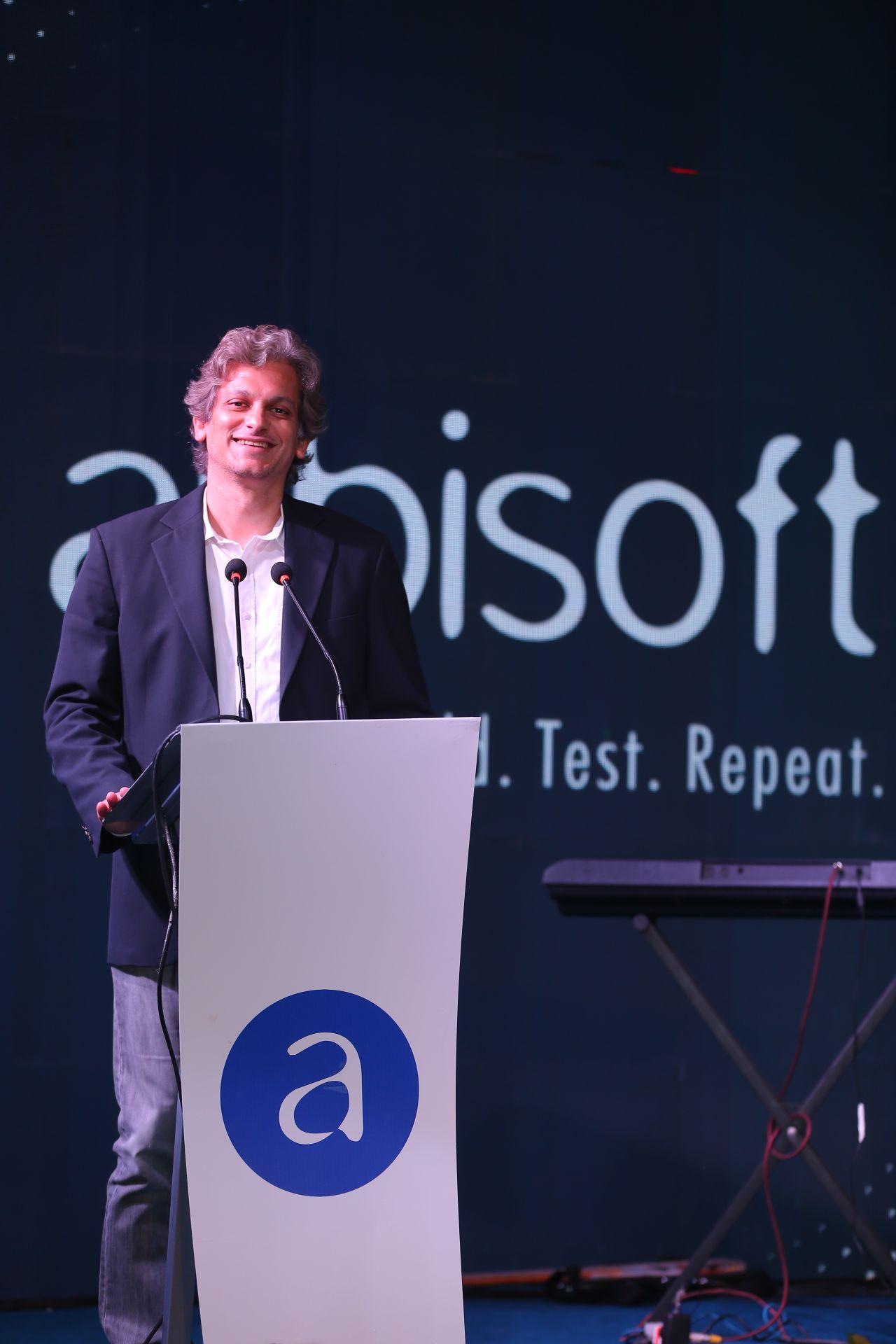
03 / A READING LIST WITH A PURPOSEThe shelf behind the software
The same reading list wanders beyond organizational design. There is Hamilton Helmer on business strategy, Robert Cialdini on persuasion, and Teresa Amabile and Steven Kramer on progress at work. William Thorndike’s The Outsiders adds the subject of capital allocation. Bashir presents these as books that affected how he thinks about work, giving the shelf a purpose beyond decoration.
It is an instructive mixture. Technical competence does not settle how to persuade a customer, sustain a team’s momentum or decide where to invest. Running a software company brings all of those questions into the same room. The computer may execute an instruction faithfully; the humans involved generally reserve the right to ask why.
His personal introduction is lighter. He calls himself a “Software engineer, accidental CEO/founder, father of two, sports enthusiast.” The ordering is his. Engineering gets first billing; the corner office receives an adjective that takes a little air out of it.
04 / BUILDING FOR LEARNINGThe machinery behind the classroom
Education has become a substantial part of Arbisoft’s work. Its Edly business supports learning platforms built on Open edX. In April 2023, Edly announced its acquisition of Tutor, the Docker-based distribution used to deploy Open edX. Tutor’s creator, Régis Behmo, joined Edly as vice president of engineering, preserving a connection between the tool and the person who built it.
This is the sort of development that rarely makes a dramatic photograph. Deployment software does not pose well. Yet the ability to install, maintain and upgrade a learning platform affects whether an institution can use it with confidence. Open code still needs people who understand how to keep it working.
The acquisition puts Bashir’s interest in education alongside a concrete operational commitment. A lesson on a screen depends on less visible work underneath: releases, infrastructure, configuration and maintenance. There is a useful modesty in attending to that machinery. The learner need never know it exists.

05 / A NEW SET OF TOOLSDraw the problem before predicting the future
AI has given him another subject to take apart. In 2025, he laid out fourteen layers of the AI value chain, ranging from computing infrastructure and data to deployment, applications and feedback. His advice was to choose a position according to the talent, resources and advantages available. A company buying into AI has several decisions to make before it has a strategy.
The framework has the temperament of an engineer sorting a workbench. Different jobs require different equipment. Building a model, evaluating its behavior and integrating it into an existing workflow have distinct demands. Calling all three “AI” does little to help someone decide where to spend the afternoon, much less the annual budget.
He has also compared AI models through the task of visualizing the stable marriage algorithm, and published a flowchart addressing the question of whether AI threatens someone’s job. The subjects vary, but the approach recurs: give an abstract argument a shape that someone else can inspect.
06 / SKILL MEETS APPETITEFour boxes, one uncomfortable question
In a 2026 post, Bashir divided software engineers along two axes: skill and enthusiasm for creating software. He argued that motivated learners can use AI to close gaps, while capable engineers without much appetite for the work may struggle to keep pace. He reserved his strongest expectations for people who combine technical discipline with enthusiasm.
This is his interpretation of a changing workplace, rather than a measured law of employment. Its appeal lies in the question it asks of an experienced engineer: what happens when familiarity stops being enough? It also leaves room for the beginner who has energy to spare and much still to learn.
07 / THE NEXT EXPORTWho gets to keep the keys?
By July 2026, Bashir was making a wider argument: Pakistan could develop an export business helping organizations move to systems they can operate and control themselves. Open-source software and open-weight AI, in his view, create an opportunity to build that capability. The proposal extends beyond producing software for a foreign customer to helping customers reduce dependence on proprietary systems.
He also sets out the inconvenient requirements. Locally operated technology needs dependable electricity, equipment and people able to run it. Migration involves decisions about what to move, whether it works afterward and who takes responsibility. His suggested starting points include document management and internal dashboards. Digital independence, in this telling, begins with some deliberately ordinary projects.
The ambition is substantial, but the test is recognizable: build something useful, check the result and learn enough to do it again. He is proposing a direction for the industry, with engineering work still waiting underneath the argument.
08 / BACK TO THE BEGINNERSA graduate returns with more questions
Bashir also serves as president of LUMS’s Computer Science Alumni Network. In January 2025, he returned as the opening guest of the second season of the university’s ALUMS Chat. The role places him between former classmates, current students and faculty, a useful position for someone whose public talks repeatedly circle learning and the future of engineering.
His talks range from choosing a startup’s chief technology officer to lifelong learning and AI’s effect on software development. There is no single audience for those subjects. A student deciding what to study and a founder deciding whom to hire encounter the same technological changes from opposite ends of a working relationship.
“I was taking the sales calls back then, I still do.”Yasser Bashir · 2023
Perhaps that continuing involvement is the most useful detail. On his personal website, visitors can now question a digital version of Bashir. Elsewhere, the original is still explaining diagrams, discussing engineering and meeting the human obligations of a company. For someone who introduces himself as an accidental CEO, he has stayed with the assignment for quite a while. The next answer, as ever, will need testing.
Keep following the questions
- Yasser’s website and digital clone ↗
- Yasser Bashir on LinkedIn ↗
- Yasser Bashir on X ↗
- Yasser Bashir on GitHub ↗
- Meet Arbisoft’s leadership ↗
- Watch: From LUMS to Leading Innovation in Tech ↗
- Watch: How AI Will Change the IT Services Industry ↗
- Read: Pakistan’s next tech export could be digital independence ↗
- Read: The 2023 conversation about Arbisoft’s early years ↗
- Browse the books that changed his thinking ↗