At 12:35, the programme gave Usman Akbar five minutes to welcome the room. Five minutes later, the conversation would turn to AI agents. The December 2025 gathering at Lahore’s National Incubation Center had a guest speaker, Langbase CEO Ahmad Awais, and an agenda full of questions about building software that could actually work outside a demonstration. Akbar’s place was at the beginning: bring people together, make the introduction, let the discussion start.
It is a useful place to meet him. Akbar founded PureLogics in 2006 and remains its chief executive. He also chairs P@SHA’s Startups & Entrepreneurship Committee. Those jobs put him on two sides of the same conversation: how to build a technology business, and how to make the route more accessible to somebody starting one.
The welcome address rarely gets the souvenir treatment. Nobody frames the agenda and says, “I was there for the opening remarks.” Yet someone has to assemble the room. After two decades running a software company, Akbar’s public working life increasingly includes that quiet piece of construction.
A team lead takes the next job
Before the chief executive title came engineering. Akbar attended IMS, Pak-AIMS, from 2001 to 2005. His career included a software engineering team lead role at Confiz, dated November 2005 to June 2006. The next month marks the start of his founder and CEO role at PureLogics.
That sequence puts the founding close to the work itself. He moved from a technical role with responsibility for a team into responsibility for a company. The difference sounds straightforward on a business card. In practice, it expands the list of things that can land on your desk. Writing software becomes one part of an undertaking that also requires finding customers, organising people and keeping promises.
PureLogics dates its beginning to 2006. Its business is custom software development and consulting, with services spanning web and mobile applications, cloud work and AI. It assembles teams to build technology for other organisations. The company’s description of its approach emphasises dedicated people, documented code and delivery on schedule. A schedule is an unromantic object. Customers tend to develop strong feelings about it.
His public biography describes a team of more than 400 operating across Pakistan, the United States and the United Arab Emirates, serving clients in more than 33 countries. These are reported measures of the business he leads. They also suggest how far the management task has travelled from a single engineering team.
Akbar’s own description is spare: “I build technology businesses that scale globally.” The verb does most of the work. Building is a continuing activity; it leaves room for another version, another customer, another problem that has declined to read the strategy document.
The classroom comes to the office
One photograph offers a smaller view of that career. Akbar stands with visitors from the University of Central Punjab at PureLogics, holding a presentation plaque. There are checked shirts, a reception desk and the company name on the wall. The meeting concerned future employment and bringing technical teaching closer to what industry requires.
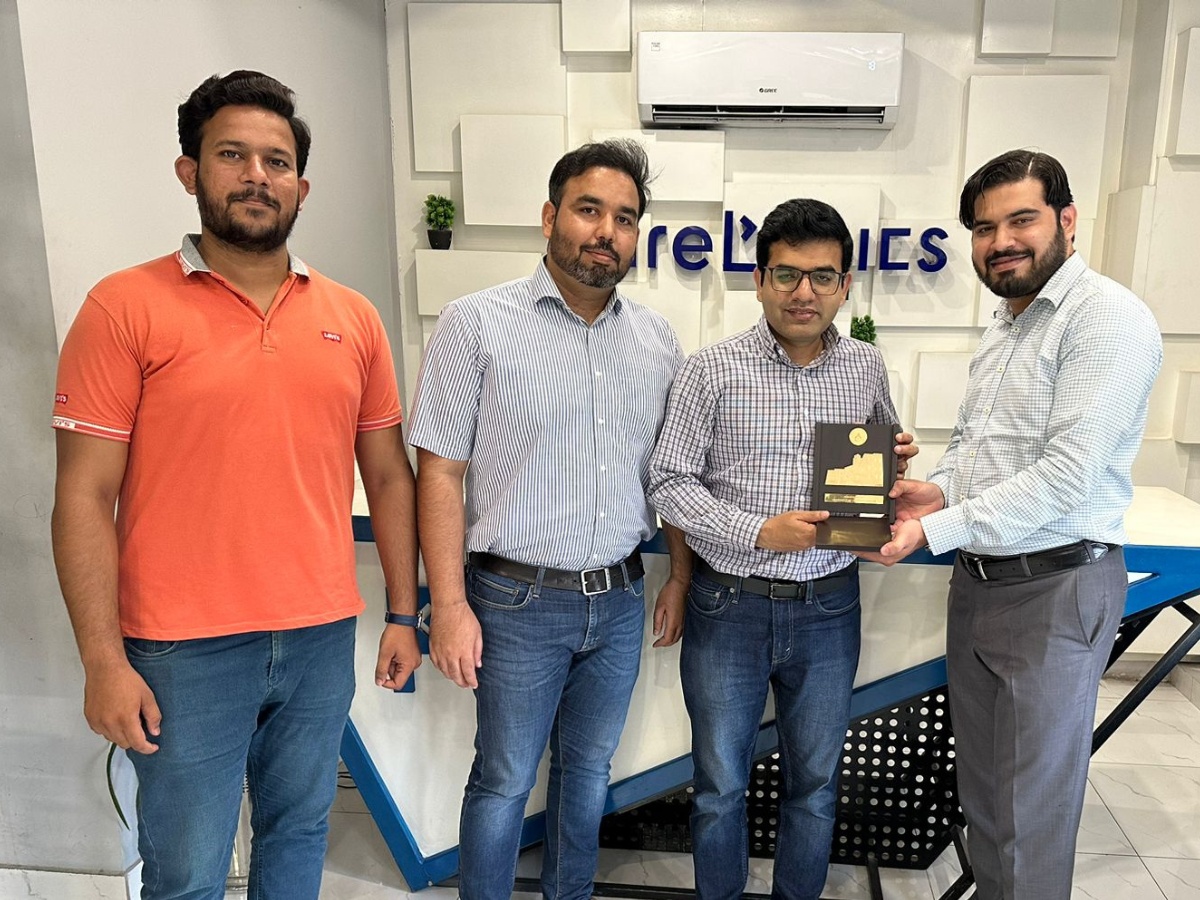
The university’s Faculty of Information Technology arranged the visit to strengthen its relationship with industry. It thanked Akbar for hosting and for the discussion. There is no need to dress the encounter up as a turning point. Its interest lies in the ordinary work of getting teachers and employers into a conversation about what students will face.
For a founder whose own route passed through technical education and engineering, the subject belongs close to home. A curriculum changes on one timetable; the tools used by an employer can change on another. Somewhere between the two sits a graduate, expected to arrive prepared. Meetings like this give the people on either side a chance to compare their clocks.
Skills also appear in Akbar’s wider industry agenda. In his 2024 P@SHA election manifesto, preparing the workforce for emerging technologies was one of five priorities. It sits alongside policy reform, cooperation between institutions, trust and access to shared knowledge. The concern extends beyond filling vacancies at his own company.
PureLogics has also described a Python and AI bootcamp delivered with training partner TopSkills. In a public graduation update, the company reported that Akbar presented certificates after a three-month programme involving projects and practical exposure. A certificate marks a finish line for a course. The work it is intended to prepare somebody for begins afterwards.
When the connection becomes the problem
In September 2024, Akbar shared an UrduPoint interview about PureLogics and Pakistan’s internet problems. The topic brings an international software business down to its wiring. People may be separated by countries, but a meeting still needs a connection. Work still has to move between the people doing it and the people waiting for it.
It is an instructive subject for a software founder to take into public discussion. A team can improve its code, organise its projects and train its members. The conditions around that team also matter. Connectivity belongs to the everyday machinery of cross-border work, even when it receives less attention than the product being built.
His election manifesto addressed that surrounding machinery. It proposed a friendlier operating environment through policy changes, financial incentives and simpler regulation. It also called for closer cooperation among technology companies, universities and government, together with greater openness and accountability within the industry.
“Centralized Knowledge and Communication”
One of Akbar’s five priorities in his 2024 P@SHA manifesto
The final priority concerned giving industry members a shared place to find resources and insight. Read together, the proposals show a founder interested in the conditions that let other businesses function. They are proposals, with all the work that word implies. Putting them on paper makes the intended direction visible.
A directory becomes a doorway
By 2026, that interest had acquired a particularly concrete form. The PASHA Startup Hub launch announcement identified Akbar as chair of the committee behind the initiative. PureLogics joined Bits Collision and BearPlex as development partners. The launch took place on July 24 at the HBL P@SHA CXO Lahore Meetup.
A startup directory can sound like a rather administrative ambition. Its usefulness depends on the problem it solves. A founder seeking an investor or partner has to be discoverable; a potential collaborator needs some way to find the relevant company. Before a useful conversation happens, people need to know whom to call.
The committee’s remit includes improving discoverability, supporting connections and widening access to opportunities. It brings together people from companies, investment, industry organisations and other institutions. Akbar occupies the chair, but the project is explicitly shared. The three development partners make that cooperation visible in the product itself.
He has taken the conversation beyond a Lahore meeting room. In August 2026, Akbar described spending two days with the PITF community at Tech Trip 2.0 in Nathia Gali. He joined the closing ceremony as chief guest and introduced the Startup Hub to a gathering he described as including more than 120 entrepreneurs and IT professionals.
His stated hope was that the connections would develop into continuing relationships and collaboration. It is a modest enough wish to be useful. An event can put names in a phone; what happens after people return to work determines whether those names become part of a business.
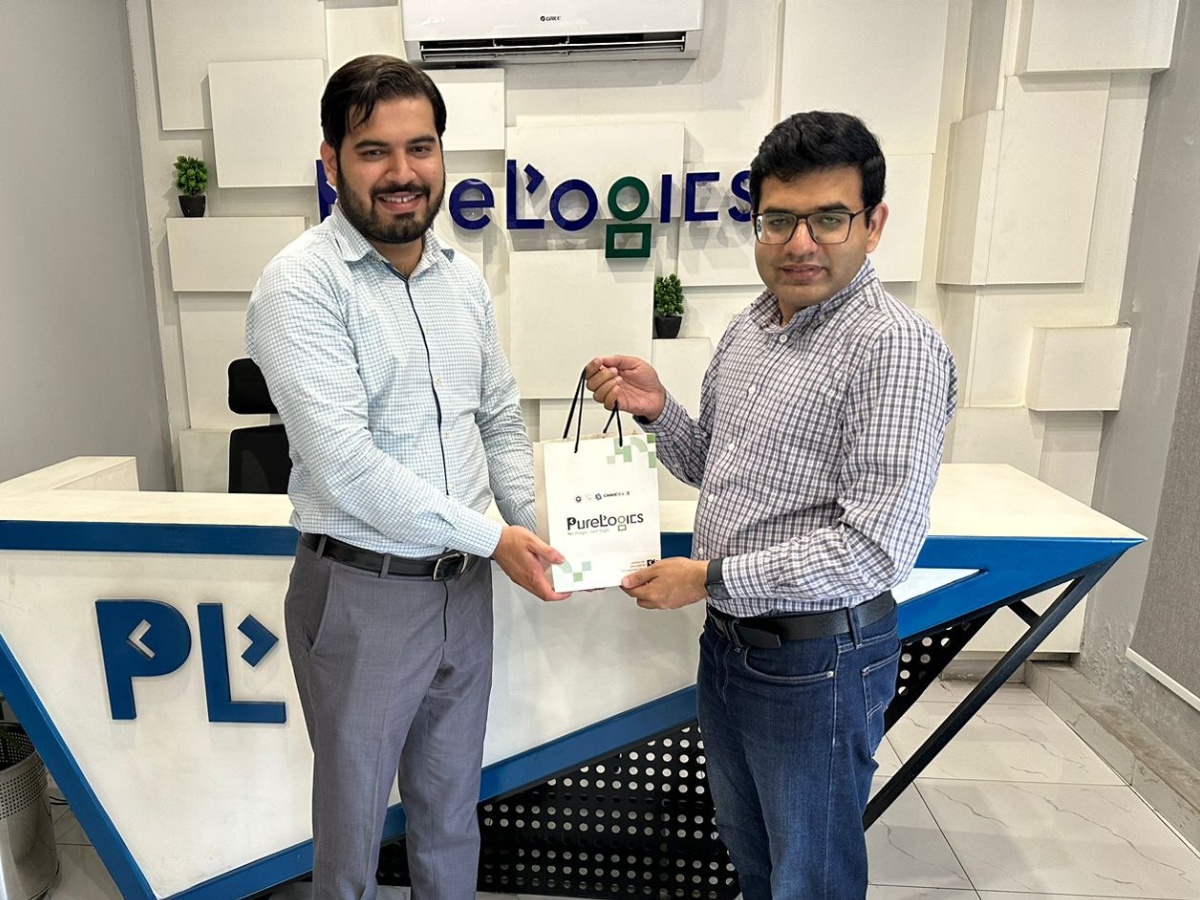
Another account describes Akbar hosting more than 20 delegates from Gilgit-Baltistan at PureLogics. He shared the company’s journey, including its challenges and lessons. The encounter places a long-running business in conversation with people building in another region. Experience becomes more useful when somebody can ask a follow-up question.
Still building, with more people in the room
Back inside PureLogics, the conversation continues to move with the technology. At the start of 2026, Akbar described reflecting on AI innovation and goals with Muhammad Atif and the team. “Proud of this team and the grind we put in every day,” he wrote. The appreciation was directed at the people doing the work.
That fits the public pattern: the engineering role, the company, the university visitors, the committee and the gatherings. The subjects vary, but they keep returning to people who need to learn something, build something or meet somebody. His responsibilities have expanded without removing him from the company he founded.
Twenty years is long enough for a founder’s title to become familiar. It is also long enough for the work behind it to change several times. Akbar now has a company to run and an industry committee to help steer. Each produces its own appointments, expectations and unfinished business.
The five-minute welcome in Lahore captures the arrangement neatly. A founder with years of software delivery behind him stands at the front of a room so that a new technical conversation can begin. Soon enough, the agenda moves on. For the people who have just met, that may be the useful part.
Follow the conversations
Akbar’s public profiles, company and appearances.