Before DotZero opened in Karachi, three companies arranged for their leases to expire together. When the new space was ready, 40 people moved in. It is an oddly domestic detail for a technology story: the founding breakthrough involved a calendar. But it explains a great deal about the business that followed. A founder can have an idea, investors and enthusiasm, and still lose weeks arranging somewhere to sit.
- It began by sharing the practical burdens of starting a company.
- Today, DotZero and NextGENi build products and dedicated engineering teams.
- Clients can keep a team offshore or arrange to bring it in-house.
Three leases, one opening day
Farzal Dojki’s interest in coworking sharpened during an Eisenhower fellowship studying American entrepreneurial ecosystems. He saw startups gathering around shared resources rather than each taking on an office alone. Back in Pakistan, he turned that observation into a business proposal, then enlisted Imran Moinuddin, Atif Azim and Yusuf Jan. DotZero began operating in 2013.
The local precedent offered little comfort. Suite401, another Karachi coworking venture, had opened in 2008 and closed in 2010. Its founder later described an idea that had arrived too early. Dojki also faced doubts about whether strangers would trust one another enough to share space. The founders’ opening commitments gave the experiment something sturdier than general approval: actual occupants.
That distinction is easy to copy badly. An encouraging conversation is not a customer. In DotZero’s case, existing businesses reorganised a real obligation to join the new one. Synchronising leases turned goodwill into a moving date. Anyone planning shared infrastructure could borrow the question: what will the first customers change in their lives before you spend the money?
An office with an admissions policy
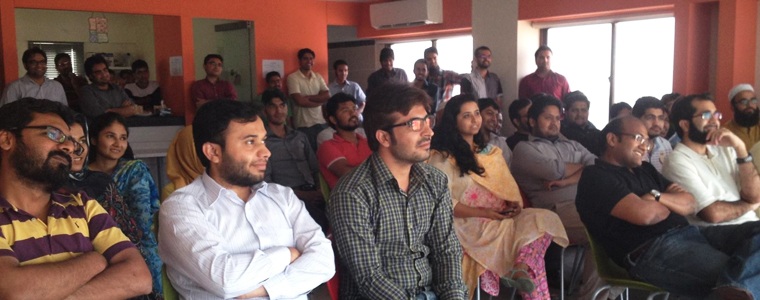
DotZero’s early distinction was its choice of company. Aurora described a technology-focused audience and founders whose industry connections made the space useful beyond its furniture. A selected community could help a young business find advice, collaborators and investors. An empty desk became more valuable when the neighbouring desk belonged to somebody who understood the problem.
By January 2015, New Worker described an operation spanning coworking and incubation, with 13 resident startups. Growing teams were encouraged to graduate at about 20 employees; six companies had already done so. The policy emerged through experimentation. A workspace that helped everybody expand indefinitely would eventually leave no room for anybody new.
The economics were deliberately modest. Historical reporting described a self-funded, nonprofit operation. A 2014 TechJuice guide listed membership fees of 1,200 Pakistani rupees for students, 3,000 for individuals, 30,000 for SMEs and 120,000 for large corporates. Those were different packages, not equivalent seats. The attraction was sharing an office’s burdens while building a business of one’s own.
“I wanted to eliminate that starting hurdle for potential companies.”Farzal Dojki, describing the original workspace
The next bottleneck was the team
A founder who has solved the office problem soon meets another: who will build the product? DotZero’s present-day offer lives here. Its LinkedIn profile describes product development, staff augmentation and a build, run and handover model. Clients named there include Careem, Retailo, Zofeur, STC and Allianz’s NextCare. The business now addresses companies that need engineering capacity, rather than merely somewhere to put it.
NextGENi supplies an important part of that story. In a 2022 interview, Dojki described more than 100 projects, around 50 startup engagements and more than 20 startups reaching Series A or beyond. These were his reported results for the engineering business. They make sense as a record of repeated exposure to early company problems, rather than a promise about the next client.
He identified a particular Gulf difficulty: recruiting a co-founding CTO before a startup has the stability a senior expatriate hire may want. His answer was an interim technical leadership role. It buys a founder time to develop the company before asking someone to commit a career to it.
NextGENi says this was the team size building and maintaining Carzaty’s core platform before its acquisition by Kavak. The lesson is about concentrated responsibility; team size alone cannot explain a company’s outcome.
Build it. Run it. Hand it over.
Today the companies describe an integrated operation: DotZero manages the client-facing product work; NextGENi powers engineering in Karachi. The offer includes MVPs, embedded engineers and complete teams. Engagements run monthly, with one month’s notice to terminate roles. Clients retain intellectual property, and an optional acquihire clause allows a later move in-house.
and assemble
and deliver
in-house
This makes the comparison with ordinary recruitment more interesting. A recruiter helps fill a position. Here, the client can start with people supported by an existing engineering organisation. A founder still needs priorities, decisions and a way to judge delivery. The useful purchase is capacity with continuity, not permission to stop thinking about the product.
Capital enters the picture too. DotZero Ventures developed a seed and angel investment role; ecosystem research records investments including Popinjay, PerkUp and Sukoon, the latter alongside CresVentures. The current company also describes discounted development for selected startups in exchange for SAFE notes. Cash fees and potential future equity therefore sit alongside each other.
The room still matters
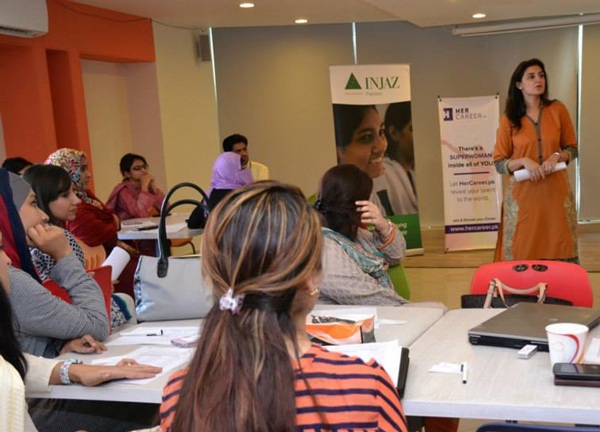
The engineering arm’s recruitment material advertises health insurance for parents and fuel cards for commuting. Those details are more revealing than a slogan about culture. A service based on teams that stay together has a reason to care about the mundane circumstances that let people keep coming to work.
DotZero fits between a conventional software supplier and a company’s own engineering department. A founder needs enough clarity to direct the work and enough willingness to collaborate across locations. Businesses requiring every engineer on their own premises from the outset would need a different arrangement. Transfer is an option to negotiate, not an automatic ending.
The original lease manoeuvre remains the best clue to DotZero’s thinking. Reduce the organising burden before the customer is ready to carry it alone. Then let that customer grow. Whether the scarce resource is a room or a functioning team, the practical question stays remarkably similar: what must already be in place so the real work can begin?