There is a peculiar ritual in the consulting business. The people with gray hair and excellent anecdotes conduct the pitch. They sit close, finish your sentences, and display an almost supernatural grasp of your problem. Then the contract is signed. The senior people become calendar invitations. The work descends through the building.
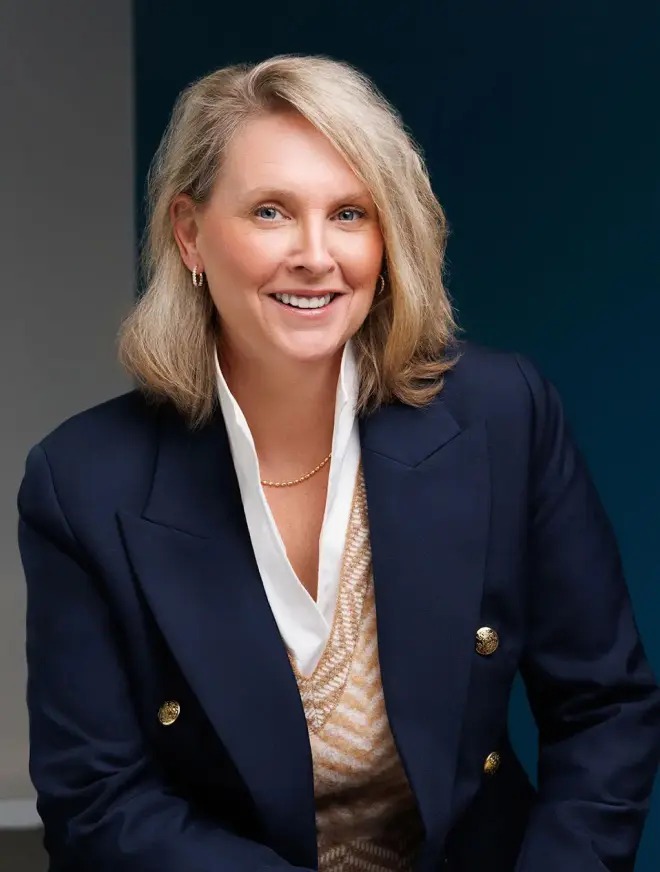
Moxie Strategies began with a refusal to perform that ritual. Founder Maggie Moran had already helped build Kivvit, the public affairs firm now folded into Avoq. When she launched Moxie in Asbury Park on April 22, 2024, the new company arrived with a sharp premise: public affairs had become too siloed, too reactive and too reliant on junior handoffs. A campaign would be researched over here, written over there, placed somewhere else and measured when it was too late to rescue.
Moxie put the senior people back on the account. It also put data scientists, creative directors and public affairs operators into the same loop. This sounds almost quaint. It is also surprisingly radical in a business that often bills integration while practicing relay racing.
The product is a shorter distance
Moxie sells strategy and public affairs, data and analytics, and advertising. The menu ranges from coalition building, ballot campaigns and crisis management to public-opinion research, media buying, video, web design and social media. But a list of services misses the point. The company is selling a shorter distance between diagnosis and action.
Its clients tend to live where a person can be four things at once: customer, voter, neighbor and regulatory stakeholder. Healthcare organizations worry about patients and policy. Energy companies contend with ratepayers, elected officials and the physics of the grid. Labor groups need members, employers and the public to hear different parts of the same argument. Moxie's named clients include FirstEnergy, Horizon Blue Cross Blue Shield of New Jersey, Capital Health, Audible, the Robert Wood Johnson Foundation, The Nature Conservancy and several building-trades organizations.
The firm says it completed more than 100 engagements across 20 states in its first two years, reaching more than 40 million Americans and sending bespoke content to 90,000 key stakeholders. By the end of 2025, the team had grown to 22 and fee income was approaching $8 million. Those figures make Moxie a small agency with the footprint of a much larger one. They also create the central tension: can a company scale a promise built on intimacy?
First, map the room
The most revealing thing Moxie makes is not an advertisement. It is a map. Its Moxie 360° Diagnostic begins with interviews about an organization's culture, history and constraints. It then examines competitors, stakeholders and audiences; identifies people who shape an issue; and names the risks and opportunities hiding in the landscape. The resulting Strategic Manifold is the roadmap. Creative work comes after the map, not before it.
This loop explains the company's difference better than its category does. Traditional research can become a ceremonial opening act. Moxie keeps it alive through implementation, using campaign performance to adjust the campaign. The feedback is valuable only while there is still time to buy different media, rewrite a message or stop saying the sentence everybody inside the organization loves and nobody outside it understands.
Aimi by Moxie pushes that logic into qualitative research. The product uses AI-moderated, one-to-one interviews instead of a conventional focus-group room. Moxie says it can surface audience language, emotional nuance and useful findings in as little as 10 days. In 2026, Aimi won an IN2 SABRE for best artificial-intelligence product or service. The sensible claim is not that software has acquired judgment. It is that adaptive interviews can be run quickly and at scale, leaving the humans more time to decide what the answers mean.
The receipt tells a better story than the slogan
What does this sort of work cost? Moxie publishes no rate card, and bespoke campaigns resist tidy menus. One public record offers a useful glimpse. During a 2024 reporting period, New York lobbying filings for the Alliance to Protect Home Care recorded two payments to Moxie: $168,000 for media relations and strategy, and $490,143 for a multi-platform media buy.
The distinction matters. Most of the disclosed total bought distribution, not advice. Moxie's job included research, message development, social strategy, toolkits, grassroots mobilization and advertising meant to influence a politically charged redesign of New York's consumer-directed home-care program. The campaign's first pressure point was not a weak logo. It was a policy change that advocates believed could disrupt care, jobs and trusted relationships. The communications work was paired with a legal strategy because neither discipline was likely to carry the argument alone.
That is also the closest thing to an answer about what failed first. Moxie was not founded around a famous campaign collapse. The “failure” it attacks is structural: the wall between research and creative, the disappearance of senior attention after the sale, and the habit of calling public affairs only after a threat becomes a fire. Moran's change of mind was less a pivot than a conclusion drawn from years inside the industry: build the integrated model at the start, because grafting it onto an established hierarchy later is much harder.
Ownership as operating software
Moxie's ownership is majority women, Black and LGBTQIA+ professionals. The firm describes profit sharing, transparent governance and flexible schedules as features of an “inclusive capitalist” model. These choices are not merely biography. Public affairs depends on noticing which constituency is absent, which word carries a private insult, which messenger will be trusted and which technically correct idea will die in public. A broader set of owners can improve the odds that someone spots the trap.
The company has also created a Leadership Academy, a structured development program unusual for a shop this young. That is practical insurance. If senior access is the promise, the firm needs to manufacture more senior judgment without manufacturing layers. Training, profit sharing and transparency are how Moxie tries to turn individual experience into an institution.
What another firm can copy
The copyable part is not Moxie's color palette or its fondness for weather metaphors. Start with the handoff audit. Count how many people touch a problem between the person who diagnoses it and the person who ships the answer. Put research, creative and distribution around the same table. Give the team a stake in the outcome. Measure during the campaign, when embarrassment can still be converted into improvement.
The less copyable part is experience. Moxie launched with leaders who had already worked in governor's offices, federal agencies, major health systems, political campaigns and established firms. A flat org chart filled with novices is not senior service; it is simply flat. AI has the same condition. Adaptive interviews help when the question is well framed, the sample is appropriate and experienced researchers interpret the patterns. They do not rescue vague objectives, biased recruitment or a client unwilling to hear an inconvenient answer.
It tends to fit when
The issue is regulated, politically visible, reputation-sensitive, multi-audience and moving too quickly for serial handoffs.
It strains when
The brief is commodity production, the budget cannot support senior time, the decision-maker wants validation rather than evidence, or the audience is too narrow for a full influence system.
Moxie is now old enough to have won Best New Agency in North America and young enough for the phrase to remain literal. Its early record includes the Alliance to Protect Home Care, Suffolk County's successful Proposition 2 water-quality campaign, a place on The PR Net 100 and recognition among leading public-affairs firms worldwide. Awards do not settle whether the model endures. Growth will.
The company has made itself an interesting test. Every new office, account and hire increases revenue while threatening the original promise of proximity. If Moxie can keep experienced people close to the work as the headcount climbs, the firm will have done more than build good campaigns. It will have shown that the oldest agency ritual was optional all along.