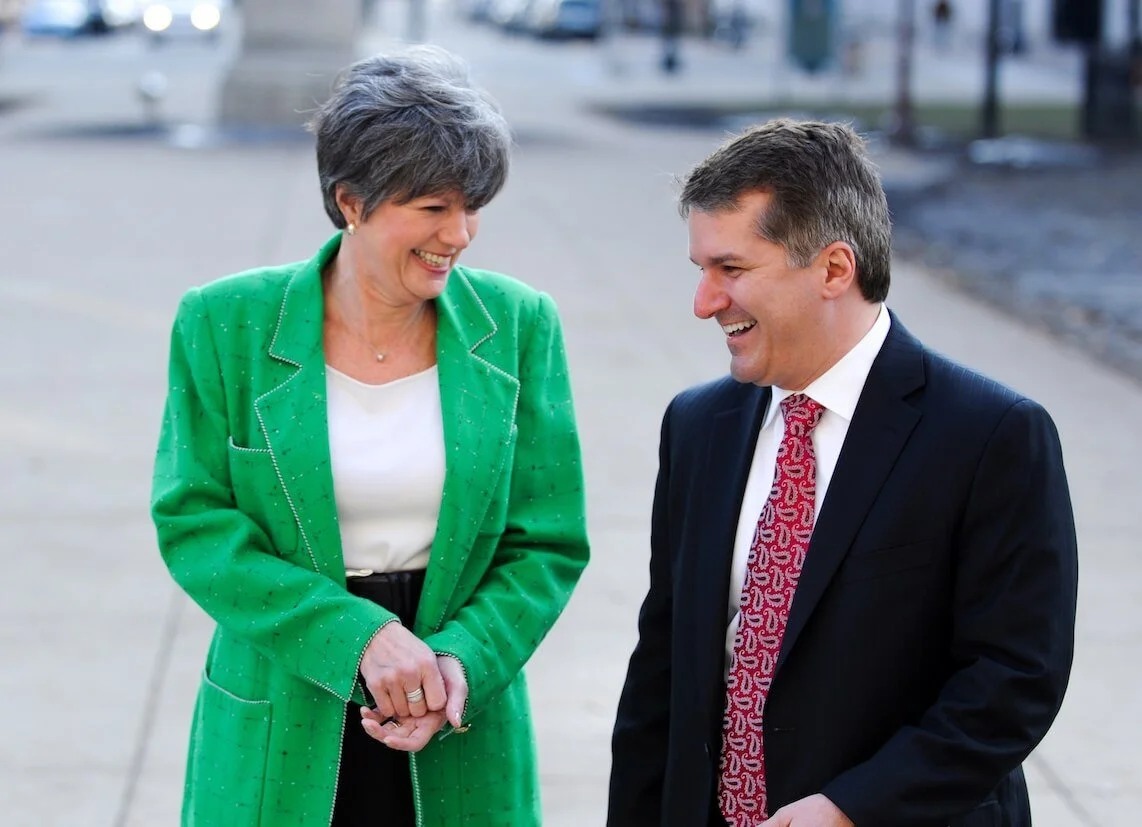
There is an old fantasy in political consulting that the sharpest person in the room is the one who never changes sides. Truscott Rossman began with a more practical insight: the sharpest room might contain two people who disagree. On January 11, 2011 - a date selected for the neatness of 1/11/11 - Republican communications strategist John Truscott and Democratic trailblazer Kelly Rossman-McKinney merged the firms they had spent years using to compete against one another.
This was not a kumbaya exercise. Truscott had served as communications director and press secretary to Republican Governor John Engler. Rossman-McKinney had worked for Democratic lawmakers and Governor James Blanchard before opening the Rossman Group in 1988. They had fought for business and occasionally sat on opposite sides of public issues. Then they made the conflict useful. Their new firm could listen to a proposal in one room and anticipate how it would sound in the room across the hall.
The founding bet
Disagreement became a quality-control system
Calling a firm bipartisan can be decoration. Here it described the manufacturing process. A message about a tax, a hospital, a transit authority, or a ballot proposal rarely has one audience. It may need to survive a newsroom, a board meeting, a neighborhood group, a regulator, and an elected official who would rather see it fail. Truscott Rossman's early advantage was not bland compromise. It was the chance to find the weak sentence before an opponent did.
“Don't just have a job, have a passion - it makes it so much easier to get up in the morning.”Kelly Rossman-McKinney
Rossman-McKinney retired from the company in 2018 and later became communications director for Michigan Attorney General Dana Nessel. She died in 2021 at 67. The public remembrances centered on her nerve, humor, ethics, and habit of opening doors for younger colleagues, especially women. Truscott still calls her his “work wife.” The firm's current culture language is more operational - project-management standards, the Entrepreneurial Operating System, quarterly priorities, the “right person, right seat” idea - but the older inheritance is visible: take the work seriously without becoming dreary about it.
The first thing that broke
The audience stopped gathering in one place
The original business was fluent in earned media: develop the message, know the reporter, make the case, manage the story. But the decline of local news was already underway when the firm launched. Social platforms multiplied, attention split, and credible-looking misinformation learned to travel without an editor. The old route from press release to public became a maze.
One message, more routes
That changed the firm. It added analysts, designers, digital targeting, social distribution, websites, newsletters, and video. In 2025 it unveiled Say More, an in-house content studio built for the pace and grammar of feeds. Chief Strategy Officer Ryan Gajewski described an earlier attempt to chase the standard “integrated” agency model, then deciding it was too rigid and slow. The shift was less philosophical than logistical: if a useful idea takes three weeks to become a video, the feed has already moved on.
The service menu now runs from crisis and executive counsel to coalition building, ballot initiatives, media coaching, digital campaigns, design, and production. A 2026 executive-consulting practice pushes further upstream, offering senior leaders a confidential call before a problem becomes a headline. The firm sells judgment and execution through custom engagements rather than a posted price list. That makes this a relationship business, not a checkout page.

Receipts, not adjectives
Three campaigns show what the firm actually sells
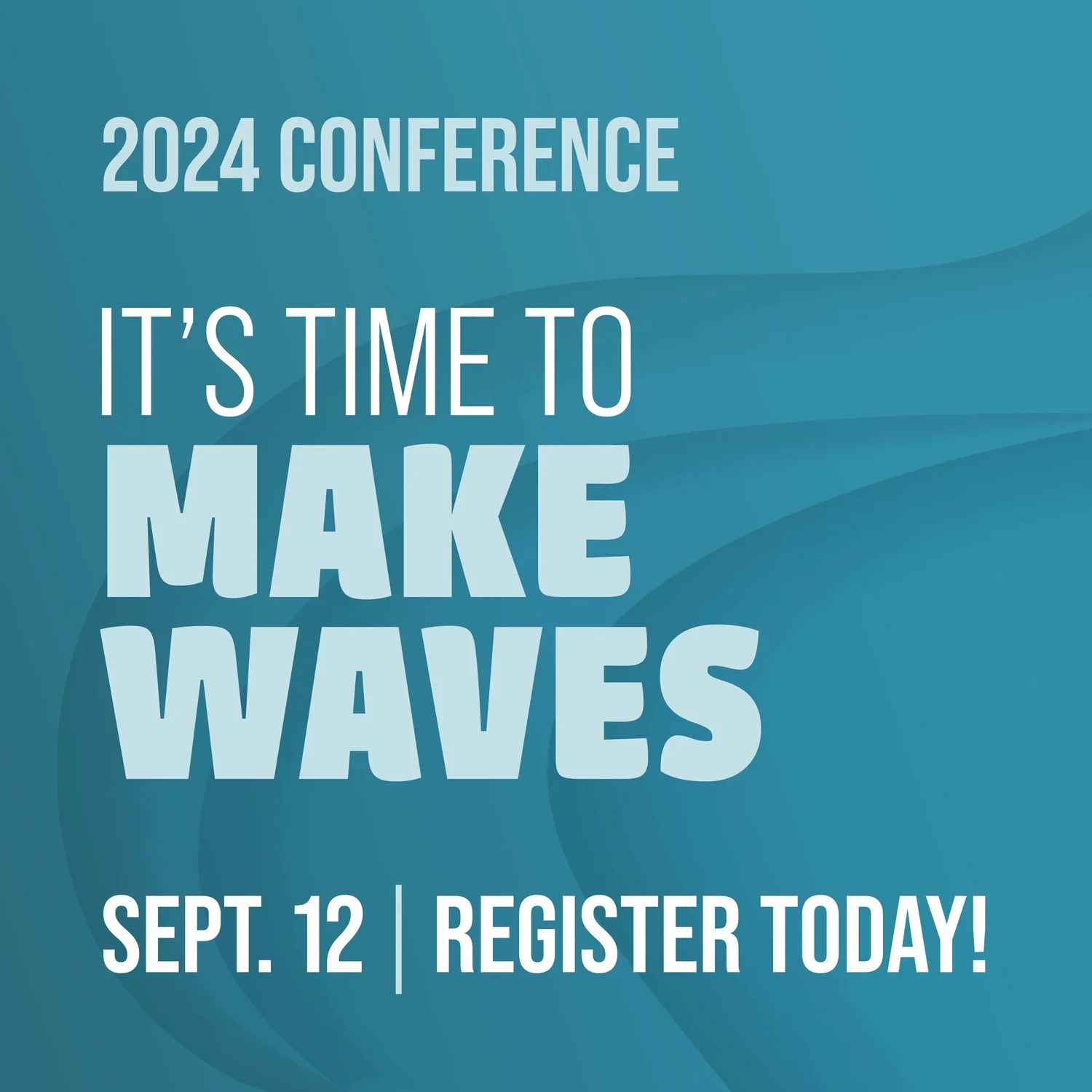
For the West Michigan Policy Forum, policy-forward talking points were not attracting enough people to its conference or email list. Truscott Rossman built Wavemakers as a separate campaign brand, modeled a look-alike audience from existing subscribers, targeted selected Michigan ZIP codes, retargeted people who showed interest, and added a dedicated email sequence. The campaign reported more than 5 million impressions, over 27,000 page views, and an 82% lift in subscribers.
The most instructive project may be smaller. A Livingston County special-education millage had previously survived by six votes. For the renewal, the firm made a toolkit of plain, legally sound explanations, positive social graphics, posters, and a distribution plan built around repeated public education. The renewal passed with 60% of the vote. The lesson is easy to miss: the work was not a more dramatic slogan. It was removing ambiguity around who the funding served and why it mattered.
Then there is GR& Riverfront, an attempt to turn Grand Rapids construction updates into a continuing civic story. The system is almost comically specific: four articles a month, more than 12 social posts, a monthly newsletter, short- and long-form video, biweekly planning meetings, website care, and community monitoring. The newsletter averages an open rate above 60%, according to the firm's case study. The point is repetition with texture. Infrastructure becomes more legible when residents repeatedly meet the people, tradeoffs, and places behind it.
Where it fits
Too political for an ad shop, too creative for a lobbying memo
Truscott Rossman sits in the overlap between a public-affairs consultancy, a PR agency, and a small content studio. Its customers include corporations, health systems, associations, nonprofits, public agencies, municipalities, and civic projects. The public roster ranges from Blue Cross Blue Shield, DTE, and Henry Ford Health to Kent County, the Grand Rapids Chamber, SMART, PhRMA, and Van Andel Institute. These are organizations with complicated constituencies, not simply products to launch.
The competitive field includes Michigan firms with their own political networks and integrated capabilities, plus national agencies that arrive with scale. Truscott Rossman's defensible asset is narrower: Michigan fluency across Detroit, Lansing, and Grand Rapids, combined with an ability to take a strategy from private counsel through public distribution. In the 2023 MIRS/EPIC-MRA survey, 33% of state Capitol insiders named it the most effective public-relations consulting firm. That is a perception measure, not a sales number, but in a trust business perception is inventory.
The useful theft
What another team can copy tomorrow
- 01Put a credible dissenter in the planning room. Agreement is pleasant; pretesting the objection is valuable.
- 02Translate policy into a human action. Wavemakers asked people to join something instead of admiring a position paper.
- 03Build a publishing rhythm, not a launch spike. Four articles and 12 social posts each month make attention cumulative.
- 04Separate the audience from the institution when necessary. A fresh campaign brand can give unfamiliar people an easier door.
- 05Measure movement. Subscribers, turnout, open rates, and repeat attention reveal more than a folder of clips.
There are conditions attached. Bipartisan positioning only works when both sides have real standing and the client can tolerate candid disagreement. A dense publishing cadence needs a continuing supply of news, access, and staff; without those, it becomes filler. Modeled audiences and retargeting work when there is a seed list and a clear action, not when the objective is merely “awareness.” And Michigan relationships are most valuable when Michigan is actually the arena. A global consumer launch would test a different network.
The firm's odd couple origin remains its cleanest explanation. Truscott and Rossman-McKinney did not merge because politics had become simple. They merged because it had not. Fifteen years later, the media machinery is harder too. Their answer has been to add routes without discarding the old discipline: understand the room, sharpen the sentence, and make sure the message arrives where the audience really is.