In 2020, the City of Saint Paul had a deceptively simple offer. Every child born in the city after January 1 would receive a college savings account with $50 already inside. The money was easy to explain. The audience was not. Families spoke English, Spanish, Hmong, Somali, Oromo and Karen. Some would encounter the program on a phone, some in an application form, some through a photograph of a family that looked like theirs. A conventional agency might have written the campaign in English and sent the copy out for translation. NewPublica did something more expensive in attention: it built the campaign as if all six languages mattered from the first meeting.
The firm created the identity, photographed local families, designed the website and forms in six languages, assembled the welcome kit, wrote the newsletter, managed social media, and scripted and directed the promotional video. In the first eight months, more than 1,000 families registered. The result says something useful about communications work. People rarely reject a public program because its logo lacks polish. They reject it because the invitation arrives from nowhere, sounds like nobody they trust, or turns participation into homework.
A media man notices the missing room
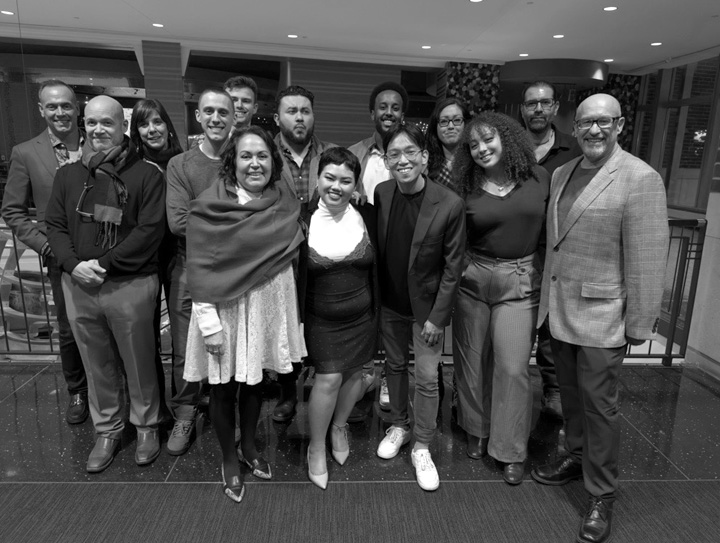
Alberto Monserrate co-founded NewPublica with Melisa Lopez Franzen in Minneapolis in 2014. Before that, Monserrate had co-founded Latino Communications Network, where he oversaw three publications and two radio stations. He had also been elected to the Minneapolis School Board and served as its chair. Those are unusually practical apprenticeships for an agency founder. A newsroom teaches which stories travel. A radio station teaches how language sounds in real life. A school board teaches what happens when a public message meets a room full of people who can answer back.
The gap they noticed was not simply a shortage of Spanish copy. Government agencies, companies and nonprofits needed to reach multicultural audiences, but the usual workflow invited those audiences in too late. NewPublica moved them closer to the beginning. Its staff runs listening sessions, surveys, focus groups and community vetting, then connects that evidence to public affairs, media relations, design, events and paid distribution. The firm's phrase is “new audiences, new communications.” The more revealing word is new. Different audiences do not merely require a new language. They may require a different messenger, image, channel, order of facts or definition of the problem.
The audience-first production line
Eighty-eight rules from one broken plan
HealthPartners asked NewPublica to help rename and reshape an early-childhood initiative about talking, reading and singing with young children. The campaign needed to work with Black, Hmong, Somali and Latino families. NewPublica brought early-childhood leaders and caregivers into the research, developed the Little Moments Count identity, and prepared listening sessions to learn about parents' media habits, trusted messengers and ideas about child-rearing.
Then COVID-19 arrived. The first thing to fail was not the message. It was the room. In-person groups became impossible just as the work depended on hearing people together. The firm moved sessions to teleconferences and socially distanced outdoor settings. That change matters because it reveals what the company regards as non-negotiable. The venue could disappear. The listening could not.
The research became 88 communications guidelines. NewPublica then managed the social campaign, reporting an approximate 130 percent increase in reach and a 75 percent increase in engagement. It is tempting to credit better creative. The deeper explanation is that the creative had constraints. Eighty-eight of them, in fact. Constraints are unfashionable in a brainstorm and invaluable when a campaign must survive contact with real families.
The taco is also a medium
NewPublica's portfolio makes more sense if you stop sorting it by format. The firm has worked on a 14-mile bus corridor, a recycling program, early-childhood legislation, media coaching for Asian American leaders, a newborn savings account and an annual taco crawl. The common product is not advertising. It is participation.
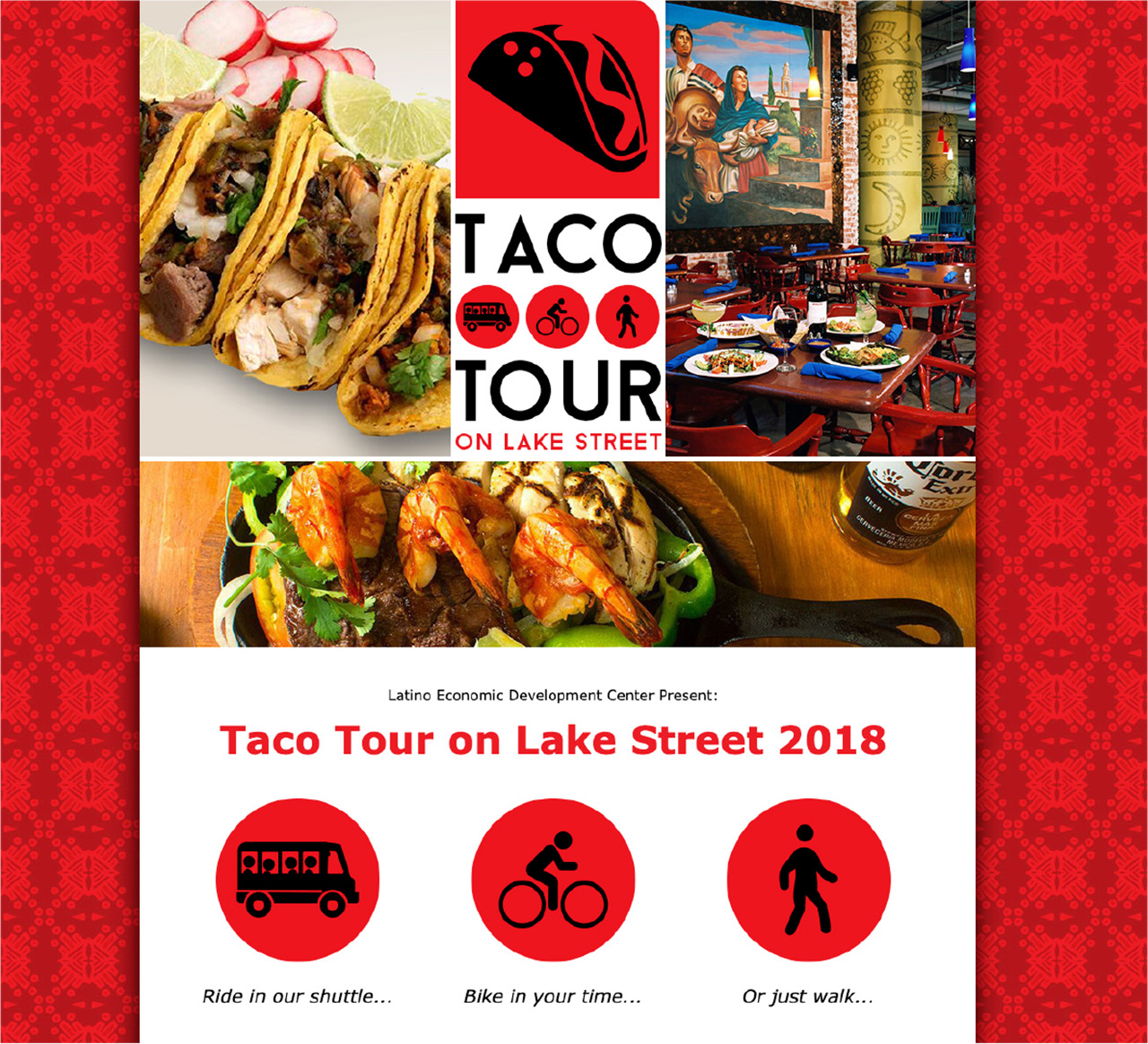
Consider Taco Tour on Lake Street. The Latino Economic Development Center wanted to promote the East Lake Street commercial corridor as a dining destination. In 2014, NewPublica created the event with support from a City of Minneapolis Great Streets grant. More than 1,500 tours took place by bike, bus or foot that first year. Participation later exceeded 3,000 visitors, the website drew more than 10,000 annual visits, and City Pages named it the Twin Cities' best crawl in 2016. A restaurant district became the message, and the audience delivered it to itself one tortilla at a time.
A 30-day campaign for LatinoLEAD worked by another route. NewPublica made video vignettes and infographics around the contributions of Latinos in Minnesota, then distributed them to mainstream audiences. The campaign logged more than 187,000 Facebook impressions, reached over 116,000 unique people, engaged more than 11,000 and collected more than 12,000 short-video views. The method traveled because the community was visible as author and subject, not a stock-photo demographic.
What the work costs, and what the number means
NewPublica is a private services business, so it does not post a menu. Public contracts offer a few useful anchors. Minnesota approved a $25,000 agreement in 2021 for Harvest of the Month messaging and content development. Minneapolis records show a $20,000 employment-and-training marketing-plan contract from 2022. In 2025, the city authorized NewPublica for a two-year Public Works community-engagement master agreement with a ceiling of $300,000. That last number is capacity, not proof that the full amount was spent.
This also explains where the firm sits in the market. A conventional PR agency may specialize in press. A public-affairs shop may know the legislature. A design studio may make the assets. A community-engagement consultant may run the meeting. NewPublica bundles those jobs around one evidence base. Its customers include cities, counties, state agencies, nonprofits, foundations, healthcare organizations, campaigns and companies - institutions whose communications can fail even when the grammar is perfect.
The useful part to steal
The most copyable thing here is not the firm's multicultural positioning. It is the order of operations. Recruit people with standing in the community. Ask about habits and trusted messengers before asking for reactions to copy. Test the premise, not merely the phrasing. Build each language and channel as a real product. Use paid, earned and community distribution together. Keep measuring after launch, when the audience can finally reveal what the research missed.
There are conditions. The method becomes theater when a client has already decided the answer, when translation is asked to rescue a settled campaign, or when one listening session is expected to stand in for a relationship. It also struggles when the institution cannot act on what participants say. Community research creates an obligation: if the finding is inconvenient, it still counts.
NewPublica has spent a decade making that obligation commercially useful. The firm's work suggests that trust is not a tone of voice. It is production infrastructure - slow to assemble, easy to waste and powerful precisely because an audience can tell whether it was there before the ad appeared.