In 1998, an 11-terabyte data warehouse qualified as a marvel. The machine was built with EMC storage, held the equivalent of billions of pages, and required comparisons to hundreds of thousands of filing cabinets so ordinary people could grasp its scale. Mitch Seigle, then an EMC senior product manager, looked past the eye-catching number. His concern was what happened next. A useful warehouse attracted more users; more users created more demand; demand required more storage. Growth, he said, would arrive in orders of magnitude.
He was right, although even that phrase now feels rather polite. Today a multi-petabyte AI model can produce copies, checkpoints and supporting data at a rate that makes yesterday's warehouse look like an office cupboard. Data did not simply grow. It became habitual, duplicated and difficult to discard. The units marched from tera to peta and toward exa. The fundamental question survived the parade: where will all of it live?
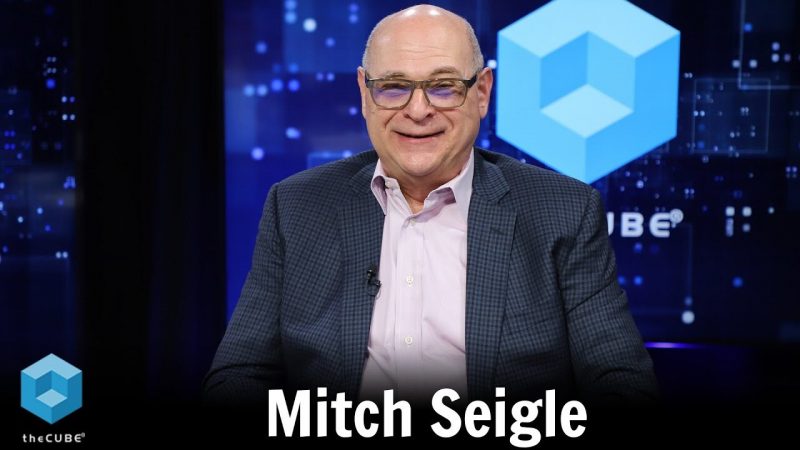
Seigle has spent a career near that question. He worked in product marketing at Unisys, moved through EMC, Engenio and LSI, then held senior marketing jobs at Syncsort, Maxta and Datera. He also founded a marketing advisory called Finial Communications. Since 2023, public profiles have listed him as chief marketing officer at Spectra Logic, the Boulder company known for deep-storage systems. The résumé covers hardware, silicon, backup software, hyperconverged infrastructure, software-defined storage and, now, robotic tape libraries. It is less a collection of logos than a tour through the ways the industry has tried to domesticate abundance.
A career measured in changing units
There is a peculiar advantage in staying with an industry long enough to watch its punch lines turn into premises. In the late 1990s, Seigle explained why a record warehouse needed to be designed for expansion. By 2016, as vice president of marketing at Maxta, the problem had shifted toward making infrastructure easier to adopt. Maxta offered a full-featured freemium version of its hyperconverged software, limited by nodes and capacity but not stripped of its essential machinery. Seigle described the move with a marketer's useful impatience: “We looked at the market and asked how can we shake it up?”
The means changed, but his assignment remained translation. Storage is physical and abstract at once. Customers see files, objects and applications; underneath sit controllers, media, interfaces, policies and a great deal of power. Marketing this category requires connecting a hidden machine to a visible consequence. At EMC, the consequence was scalability. At Maxta, it was a simpler route to evaluation. At Spectra Logic, it is the electric bill.
The power hiding behind the cloud
Cloud computing gave storage the manners of a utility. Click a button, choose a tier, watch a bucket appear. The interface is clean because the warehouse, cables, cooling and media live elsewhere. Seigle's recent writing restores weight to that illusion. AI servers draw far more power than conventional servers and throw off more heat. Meanwhile, much of the data sitting on expensive, always-powered disk is cold, which is the industry's unsentimental term for information that matters but is rarely requested.
His proposal is to stop treating every byte as if it were expecting an urgent visitor. In an essay for Spectra Logic, he argued that tape libraries can hold far more data than disk systems using comparable energy. When a cartridge is not being read or written, the medium consumes no electricity. Move dormant material into that tier and power and cooling can be redirected toward the GPUs doing active work.
“Tape consumes no energy when the tape's not being used.”Mitch Seigle, Data Protection + AI Summit, 2025
Every byte deserves the right address
The argument works because it does not ask tape to win every contest. Flash wins on latency. Disk offers familiar online access. Tape is assigned a narrower, stranger job: keep a great quantity of information safe, affordable and quiet for a long time. Old technology looks less old when the problem grows into its particular strengths.
An old medium learns a cloud accent
Tape still carries cultural baggage. It suggests spools, basement shelves and a restore process scheduled for next Thursday. Seigle's answer is abstraction. Spectra Logic's BlackPearl platform and its tape archive service put object-style access in front of libraries, so applications can speak a language associated with cloud storage while software handles the mechanics behind the curtain. A modern interface need not require every underlying byte to sit on the same kind of medium.
That bridge matters because the new archives are not merely backups. Media companies keep film libraries with no sensible expiration date. AI teams may retain enormous model versions. Universities and scientific institutions preserve research whose value may become clear years later. Seigle describes this condition with a phrase that is both grand and bureaucratically accurate: “data's become forever.” Forever is not a speed. It is an obligation.
The obligation includes recovery. An online storage system can be convenient and still share the vulnerabilities of the network around it. Tape can be removed from that network, creating a physical air gap. Seigle has emphasized this in comments about ransomware resilience: isolation gives organizations another copy that an online attacker cannot reach in the usual way. Tape is not a substitute for a security program. Its contribution is more concrete. A disconnected copy gives recovery plans something solid to work with.
From global to galactic
At the 2025 Data Protection + AI Summit, Seigle found an image large enough for the argument. The Vera C. Rubin Observatory in Chile had released its first images of the universe, and that data traveled into Spectra Logic libraries installed at SLAC in California. Astronomy turns light from remote galaxies into files, then asks earthly institutions to preserve them. The romance of discovery meets the practicalities of capacity planning.
Seigle allowed himself one flourish. Spectra Logic customers, he said, were already known for holding some of the world's important data. With detailed views of so many galaxies entering the archive, the work had moved “from global importance to galactic significance.” It is a good line because the machinery beneath it is unglamorous. Somewhere, after photons cross the universe, a storage policy decides where their record should sleep.
“It's this idea that data's become forever, and so that you have to have that scale.”Mitch Seigle, 2025
This is where Seigle's long view earns its keep. He has watched record capacity become ordinary capacity more than once. He has seen the industry wrap physical systems in layers of software until location felt irrelevant. Now AI and constrained power grids are making location, medium and energy visible again. The storage marketer's task is no longer to celebrate volume alone. It is to explain the consequences of keeping everything.
The discipline of putting things away
Technology culture prefers arrival to retention. A new model launches; a new telescope opens its eye; a production captures another season in finer resolution. Archiving begins after the applause, when someone must decide which material stays fast, which moves deeper and which copy remains beyond the network's reach.
Seigle's public case for tape is ultimately a case for that decision-making. Put active information close to compute. Give colder data an energy-efficient home. Preserve a separated copy when the cost of loss is high. Hide unnecessary mechanical complexity behind interfaces people already know. None of these instructions is especially theatrical. Together they describe a mature response to abundance.
In 1998, Seigle warned that success in data warehousing would create more demand for storage. Nearly three decades later, success has become the problem at planetary scale. AI systems work, telescopes see, cameras roll, institutions digitize, and the archive swells. The next useful innovation may be a more careful answer to a domestic question: what should remain within reach, and what can be put away properly?
Tape, in Seigle's telling, is not waiting for a retro revival. It has been working all along. The world finally produced enough permanent data, enough cyber risk and a tight enough power budget to notice.