An office poker game is an efficient way to learn things about your colleagues that the org chart neglects. How do they behave when a plan fails? Do they change their minds? What happens when someone across the table knows more than they do? For Conlan Ma, a Bay Area game also helped make a connection that would lead into the business of catching online cheats.
John Andress, a professional poker player who would move into game security, knew Ma and the company’s CTO through that game. They became close. In 2018, an investor from their startup circle bought an Asian poker brand and was preparing an online operation. Ma went to work for him. Andress had experience playing on the apps, including an unwelcome education in bots and collusion.
The conversation became a practical request: work with the data science team on bot detection. A player’s knowledge was being invited into a technical process. That is the opening scene of Ma’s gaming story. The friendship came from playing; the work came from asking what was happening inside the game.
“He asked me to work with our data science team to build bot detection tools.”
John Andress, recalling Conlan Ma
The engineer learned to sell
Ma’s earlier career had taken him through several different ways of making a technology business function. He studied at Stanford, with public biographies listing electrical engineering degrees. In 2001, he joined Genesis Microchip as an ASIC design engineer. An application-specific chip is a piece of hardware made for a particular job. There is something pleasingly concrete about beginning a career with a thing that must actually work.
He moved into product marketing at Centrality, then sales and marketing in China. His subsequent roles included customer marketing for the Asia-Pacific region at SiRF Technology and automotive product management at CSR. By 2010, he was vice president of sales and marketing at Striiv. Engineering, product management and selling had each occupied a chapter.
Those jobs face different tests. A design must meet its requirements. A product must fit a use. A sales pitch must explain why somebody should care. Moving between them means moving between the internal logic of a system and the person expected to pay for it. Ma’s job history puts both sides in view.
He became CEO and co-founder of Lyfeline in 2013, later returned to Striiv in strategic partnerships, and took a general manager role at Variant Labs in 2019. In January 2021, he began his role as founder and CEO of A5 Labs. The route was a succession of technical and commercial responsibilities rather than a single uninterrupted specialty.
Genesis Microchip
Striiv
A5 Labs
The player willing to show his workings
Meanwhile, another version of Ma was talking about poker hands. In March 2016, he appeared on David Tuchman’s Under the Gun podcast as a high-stakes player and Top Section co-host. The subject was strategy. Poker was already a public part of his life, running alongside the business résumé.
With David Chan, he discussed gameflow: how previous hands, the history of a session and an opponent’s tendencies can change a decision. Their April 2016 episode included a turn check by Ma and a hand involving pocket jacks. The interest lay in the circumstances around the cards. A hand is a small story, and the earlier chapters can alter the ending.
In July that year, Ma interviewed professional player Michael Jen about hands they had played at their home casino. The published outline includes a bluff by Ma that became a value bet on the river. That is poker’s cheerful habit of rearranging the meaning of an action halfway through the conversation.
Teaching a hand requires more than announcing the correct answer. You have to explain the information available when the decision was made. What did the opponent represent? What changed? Which alternatives were plausible? Results arrive later and have a talent for making everyone sound wiser than they were at the time.
In a December 2016 cash-game episode, Ma reviewed hands with Chan and used PIOSolver to examine optimal play. An August 2017 discussion with Bart Hanson considered how optimal play could be misused. Together, those topics make a useful pair: learn the model, then examine what happens when someone applies it to a particular game.
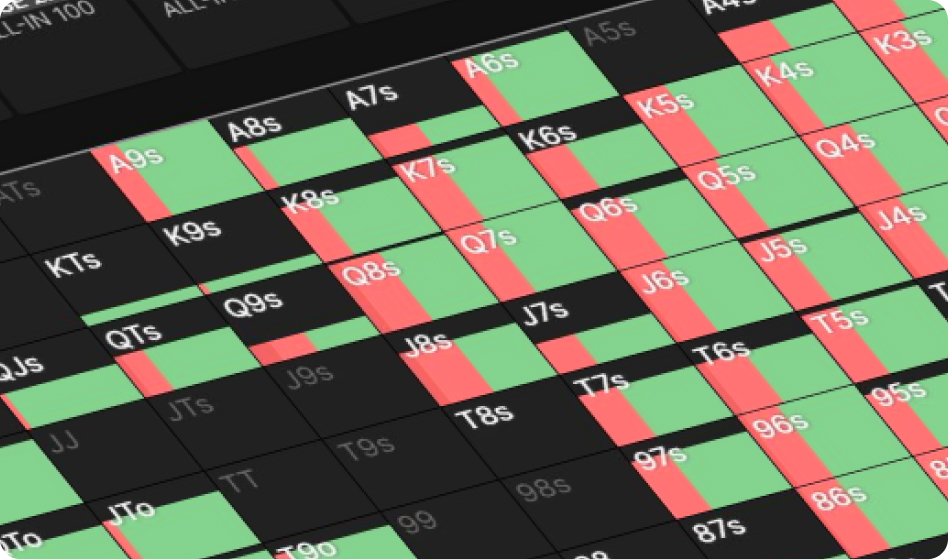
Ma also became the subject of his own lesson. A March 2019 episode called Conlan vs Bart examined a hand between him and Hanson in a $10/$20 no-limit game at the Bike. Hanson had reraised from a blind; Ma had defended from the button. The flop came ace, queen, jack with two spades. Their encounter became material for analysis.
There is a modest intimacy to that format. The contributor puts his own decision on the table. A listener can follow the discussion and disagree. A teaching archive built from particular hands gives Ma’s poker involvement a texture that the phrase “gaming executive” could never supply.
In January 2022, Crush Live Poker republished an earlier preflop discussion between Ma and Hanson. Its focus was optimal and exploitative approaches in live games. The recurring question was how a general strategy meets a specific opponent. Years later, it remained part of the catalog.
When the opponent has a power cord
A5 Labs approaches competitive games from the operator’s side. The company develops data, machine-learning and game-theory technology for integrity and fairness. Its work includes identifying suspicious gameplay and estimating player skill. Ma’s role places him around decisions whose consequences extend beyond his own seat.
For a player, an opponent’s pattern is an opportunity. For an operator, the pattern may require investigation. Similarity to a mathematical strategy, account context and relationships among players can all become relevant. The question has changed from how to respond to a bet to how to understand the person, or software, making it.
A5 Labs says it builds solvers and compares play with game-theory baselines. It also describes combining gameplay patterns with contextual information. Its claim that skill can be inferred from less than two hours of gameplay belongs to the company’s own account of its technology. It expresses the speed the business is trying to achieve.
A5 Labs’ stated gameplay window for inferring player skill. A company claim, rather than an independent performance measure.
The office-game connection makes sense in this setting. Ma brought Andress into a conversation with data scientists because the player understood the problem from inside it. The account describes a collaboration across kinds of expertise. A model needs something meaningful to measure; a poker expert can help formulate the question.
That is also a reminder of why the perfect-player problem is awkward. A strong move can be legitimate. A weak move can be deliberate. Poker rewards adaptation, and an unusual decision is often the interesting part of a hand. Investigating behavior requires context, not merely surprise.
A fair game needs more than a fair deck
Consider the founder’s problem as an operating question. A person logs in expecting a contest. They may lose. Losing is built into the arrangement. But their willingness to return depends in part on believing that the contest was conducted under rules shared by everyone at the table.
That belief is easy to describe and difficult to maintain at a distance. Online opponents cannot look around the room and see who is consulting whom. A platform has to examine evidence the players cannot observe directly. The operator’s responsibility continues after the hand ends.
In April 2023, A5 Labs selected GeoComply to supply fraud detection and geolocation technology for its customer WPT Global. The announcement described support across more than 85 countries. Geography and account behavior were joining the poker evidence. A gaming company’s technical decisions had acquired a considerable number of borders.
Choices and strategic patterns
Device and location signals
Turning patterns into questions
The commercial side appears elsewhere in Ma’s network. When Tom Wheaton announced his role as an executive business consultant for A5 Labs and WPT Global, he thanked Ma and Dan Maor. His brief included acquisition, content, community engagement and ambassador marketing across international markets. Getting people to the table remained part of the work.
Read together, these connections show the breadth of the executive job. The security collaboration draws on a player’s judgment. The technology partnership supplies another kind of evidence. The business-development work concerns the people who might join the game. Each addresses a different part of the experience.
The next hand belongs to someone else
Ma’s story has a recurring setting: a decision made under incomplete information. It appears in the poker episodes as a bet to be examined. It appears in the company as behavior to be interpreted. His career adds the practical work of designing, packaging and selling technology around those decisions.
There is a change of scale between the teaching table and the operator’s desk. In a strategy discussion, the next question is what a player should do. At A5 Labs, the surrounding questions include whom that player is competing against and whether the environment deserves their confidence.
The office game offers a fitting place to return. People sat down to play, became acquainted, and found a problem worth working on together. Ma’s public story moves through engineering jobs and commercial titles, but this small social connection explains something the titles leave out: how poker knowledge entered the technical conversation.
For a founder working on game integrity, the desired outcome has a certain lack of theatricality. People sit down. They make their choices. Somebody wins the pot. The next hand begins with enough trust left in the room for everyone to keep playing.