A clock is an excellent employee. It arrives early, rarely complains, and is entirely indifferent to the meeting it has made everyone late for. Minoru Kamura has built a substantial part of his working life around the more complicated people who consult it. The company he founded in Nagoya in 1981 became Kinjiro, a Japanese workforce-software business whose products deal with attendance, working arrangements and the administrative consequences of having staff.
His own time sheet would be a lengthy document. The business reached the Tokyo Stock Exchange in October 2020, when he was 73. In 2021, it adopted the name of its software. In March 2022, he passed the presidency to Kozo Kamura and became chairman and CEO. Forty-one years separated the founding from that change of chair. For a business concerned with recording time, it is an appropriately exacting chronology.
An office before the cloud
Kamura was born on June 1, 1947. His recorded executive career reaches back to April 1972, when he became a director of the company then called 日本警報装置中部株式会社, now NKC. By April 1981, he was establishing his own business and taking the presidency. The beginning was in Kanayama, in Nagoya’s Atsuta ward, with office computing, systems development and communications equipment among its activities.
That starting point gives his later career some useful texture. The present company belongs to the world of software services, yet its beginnings sat closer to the equipment and systems of an actual office. A business has to answer the telephone before it can aspire to reorganize the working day. Kamura’s company began with those practical surroundings, years before a cloud subscription became part of its catalogue.
The successive products reveal the distance travelled. Workforce and payroll package development began in 1992, alongside an ID-card terminal. National sales followed in 1994. Kinjiro S arrived in 1997; Kinjiro M followed in 1998. The Enterprise package came in 2004. These were company milestones during his presidency, each a revision of what the business could offer the people running another business.
Nagoya
launched
listing
and CEO
The peculiar life of an office rule
Workforce software inhabits an unusually human corner of computing. A working day has a start and a finish, but employment arrangements supply a generous collection of qualifications. Different schedules, wages and staffing patterns turn the apparently simple act of recording attendance into something rather more demanding. The clock has one opinion about the hour. An organization may have several opinions about what that hour means.
One view of the work comes through a May 2015 agreement with Miroku Jyoho Service, or MJS. Under Kamura’s presidency, Nittsu System had developed a web-based Kinjiro product that MJS would sell through its national network. The arrangement included data connections with MJS’s Galileopt NX-I and MJSLINK NX-I systems. Each company would also help sell compatible products from the other.
The announced capabilities were practical: collecting time-recorder entries, adding them up automatically, finding missed punches and allowing corrections through a web screen. The package also supported workforce analysis and staffing decisions. There is a particular satisfaction in a product description that admits people sometimes forget to clock in. Enterprise software earns its place partly by making provision for ordinary lapses.
The agreement illuminates an aspect of Kamura’s business that a founder’s portrait can easily overlook: other companies had to carry the product into the market. Software development and distribution were intertwined. A partner needed something it could connect to its existing offerings and explain to customers. The work included making a system useful inside a wider commercial relationship.
His name also appears among the co-inventors on a labor-management system application filed in 2014. The other named inventors include Takeshi Kamura, Reiko Yoshida and Shingo Ishitani. That record adds a concrete product connection to the executive biography. It places him within a named group associated with the design of a system, alongside the more familiar record of board appointments and presidential titles.
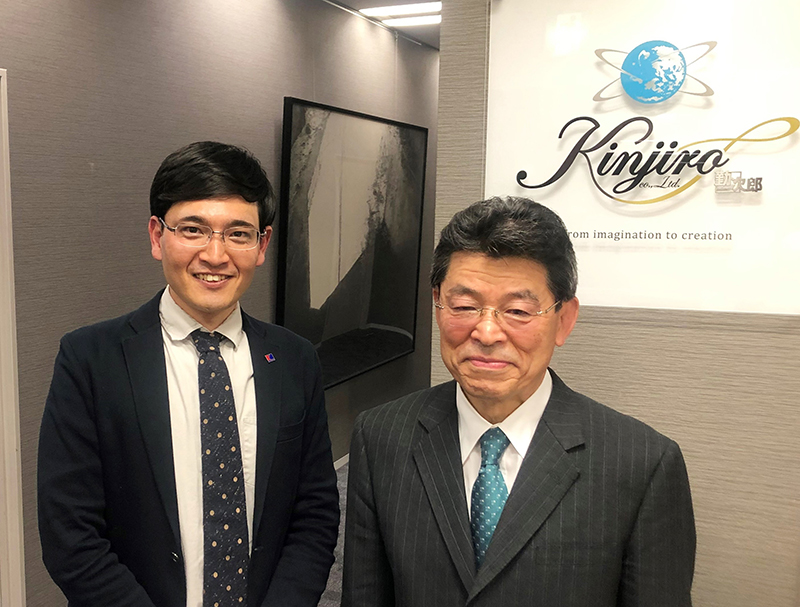
Waiting to be paid
Cloud services brought another kind of scheduling problem. Kinjiro launched its Enterprise for SaaS offering in 2010. In an April 2021 conversation with investor Toshiya Imura, Kamura described the commercial trade-off plainly: money collected upfront on an installed system could take three and a half to four years to collect through the cloud model. Customers gained a lower initial investment; his business accepted a longer collection timetable.
He described a customer-led transition, with some larger buyers initially preferring an installed system. Around seven-tenths of sales went through agents, he said, with the remainder direct. His account of the next product generation included an appealing detail: agents were adopting it themselves before selling it. A sales demonstration acquires a different authority when the demonstrator also has to live with the software.
It is a revealing commercial choice. A subscription changes the seller’s timetable as surely as it changes the buyer’s invoice. The founder has to accommodate that difference while the organization continues developing, supporting and selling its products. The elegance of recurring payments can look rather less elegant from the desk responsible for waiting for them.
Kamura’s long involvement gives that decision a biographical dimension. He had led the company through earlier product generations before the cloud service arrived. The later model therefore sits inside a career of adapting an existing business. Customers, agents and accumulated product work already existed; the method of supplying and collecting payment for the service was changing around them.
The chairman takes questions
There is a less formal glimpse of Kamura in the training room. In a June 2021 account, he attended every internal training session, creating opportunities to speak with employees and answer their questions. The conversations included the company’s actual business position. They also sometimes wandered into personal matters, which he was willing to discuss.
“Sometimes I also answer personal questions, trying to communicate in a relaxed way.”
Minoru Kamura, 2021
Translated from Japanese
The detail gives the executive biography a recognisable human setting. A president can appear before colleagues with a plan and leave with an unexpected question. Kamura described making room for that exchange. Corporate titles are carefully standardized; conversations have the pleasing habit of ignoring the approved structure.
His public appearances also place him within Nagoya’s business community. On January 9, 2020, at the Nagoya International Hotel, he delivered the greeting on behalf of newly joined member companies at the Aichi Information Service Industry Association’s New Year reception. His company had joined in 2019. The occasion was a local industry gathering, complete with introductions and the familiar ceremonial business of meeting one’s peers.
That scene belongs alongside the listing photographs and product announcements. It shows Kamura representing the organization in a room of other organizations, a few months before the company entered the public market. A career lasting decades has many such rooms. Their importance is often more visible in the relationships they sustain than in the size of the announcement attached to them.
A different chair, the same company
The exchange listing came on October 13, 2020, under the Nittsu System name, on Tokyo’s Mothers market. Kamura had founded the business thirty-nine years earlier. A year after the listing, an IPO seminar programme featured him speaking about the experience of going public, including the difficulties encountered on the way. The founder had become someone invited to explain the process to other people considering it.
In March 2021, Nittsu System became Kinjiro. The software name moved onto the company itself, bringing its public identity closer to the product customers knew. For Kamura, it was another change within the organization he had established in 1981. The announcement gave the business a new introduction; the founding date stayed put. A company can acquire a different name without becoming a different age, a privilege that its founder might reasonably regard with some interest.
Then came the change in leadership. The January 2022 announcement proposed Kozo Kamura as president, with Minoru moving to the chairmanship to support the new structure. The transition took place that March. Today, the company lists Minoru as representative director, chairman and CEO, and Kozo as representative director, president and COO. The distinction matters: the presidency changed hands while the founder continued to hold executive responsibility.
Kozo is his son, as the company’s securities report states. He had joined the company in 2002 and later held planning, marketing and sales roles, with a period at another technology company before returning. The succession therefore sits within both a family relationship and a recorded sequence of operating jobs. Those two histories meet in the leadership arrangement now printed on the company’s roster.
Kamura’s career has moved through equipment, software, subscriptions, a listing and a new distribution of authority. The daily business he chose remains agreeably concrete: people arrive, work, leave and need their arrangements recorded correctly. His own working life has required a longer ledger. The clock, one suspects, would approve of the record keeping. It might even allow the chairman a moment to answer another question.