At Toyo Glass Machinery, lunch had acquired a second job. Employees chose their meals on paper. Somebody copied the orders into Excel. The information then had to find its way into payroll. A sandwich-sized administrative problem had become a useful illustration of how work accumulates around software.
- Kinjiro connects attendance, personnel, payroll and employee health.
- Its advantage is handling the awkward details between those jobs.
- Customers still have to change how people work. That takes time.
The Japanese manufacturer already used Kinjiro’s older attendance system. Moving to Universal Kinjiro let employees enter meal reservations themselves and connected that information with payroll. Managers also gained direct access to current overtime information. Less copying. Less waiting for somebody else to assemble a report.
Health management helped persuade the manufacturer to upgrade, too. In its November 2025 account, that remained a next step: digitise health records, then use them. The sequence matters. A connected platform can create possibilities long before an employer has put every possibility to work.
A spreadsheet with a second job
Kinjiro occupies an unglamorous but consequential corner of business software. It records when people work, helps administer what they earn and brings employee health information into the same product family. Its audience includes factories, hospitals, hotels, schools and transport operators, where working arrangements rarely fit a tidy nine-to-five.
The business began in Nagoya in 1981 as Nittsu System, founded by Minoru Kamura. Its early activities included office computers, systems development and communications equipment. Development of attendance and payroll packages followed in 1992. The product eventually became sufficiently central to the business that the company adopted the Kinjiro name in 2021.
That history explains the attention to operational details. A night shift crosses midnight. A driver clocks in away from headquarters. A factory needs meal reservations. These are the everyday exceptions that make an attendance system useful, and that make replacing one harder than a software demonstration suggests.
Four records, one employee
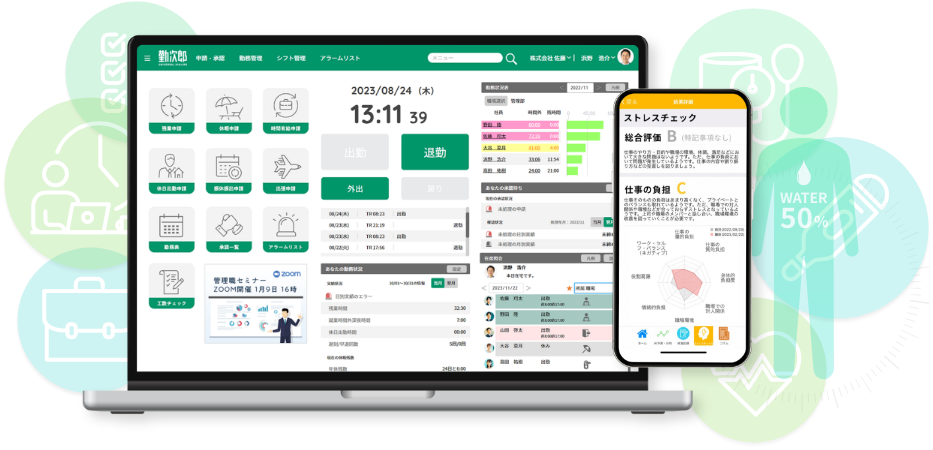
Universal Kinjiro brings together four management areas: attendance, personnel, payroll and health. Employees can submit requests; managers can approve them and examine working patterns. The health offering covers medical-checkup administration and stress checks. Access permissions and role-specific displays help determine what each user sees.
One HRM platform. Different permissions.
The commercial proposition includes implementation. Consultants hear the customer’s requirements, configure the environment, run the new system alongside the old one and support the first closing process. For a payroll administrator, that last step can matter more than a long feature list.
There are alternatives. KING OF TIME also supplies attendance, personnel and payroll software. Kinjiro’s particular emphasis is the connection with health management and support for complicated workplace rules. A buyer should test that emphasis against actual needs: a simple attendance requirement may not justify a broader implementation.
“働く人の健康と幸せが、企業の未来を築く”
Kinjiro’s stated concept: workers’ health and happiness build a company’s future. Translation.
The spreadsheet fought back
Consider Hospitality Operations, the hotel operator behind Smile Hotel. Its published customer account describes schedules prepared in Excel and then entered into an attendance system. The company considered adding scheduling software, but chose an integrated route that could eventually extend into personnel and payroll.
Employees objected to losing Excel’s flexibility. Questions multiplied. An engineer visited roughly weekly. Around ten hotel managers tested the system for about three months before the July rollout. Daily error checks subsequently became easier, although some spreadsheet use remained. Health integration was still an ambition in the October 2024 account.
The transferable lesson is straightforward: pilot with the people who handle the exceptions. Let them reveal which freedoms the new process removes and which missing steps they will recreate elsewhere. Buying an integrated system does not, by itself, integrate a workplace.
A smaller door into the same market
Kinjiro took its enterprise suite into SaaS in 2010. By the end of 2025, its results presentation reported 803,000 cloud licenses across 2,599 contracts. Those figures describe different units. The website’s claim of more than 5,000 installations is a cumulative deployment measure, rather than a count of current cloud contracts.
2,599cloud contracts
70.4%recurring revenue share
Consolidated 2025 revenue reached approximately ¥5.37 billion, with operating profit of ¥1.52 billion. Recurring revenue accounted for 70.4% of sales. The company attributed growth to cloud licenses. These numbers describe a subscription business developing inside a company with decades of software and implementation experience.
In August 2025, Kinjiro launched JOBEE for businesses with fewer than 100 employees. Attendance management started at ¥150 per person per month with no initial fee. That is a launch price for the smaller-business offer; Universal Kinjiro uses a tailored quotation. Modules and implementation requirements deserve separate scrutiny.
There is another connection buyers can check. In March 2024, HENNGE announced single sign-on support for Universal Kinjiro through HENNGE One. It is a modest integration with an immediate purpose: employees using that identity service can enter the HR platform without maintaining another separate login.
The company tries its own prescription
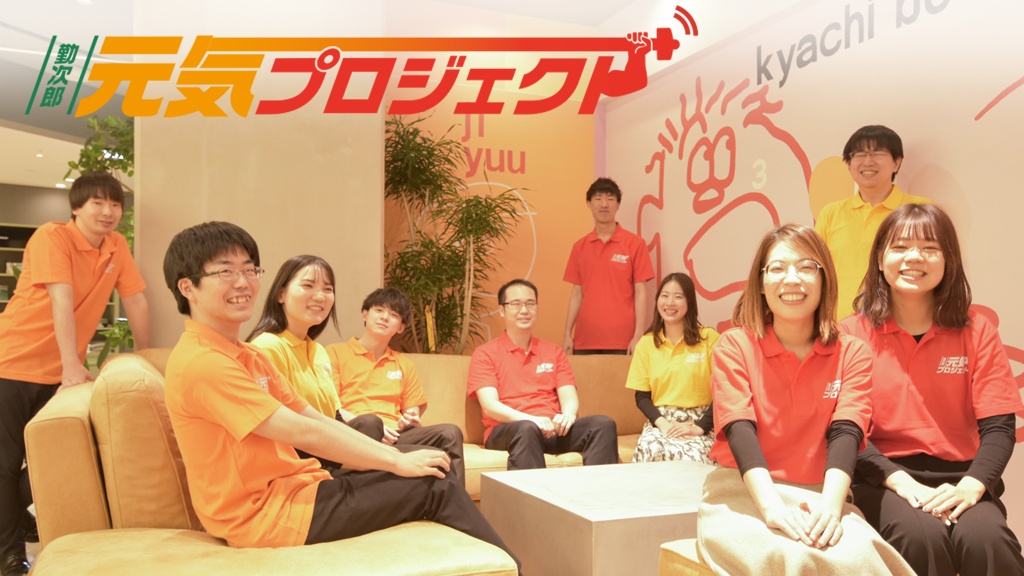
Kinjiro also publishes its own employee health programme. Its Genki Project encourages everyday movement and runs staff activities. The company reports nine consecutive years of White 500 health-management recognition, from 2018 through 2026. On October 21, it announced a separate ITreview Leader award for Universal Kinjiro’s attendance software.
Software can collect working hours and health records, but someone must decide what to change when those records suggest trouble. A company unwilling to adjust schedules or follow up on employee concerns will get limited value from connecting the information. Kinjiro’s proposition becomes interesting when management is prepared to act.
For the reader evaluating a purchase, start where the factory started: follow one ordinary task from beginning to end. Count the handoffs. Find the repeated entry. Ask who waits. The lunch order may tell you more about your next HR system than its dashboard does.