Sentry processes 790B+ events/month $219.75M total funding raised 4 million developers trust Sentry Series E: $90M at $3B+ valuation 100,000+ organizations on platform $100M+ ARR achieved AI root cause accuracy: 95% Sentry processes 790B+ events/month $219.75M total funding raised 4 million developers trust Sentry Series E: $90M at $3B+ valuation 100,000+ organizations on platform $100M+ ARR achieved AI root cause accuracy: 95%
Profile • CEO • Developer Tools

Milin
Desai

The engineer who crossed to the business side - and built the platform that catches every bug 4 million developers don't want to miss.

CEO, Sentry $3B+ Unicorn San Francisco Open Source Champion Series E
$219M
Total Raised
4M+
Developers
790B+
Events / Month
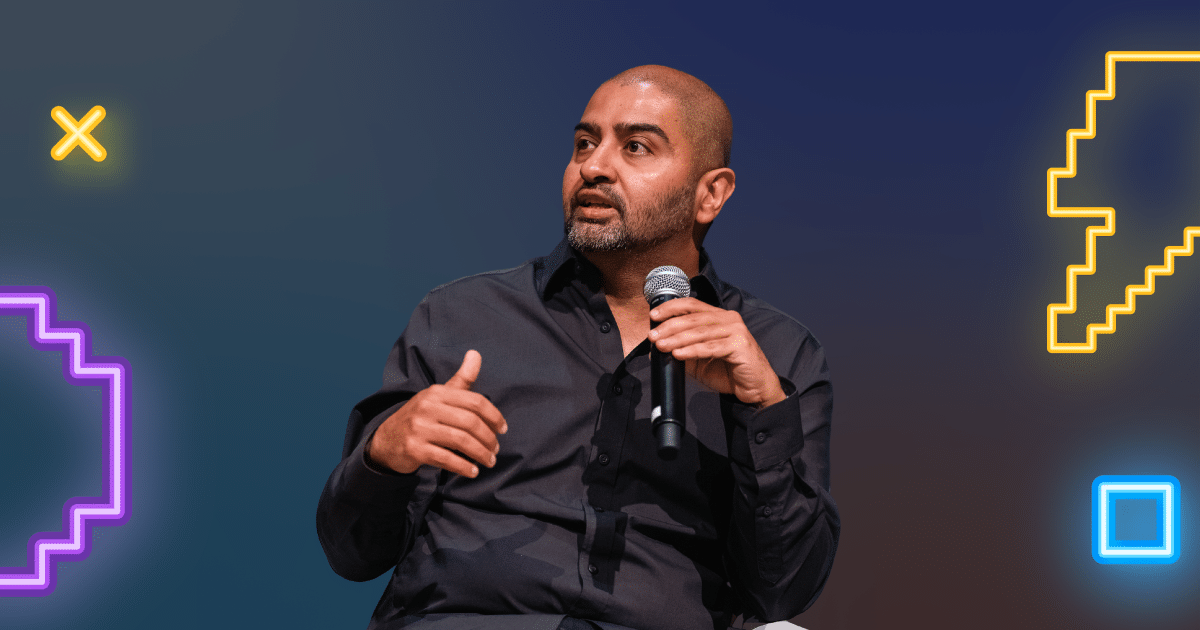
Milin Desai, CEO of Sentry

Milin Desai - CEO, Sentry • San Francisco, CA

The debugger who became the CEO

Somewhere in the stack trace of every application crash, Sentry is watching. And at the top of Sentry sits Milin Desai - a man who describes himself, without irony, as "a developer who moved to the dark side." He means the business side. What he built on that side is a $3B+ platform processing 790 billion events per month for 4 million developers who've decided that error blindness is not an option.

Desai joined Sentry in January 2020, when the company was already beloved in developer circles but hadn't yet figured out how to translate that affection into a scalable business. The founders - David Cramer and Chris Jennings - had built something engineers genuinely liked, a rare thing. Desai's job was to make it a company they'd pay for. He kept the open-source core intact, kept the developer-first DNA, and then built enterprise motion around it. Within two years: $90M Series E, unicorn valuation, $100M ARR.

Before Sentry, Desai spent nearly a decade at VMware, most notably as VP of Products for NSX - the network virtualization product he scaled from a promising bet into a billion-dollar-per-year business. The playbook he used there - find the infrastructure problem nobody's solved cleanly, build deep technical credibility, then methodically expand the footprint - maps directly onto what he's done at Sentry. Different stack, same instincts.

$100M+
Annual Recurring Revenue
100K+
Organizations on Platform
130%+
Net ARR Expansion YoY
400+
Employees (Sentry)

One-third the price. All the market.

Desai made a decision early on that sounds like it came from someone who'd never taken a pricing course: charge approximately one-third of what competitors charge. Not as a temporary tactic. As a permanent philosophy. The competitors are watching their margins; Desai is watching his developer love-to-customer conversion rate.

The logic is upstream of pricing. If you're building for developers - the people who actually choose and champion tools in their organizations - then friction at the point of adoption is the real enemy. A tool that's obviously worth paying for, priced in a way that doesn't require a procurement committee, spreads through organizations at a fundamentally different rate than an enterprise solution that needs a VP signature. Sentry's paid customers often started as developers who just tried it.

When investors push on margins, Desai pushes back on the framing. "It's packaging, not pricing," he's said - the real question isn't what to charge but which features belong at which tier. Get that right, and price becomes a downstream variable. Get it wrong, and you can charge anything you want and still lose.

You have to become the need, not a want. It has to show up in the priority list.

Milin Desai, CEO of Sentry

He's also turned down enterprise deals. Not because they were too small - because they pointed in the wrong direction. Companies that wanted Sentry to compromise its developer-first posture in exchange for a larger contract didn't get the contract. This is the kind of decision that reads as obvious in retrospect and terrifying in the moment. At a company with VC backing and growth expectations, saying no to revenue requires conviction in the model that most executives don't actually have.

1/3
of Competitors' Price
95%
AI Root Cause Accuracy
2020
Joined as CEO
$1B+
VMware NSX Revenue Built

Open source as a distribution strategy

Sentry was open source before Desai arrived. He decided it would stay that way - not out of ideology alone, but because he understood what open source actually buys you. "The reasoning was: if we deliver value and do it well, people will want to pay, one way or the other." This is a cleaner version of the freemium thesis than most companies execute, because it ties the open version to the commercial one through genuine value rather than artificial limits.

What Desai doesn't accept is the asymmetric version of this arrangement: large companies consuming open-source infrastructure without contributing financially back to maintainers. He's been vocal about this publicly. The critique isn't abstract - it's about the sustainability of the ecosystem that tools like Sentry depend on, and the precedent set when consumption is divorced from contribution.

If we deliver value and do it well, people will want to pay, one way or the other.

Milin Desai - on Sentry's open-source business model

95% accuracy. Not a claim - a floor.

When every software company is describing itself as an AI company, it helps to have a number. Desai has one: 95% root cause accuracy, achieved by feeding Sentry's production context - the actual stack traces, breadcrumbs, and event data - into large language models. In error monitoring, root cause identification is the hard part. The stack trace tells you where the crash happened; the root cause tells you why it happened and what to fix. Getting that right 95% of the time changes the economics of debugging.

Desai's view on AI adoption is characteristically direct: "The question isn't whether to adopt AI but how to use it responsibly and effectively to transform your business." He's positioned Sentry as an AI-native platform, not an AI-augmented legacy tool - a distinction that matters for how the company thinks about roadmap priorities versus retrofits.

His appearances at AWS re:Invent 2025 and on the First Round Review podcast in early 2026 have centered on exactly this: what "becoming AI-native" means for a developer tools company that was already doing sophisticated event processing before LLMs entered the picture.

On building, leading, shipping

"Build for the many, not the few."

Core Sentry Principle

"It's packaging, not pricing!"

On go-to-market strategy

"AI isn't just the next step - it's a leap forward."

On Sentry's AI roadmap

"It's a completely different magnitude of responsibility and impact."

On transitioning from GM to CEO

25 years through the stack

1999 - 2000
Master of Science in Computer Science - one year, done.
University of Southern California
2001 - 2006
Software Engineer to Senior Engineer - APIs, middleware, data protection for Oracle and Exchange.
Veritas Software
2006 - 2010
Technical Marketing Manager, then Product Manager. BCDR strategy, virtualization, technology partnerships.
Riverbed Technology
2010 - 2015
Joined VMware as it reshaped enterprise infrastructure. Advanced through product management into network virtualization leadership.
VMware
2015 - 2018
VP of Products, NSX - scaled network virtualization from promising product to $1B+ annual revenue business.
VMware
2018 - 2019
General Manager of Cloud Services - led VMware's transition to SaaS and public cloud strategy.
VMware
Jan 2020
Joined Sentry as CEO. Founder David Cramer moved to CTO. Mission: build the business around the developer love already in place.
Sentry
May 2022
Closed $90M Series E at $3B+ valuation. Total funding: $219.75M. Net ARR expansion: 130%+ year-over-year.
Sentry
2023 - Present
$100M+ ARR. 4 million developers. AI-native platform roadmap. Inc. Best Workplaces. NYSE Floor Talk. AWS re:Invent keynote.
Sentry

Things worth knowing

01
Sentry processes more than 790 billion events per month - roughly 100 events for every person on Earth, every single month.
02
Desai dedicates every Saturday to learning - a discipline he's maintained consistently throughout his executive career.
03
His Twitter handle is @virtualmilin - a nod to his years in virtualization at VMware. The old identity, still showing up.
04
He scaled two separate product lines to billion-dollar revenue over his career: VMware NSX and Sentry. Different decades, same playbook.
05
Sentry's company values acronym is RISE: Recognition, Integrity, Speed, and Empathy. Desai holds an A+ rating from employees on Comparably.
06
Completed his USC Master's in Computer Science in one year (1999-2000), then spent the next 25 years proving it was worth it.
developer-tools error-monitoring observability open-source series-e unicorn saas apm vmware network-virtualization ai-native product-led-growth san-francisco enterprise-software developer-first