Michael Serbinis had a perfectly reasonable plan after Kobo: take the summer off. He called it the “summer of Mike,” borrowing from Seinfeld, whose characters have considerable experience making plans that do not survive contact with other people. His children, he discovered, had schedules of their own. A father with time on his hands was not necessarily the missing ingredient.
By then, he had helped build a digital reading company that competed with Amazon and been its CEO through a sale to Rakuten. He had worked in search, storage and messaging. There was enough on the résumé to justify a little idleness. Instead, he started League in 2014. Today he remains its founder and CEO.
The interesting question is what makes someone volunteer for the beginning again. Serbinis’s career offers several answers: curiosity about unfamiliar markets, an engineer’s confidence in taking a problem apart, and an appetite for working with people who know things he does not. It also contains enough reversals to make the word “serial” in serial entrepreneur sound less like a compliment and more like a warning about the paperwork.
The engineering came first
He grew up in Hamilton, Ontario. As a school student, he worked on a propulsion design involving superconductor motors. The project took him to the International Science and Engineering Fair and brought awards from NASA and Rockwell Aerospace. He later called the competition the “Nerd Olympics.” A baking-soda volcano would have faced an awkward afternoon.
His interest in engineering had an earlier, sobering point of focus. He was at an ice rink when he heard about the Challenger disaster. Richard Feynman’s explanation of the failure helped direct that interest toward engineering physics. The connection matters: before the companies and transactions, there was a young person trying to understand how a complicated machine could fail.
He studied engineering physics at Queen’s University and later completed a master’s in industrial engineering at the University of Toronto. The subjects gave him a way to approach unfamiliar work. In his account, the useful inheritance was the habit of beginning with fundamentals, handling a demanding workload and recognizing that difficult problems require a team.
His early career included Microsoft and Zip2, where he worked alongside Elon Musk. Those names can dominate a short biography. They are more useful as part of an apprenticeship: software, urgency, ambitious colleagues and the experience of building while an industry was still deciding what the internet could become.
A sale, followed by the hard part
In 1997, Serbinis co-founded DocSpace, a business for storing and sharing documents online. It was sold to Critical Path in 1999, near the height of the technology boom. The sequence looks reassuring when reduced to two dates. The events that followed were considerably less obliging.
Serbinis stayed with Critical Path as chief technology officer. The company’s share price, once above US$100, fell to 30 cents. He chose to remain through a restructuring because he believed the technology and the people were worth keeping. A transaction had happened; the job of making a company work continued.
At the same time, he was studying at the University of Toronto while working full time, completing his degree in 2001. His supervisor, Joe Paradi, became a friend who helped him through the downturn. That relationship supplies a necessary correction to the solitary-founder portrait. Even a person hired to have answers needs somewhere to take questions.
Paradi’s influence also lasted beyond that crisis. Years later, Serbinis still described him as a mentor from a period when he was learning how to lead and manage. The education had extended beyond the degree. It included what to do when the company, the market and the confident forecast stopped agreeing.
“There’s failure every day.”
Michael Serbinis, speaking to entrepreneurship students in 2019
The bookstore’s way around Amazon
His next widely visible chapter began inside Indigo, the Canadian bookseller, where he joined as chief information officer in 2006. Digital reading presented a problem with several moving parts: books, devices, software, publishers and the retailers that already knew how to put a title in a reader’s hands.
Kobo emerged from Indigo in 2009. Its earlier service had been called Shortcovers; Kobo rearranged the letters of “book.” For an engineer moving into publishing, it was a compact piece of wordplay. The larger challenge was finding a place in a market where Amazon already had money, customers and a device of its own.
Serbinis’s account of the competition emphasizes allies. Kobo could work with retailers in different countries that wanted their own place in digital reading. Those relationships gave a smaller company a route into markets where a direct contest of spending would have been uncomfortable. Every rival has neighbors. Some of those neighbors would welcome an alternative.
Rakuten’s announced cash purchase price for Kobo. The acquisition completed in January 2012.
The deal joined Kobo’s devices, applications, catalogue and retail relationships to Rakuten’s international commerce business. Serbinis continued as CEO until 2014. The sale was a company milestone, but it also demonstrated the value of the route Kobo had chosen. A network of partners had become something a buyer wanted to own.
It is tempting to flatten this into a fable about a small business defeating a large one. The actual story is more interesting. Kobo had to find a workable position among larger companies, recruit partners and keep executing. There was no requirement that the entire market belong to it for the company to have a future.
The summer that could not last
The proposed break after Kobo makes more sense against that history. He had already spent years making decisions with deadlines and consequences. A summer without a company to run must have looked attractive. Yet his description of himself as curious helps explain why the interval became an interval.
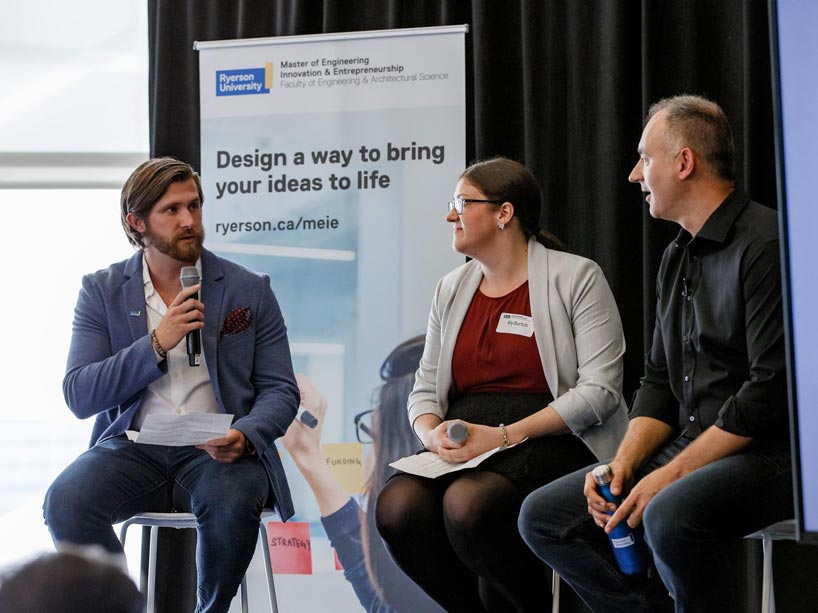
League supplied another beginning. Previous experience could travel with him; certainty about a new business could not. When he later addressed entrepreneurship students, he warned that repeated success makes complacency easier. People begin assuming the next venture will work because the previous ones did. The founder can start believing it too.
He also resisted the tidy story in which one decisive pivot makes everything fall into place. His account involved repeated adjustments, including moments when he wanted to quit. That is a less cinematic version of entrepreneurship, and a more useful one for anyone whose own week contains mostly unresolved details.
A calendar is also a strategy
There is another complication in his version of ambition: he does not present constant work as the only respectable arrangement. In 2017, while discussing his company and board responsibilities, he described the satisfaction of pursuing meaningful work while also having a family life. Doing both required repeated choices about what deserved his attention.
“I don’t believe it’s all about work,” he said. He questioned a culture organized around relentless intensity, arguing that it would fail to attract the variety of people a company needed. That observation shifts a discussion of working hours into a question of who gets to participate.
His practical answer was to prioritize more deliberately. There would always be another meeting. The test was where his presence could have an effect. It is an unglamorous discipline, particularly for someone whose career keeps producing invitations. Declining an appointment rarely earns applause. It can still be an executive decision.
He has offered a related warning about leading a company: today’s demands can consume the time needed to prepare for the future. Building the organization means making room for what colleagues will need months ahead. The urgent task has an advantage in any argument with the important one. It arrives carrying a calendar invitation.
A business that can wait a century
His work at Perimeter Institute takes that concern with the future onto a different timescale. In 2021, he succeeded BlackBerry co-founder Mike Lazaridis as chair of its board. The institution supports theoretical physics, where a useful question may precede a practical application by generations.
For a software entrepreneur, that is a demanding kind of patience. Research cannot promise a product launch at the next board meeting. Serbinis has nevertheless made the connection between foundational science and the technologies his businesses used. The discoveries arrive first. Commercial opportunities may follow much later, in forms their discoverers never planned.
He and Laura Adams helped support Perimeter’s undergraduate theoretical physics summer program, launched with their gift in 2018 and first run in 2019. Students could learn how theorists work; selected participants could spend a longer internship on research. The support made an interest tangible by giving young people access to researchers and time to work.
That closes a circle without completing the career. The student who once took a propulsion design to a science fair now helps other students approach difficult questions. The founder still runs League. His work stretches between the pressure to deliver something soon and the willingness to support something whose destination remains open.
The summer of Mike makes a good anecdote because it promises a pause in all this. His longer record suggests that a pause and a permanent finish are very different attractions. There are still unfamiliar subjects, prospective collaborators and problems to take apart. He has repeatedly found reasons to return to work. The interesting part is which question gets him next.