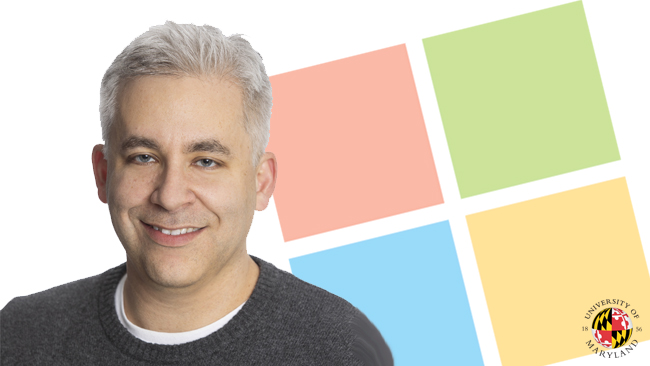
Two decades inside one of the world's most complex software companies. Fifteen years spent specifically on the question of how people find things on the web. Now running Search Growth and Experiences at Microsoft - the team where Bing meets AI meets the future of how knowledge moves.
The launch of AI-powered Bing in early 2023 was the biggest product moment in Microsoft's search history. Bing had existed since 2009, had been a respectable second in the market, and had never seriously threatened Google's dominance. Then Microsoft integrated GPT-4 into its search experience and the industry paid attention in a way it hadn't in years.
Schechter was part of the team that made that launch happen and has been steering its expansion ever since. In February 2025, he announced "Grounding with Bing Search" - a feature that brings live web search data into Azure AI Agent Service, allowing AI agents to pull from the current web rather than static training data. It's the kind of plumbing decision that doesn't make consumer headlines but determines whether enterprise AI tools are actually reliable.
In April 2025, Copilot Search launched in Bing. In May 2025, the GPT-4o image generation model integrated with Bing Image Creator. Each announcement came with Schechter's voice behind it - on social media, in product announcements, in how the public narrative around Bing was being shaped.
He also drew a clear line on user control. When Google launched AI Overviews - AI-generated summaries that appeared at the top of search results and couldn't be turned off - Schechter made a point of noting that Bing's equivalent feature came with an off switch. Users who didn't want AI-generated answers could disable Copilot's responses with a single click. That choice to build in optionality reflected a philosophy about user trust that Schechter has been consistent about.
Copilot in Bing can be turned off. One button. Your search, your choice.- Michael Schechter, contrasting Bing's approach to AI search toggles with competitors
The search industry runs on a particular kind of patience. Changes to ranking algorithms, feature rollouts, partnership negotiations - none of them happen in a news cycle. They happen over quarters and years. The executives who survive and advance are the ones who can hold a long-term thesis while managing weekly metrics.
Schechter has done that at Microsoft for longer than most. He arrived before the smartphone era, before AI was a product category, before the cloud was infrastructure. He's been on the Bing team through every pivot the internet has forced on search: from desktop to mobile, from links to answers, from results pages to AI conversations.
That kind of institutional knowledge is genuinely rare. It's the difference between understanding search as it is and understanding search as it became - and those are different things.
Schechter has spoken at his alma mater's College of Information Search Mastery Speaker Series, covering topics including "Understanding the New Bing" and "Search Engine Results: The Bing Perspective" - explaining the technical and philosophical decisions behind how Bing presents information to users.
Schechter uses his public platform to say things plainly. When Google Bard launched without citations, he said so. When Bing Deep Search wasn't universal, he corrected it. No corporate hedging. Just the actual situation.
The decision to make AI Copilot toggleable in Bing - when Google's equivalent was non-optional - reveals a consistent belief: users deserve control over their own experience. That's a philosophy, not a feature.
The "Mike-rosoft" story - where all Mikes and Michaels at Microsoft landed in a mass email alias by accident - is exactly the kind of internal absurdity a 20-year veteran notices and shares. He posted about it. That's personality.