The answer that helped start Michael Monteiro’s company was a little too relaxed for a question about rent. Had everybody paid this month? His colleague Dimitris Georgakopoulos replied, “I don’t know, it looks pretty close.” For two people with programming backgrounds, approximate bookkeeping presented an invitation. Their rental properties in Providence needed something more dependable than a reassuring glance.
Buildium grew out of that ordinary uncertainty. Years later, after its acquisition by RealPage, Monteiro would turn his attention to a different sort of accounting: the carbon cost of the things people build. The distance between a tenant ledger and a house insulated with hemp sounds considerable. In his case, both began with looking closely at property and asking what the existing arrangements were missing.
A side business acquires a software problem
Monteiro studied computer science at Boston College, earning a bachelor of arts degree, and began his career in technology consulting at Accenture. He subsequently spent more than eight years at Sapient, working on projects for clients including General Motors, Bank of America and Williams Energy. Before becoming a founder, he had spent years helping other organizations make technology work.
Real estate supplied a different education. He and colleagues bought rental properties on Providence’s East Side. The available software struck them as a poor fit: desktop systems from established vendors, when they wanted to keep track of tenants and leases online. They built something for their own use, including a component tenants could access. In 2004, Monteiro and Georgakopoulos founded Buildium.
The first commercial idea was modest. Their tenant portal could sit alongside a landlord’s existing accounting software. Customers, however, had limited enthusiasm for maintaining two separate systems. The product needed to do more. A convenient addition would have to become a more complete place to run the business.
That change required its own small act of surrender. Engineers can become attached to an elegant solution, particularly one they have already built. Monteiro later acknowledged that they had kept their original approach too long. The practical lesson was to test assumptions with potential customers before letting a good idea become an expensive habit.
“I think we were too conservative.”
Michael Monteiro, reflecting on Buildium’s early years
During his Buildium years, Monteiro took the ferry to work, avoiding traffic associated with the Red Sox. It is a small detail to sit beside an international software business, but a fitting one. The founder selling managers more orderly days had his own commute to arrange. The view of a company changes when its chief executive has to get to the office like everybody else.
The customer is also buying Tuesday afternoon
A property manager’s day gives software a fairly unforgiving examination. Rent has to be recorded. A lease has to be found. An owner wants an answer. The appeal of a shared system lies in the accumulated time these jobs consume, especially for smaller businesses that cannot distribute every task across a large staff.
Monteiro’s public conversations repeatedly returned to the working lives behind those tasks. In a 2016 discussion about the property management industry, he emphasized focus, clear communication with owners and understanding what a customer actually needs. Managing an association and managing a rental were different businesses. Trying to be equally useful to everyone could make a firm less useful to its intended customers.
By July 2011, Buildium served more than 3,700 customers managing nearly half a million units across 31 countries. Monteiro had been speaking about customer service, drawing on growth from 500 customers over the preceding three years. His examples were pleasantly unglamorous: an electronic status board, wireless headsets, small operational improvements that could make collaboration easier.
His point placed the burden on the company providing the software. Delivering an application through the internet did not finish the job. The experience around it mattered too. For a manager trusting a system with the daily workings of a business, help and reliability belonged in the product’s value, alongside its features.
- 2004Buildium begins
- 2012First institutional capital
- 2018CEO handover
- 2019RealPage acquisition
- 2021Mpactful Ventures
Learning to spend, learning to let go
The early sales numbers were less imposing. Monteiro recalled that the first 50 customers took two years to acquire. Word of mouth and Google advertising helped, but he and his co-founder were engineers learning marketing while running a business. At around 500 customers, they hired their first employees. Looking back, he would have put more into marketing sooner.
That admission gives the later growth some texture. Building the application was familiar work; finding the next person who needed it required another set of skills. Eventually, useful content about property management helped draw prospective customers toward the company. The subjects could extend beyond software because the reader’s business extended beyond software. A customer had a day to get through, with or without a new subscription.
The company’s expansion eventually included buying All Property Management in February 2015. That gave Buildium another way to connect property owners with management services. Later that year, the team moved into a 15,000-square-foot headquarters in Boston’s Post Office Square. Monteiro’s year-end account recorded 59 new hires and a customer base overseeing nearly a million residential units in 46 countries.
Outside money had entered the picture in 2012, when K1 became Buildium’s first institutional investor. Monteiro described a relationship built over more than a year before they agreed to partner. Investment supported hiring, marketing and a broader product portfolio. In May 2016, Sumeru Equity Partners invested as well. A business begun around the founders’ own properties now had partners helping it grow.
Monteiro’s leadership also appears in a smaller episode. Jay Green, recalling his interview to join Buildium, described how Monteiro drove to a Starbucks near Green’s home because Green had recently become a father. The meeting could happen without requiring a long absence from his family. A recruitment process had made room for the person being recruited.
There were changes at the top, too. Chris Litster had joined as chief customer officer in January 2017. On July 1, 2018, he succeeded Monteiro as CEO. Monteiro remained with the company and on its board. The transition put an executive with responsibility for customer-facing teams in charge of the business he had helped scale.
RealPage completed its acquisition of Buildium on December 18, 2019, in a transaction announced at approximately $580 million in cash, subject to adjustments. By the announcement, Buildium was used by more than 17,000 customers in over 50 countries, with roughly two million residential units under management. Those figures describe a company’s reach and a corporate transaction; the human decision waiting beyond them was what Monteiro would do next.
A second career, with a different balance sheet
He chose climate solutions. In 2021, he established Mpactful Ventures, a public benefit investment company supporting startups and other initiatives addressing climate change. Its published principles include being intentional, responsible and transparent. The questions behind them are practical: understand the effects of a decision, consider the alternatives and explain what you are doing.
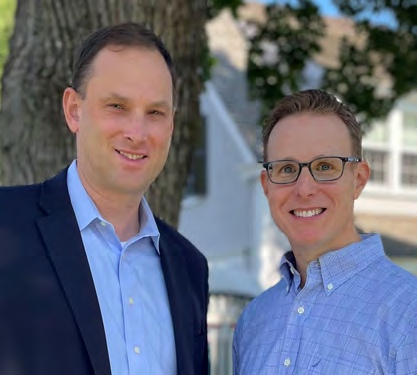
His interests extended to philanthropic capital. He learned about Prime Coalition through the My Climate Journey podcast, then explored recoverable grants with financial adviser Andrew Blackwell. The attraction was the possibility of directing charitable resources toward climate ventures while allowing returned capital to support future giving. He also connected the work to the example he and his wife Jennifer wanted to set for their children.
That leaves a more interesting picture than a founder simply taking up a fashionable investment category. Monteiro was considering several places his resources could go: direct startup investments, philanthropy and the materials selected for a building. The last of those would make his priorities unusually tangible. You could walk through them.
The experiment behind the cedar shingles
The Cape Cod house he and Jennifer built looks comfortable among its neighbors. It has cedar shingles and simple gabled forms. On a podcast tour in December 2023, Monteiro described the less familiar material concealed behind the walls: hemp lime, also called hempcrete. A conventional coastal appearance was covering a different approach to insulation.
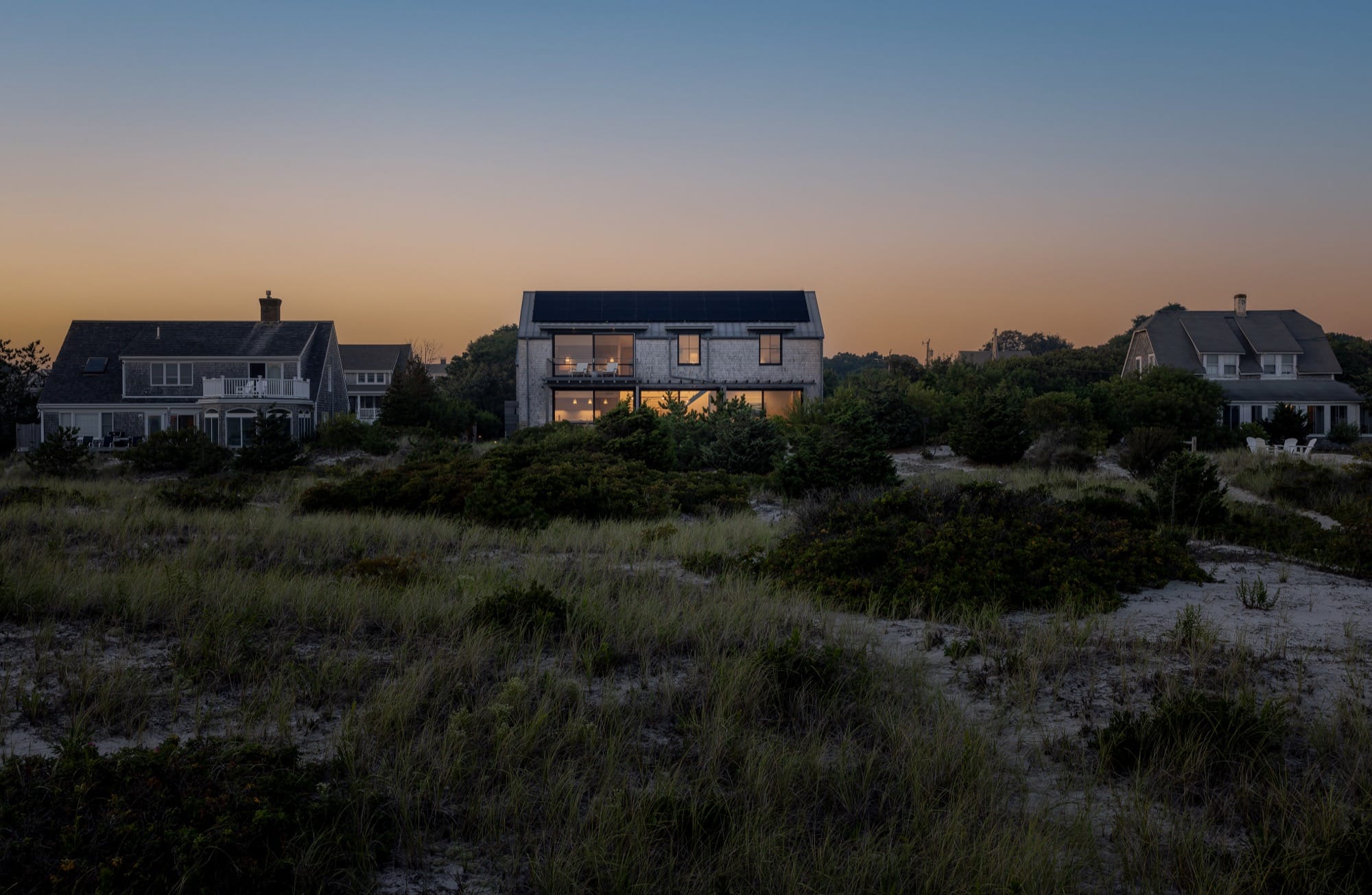
Estes Twombly + Titrington Architects designed the house, with a wider team including C.H. Newton Builders and HempStone. The project used a high-production spray application system for hemplime, a method its designers identify as the first of its kind used in North America. The point of the experiment included making the approach less uncertain for the people who might use it next.
The architects report 12-inch hemplime walls and 16-inch hemplime roofs. Their estimate places the building’s embodied carbon at about half that of a comparable conventional house. Embodied carbon concerns the emissions associated with materials and construction, before the household starts paying electricity bills. The design addresses operation separately through an all-electric approach and rooftop solar intended to support net-zero energy use.
Materials + construction
Hemplime and other substitutions reduce embodied carbon.Energy used to run the home
All-electric design + rooftop solar target net-zero operation.Some details make the house feel like a working demonstration. Hemplime remains exposed on a basement wall. Lime plaster becomes sculpted art at the entry. A material usually hidden inside an assembly gets a chance to explain itself. In 2024, the project received two gold awards and one silver at the regional PRISM Awards.
Monteiro now lives in Hingham, south of Boston. His route through software, property and climate investment has kept returning to the same physical world: homes, the people managing them and the choices made before anyone gets the keys. Buildium began when an approximate answer about rent stopped being good enough. The house asks for another closer look, this time at what a familiar wall contains.