Presidium makes the sort of product most people encounter before they know who made it. An apartment resident in Austin may notice the pool, the quick commute or the hot water. An investor sees occupancy, rents and refinancing. A city planner sees traffic, drainage and a block that finally does something. Presidium sits behind all three views, buying or entitling real estate, designing and constructing it, leasing it, managing it and eventually deciding whether to hold, refinance or sell.
That full loop is the company. The cream-colored kitchens and resort pools are only its most photogenic output.
John Griggs and Cross Moceri founded Presidium in 2003 while still practicing law. Griggs had started investing in Arizona property as a second income stream. Two years later, both men left their legal careers and moved to Texas. The decision was less a dramatic pivot than a test that kept passing: the side business had become substantial enough to deserve their full attention.
The first product was a turnaround
Presidium's early specialty was value-add housing, the polite industry term for buying an apartment property with visible or operational problems and making it worth more. The work can include new interiors, repaired common areas, better marketing, tighter maintenance and a management team that knows which units are ready, which invoices are late and why residents leave. The raw material is usually not a ruin. It is a decent building performing below what its location should allow.
What failed first, then, was not Presidium's model. It was the asset it targeted: under-maintained properties, stalled developments and portfolios whose ownership or operations had broken down. After the financial crisis, Presidium added distressed-asset and special-servicing work. Its public account describes assignments ranging from a half-built 900-unit Florida condominium project to desert land and a casino. Those jobs taught the firm to treat legal, financial and operating problems as one knot.
“Be that expert and know more about your space than anyone else.”John Griggs, co-founder and co-CEO
The approach got an institutional receipt in 2017. Presidium and Partners Group completed a roughly $210 million recapitalization of eight Texas assets - six in Austin and two in Dallas. Several communities had been rebranded and renovated; another, The Edison, was under construction. It was Presidium's largest deal at the time and showed that a collection of local turnarounds could become one financeable portfolio.
What did that growth cost? Presidium does not publish a company-wide development ledger, but individual transactions expose the scale. The 2017 recap was worth about $210 million. The Pepperell Mill conversion later required a $31 million refinance. An early outside data record lists $19.5 million of debt financing in 2014. These are not the price of founding Presidium, nor do they add up to the firm's value. They are snapshots of a capital-intensive machine in which every improvement is paid for months or years before its return is known.
The business model therefore has several clocks. Monthly rent supports property cash flow. Management work creates recurring operating economics. Development and renovation can generate value when a project stabilizes. A refinance can return capital without a sale; a disposition can crystallize gains and hand the building to another operator. In 2023, for example, Olympus Property bought the 370-unit Presidium Town Center in Jacksonville after Presidium had developed it. A resident saw a continuous apartment community. Behind the scenes, ownership had reached the last box in the investment plan.
The moat is not any one box. It is the information moving between them.
Luxury is the wrapper. Control is the product.
Today Presidium calls itself a developer, owner and operator. Its residents range from professionals renting new apartments to people living in rehabilitated communities. Its other customers are less visible: capital partners looking for returns, lenders underwriting projects, landowners seeking a development partner and municipalities negotiating the roads, utilities and public spaces around a project.
That split explains why the company can look like several businesses at once. To a renter, the product is a home and a service relationship. To a pension-scale partner, it is an investment vehicle with a local operator attached. To a city, it is a privately financed proposal that may still need zoning, infrastructure or public participation. Presidium has to make the same parcel legible to all three, even though they measure success in different units: comfort, return and civic consequence.
The company differs from a fee-only property manager because it can own the investment plan. It differs from a merchant builder because its management arm can observe a building after opening. That feedback matters. A leasing team knows whether prospects care more about coworking rooms or storage. Maintenance crews discover which material ages badly. Asset managers see which renovation earns rent and which merely photographs well. The next design can absorb all of it.
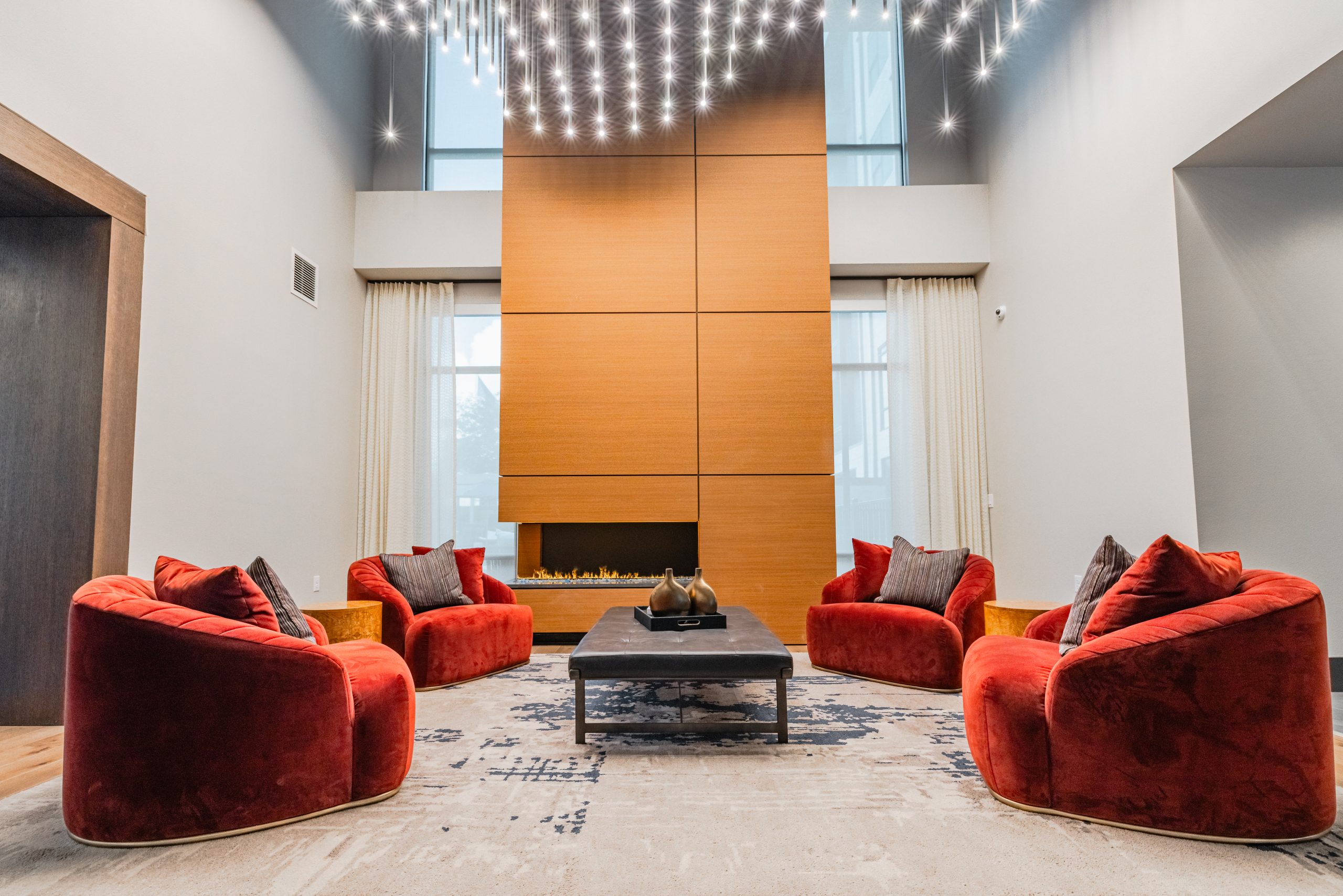
Waterford, completed in North Austin in 2025, makes the model tangible. The 283-unit community redeveloped a former strip center. Its centralized hot-water equipment is designed to reduce energy use; biofiltration now cleans runoff where the old site had no comparable system; and the project earned an Austin Energy Green Building Level 2 rating. Nearby Tech Ridge has 358 units, preserves almost four acres of parkland and uses a similar centralized system that the company says can cut water-heating energy by up to 40 percent.
This is sustainability at the unglamorous end, which is often the useful end: pipes, ponds, fixtures and lower operating loads. It also illustrates the business logic. Resource efficiency can reduce expenses and compliance risk while making a property easier to market. The climate case and the pro forma do not have to glare at each other across the conference table.
The canvas keeps getting larger
Presidium's portfolio now ranges well beyond Texas apartments. It owns the 17-acre Pepperell Mill Campus in Biddeford, Maine, a former textile complex with residences and more than 150 commercial tenants across 16 buildings. A $31 million refinancing in 2024 funded the conversion of a 152-unit rental building there into condominiums. In Santa Fe, the company completed its first New Mexico development, the 171-unit Casa Siena, in 2025.
The ambitious test is Austin. River Park is a planned 109-acre mixed-use district near East Riverside Drive, developed with Partners Group. AEG Presents is set to operate its roughly 65,000-square-foot, 4,000-capacity indoor music venue. Elsewhere in Southeast Austin, the 314-acre project now called The Row combines apartments with a long retail, hospitality and entertainment buildout. Its first retail phase was slated to begin in 2026.
This is where the original playbook meets its limit. Renovating one community is a bounded puzzle. A district is a chain of dependencies: entitlements, infrastructure, interest rates, retailer demand, construction pricing and the public's patience. A music venue can create identity and foot traffic, but it cannot make office tenants appear or cheapen debt. The firm's celebrated control becomes partial control.
Start in one geography. Turn property operations into a feedback system. Integrate the handoff where delay destroys the most value.
More in-house functions mean more fixed cost, management layers and correlated exposure when one market slows.
Assets have fixable problems, rent demand is durable, capital is patient and local teams can execute repeatedly.
Debt reprices faster than rents, entitlements drift, construction costs jump or the problem is the location rather than the operator.
What another operator can actually steal
The obvious answer - become vertically integrated - is too expensive to be useful. The smaller lesson is to own the feedback at the costliest handoff. A five-property landlord may not need an internal construction company. It may need one person who translates maintenance history into renovation scope before an architect draws anything. A developer may not need a management platform. It may need leasing data early enough to delete amenities prospects ignore.
Second, choose problems that are operational, not existential. A tired property in a strong submarket can be repaired. A beautiful property where household growth has vanished is a more stubborn object. Presidium's language consistently pairs underperformance with strong markets. That pairing is the strategy, not a disclaimer.
Third, use partnerships to stretch the canvas without pretending to possess every capability. Partners Group supplies institutional capital. AEG knows venues and artists. Weitzman leases retail. Argosy has joined an Austin development venture. Vertical integration at Presidium does not mean doing literally everything; it means keeping the investment thesis and operating information coherent while specialists do specialist work.
Finally, accept that the model is cyclical. Apartment supply can outrun demand. Rates can turn a sound building into an awkward capital stack. Public-private projects invite scrutiny over who pays for infrastructure and who captures the upside. Presidium's own history offers the best defense: learn on contained problems, build a system, then enlarge the problem carefully.
The company has spent more than two decades moving from broken apartments to finished communities, from single assets to portfolios, and from portfolios to districts. The next result will not be measured by a rendering. It will be whether the apartments fill, the public spaces feel public, the venue draws people on a Tuesday and the whole machine still works after the first plan changes.