Michael Martocci began with an unusually agreeable supplier: his mother. When she brought home groceries, he would take the stock outside and offer it to the neighbours. The buying department had already paid. The sales department was a small boy in a driveway. As introductions to commerce go, it had rather better margins than most.
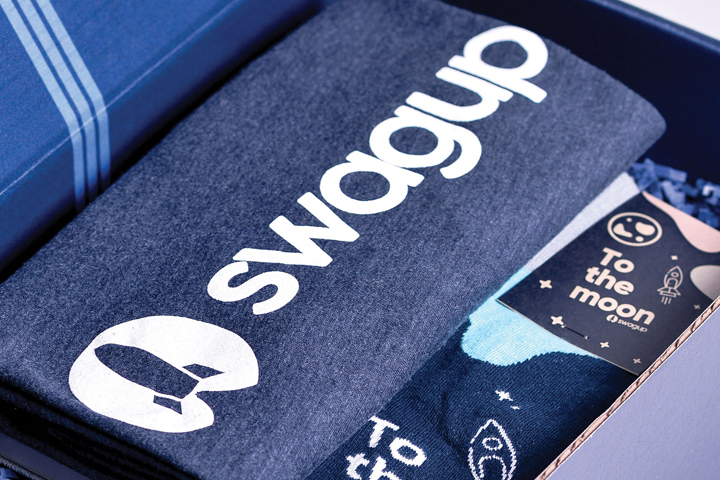
Years later, he would build a business around giving things away. SwagUp supplied the shirts, bottles, notebooks and boxes that companies send to employees and customers. Behind the cheerful parcels sat the less photogenic work: design, purchasing, storage, packing, software and international delivery. Martocci made that work his business.
Now he has changed lanes. His nine-year run at SwagUp ended in June 2026. Based in Austin, he is building Backroad, a place for car enthusiasts to understand the market and connect. He arrives with experience in a trade where a pleasing object can conceal a spectacular amount of administration.
The expensive flag that led somewhere
At William & Mary, which he entered in 2013, Martocci initially imagined a career in wealth management. Alongside a friend, he started Clique, an app for students looking for other students to join an activity. Promoting it required printed materials. The prices prompted another idea: source custom flags overseas and sell merchandise to campus fraternities.
One venture had supplied the inconvenience for the next. He later left university for a business partnership with former NFL punter Steve Weatherford, whom he had met through his father’s sports and entertainment travel company. A brief spell at the venture firm Brand New Matter followed. Around startups, he noticed how much attention went into brand and employee experience.
Those companies could put extraordinary care into their products and still struggle to assemble a welcome box. A new hire might receive a beautifully designed notebook, provided somebody had found the notebook, commissioned the design, ordered the box and negotiated the office cupboard. Corporate generosity had acquired a part-time logistics department.
A box becomes the business
SwagUp began in May 2017. Its early home was his mother’s house in New Jersey, a setting with little separation between domestic life and incoming packages. The idea became more precise when customers wanted sets of items bundled for new employees. Each request revealed the same awkward chain of tasks.
In the summer of that year, Martocci decided to concentrate the company’s message on swag packs. He remembered arriving at the decision while out running. A company offering everything invites a customer to do the choosing. A company offering a finished pack gives the customer a recognisable job to hand over.
That focus mattered because the industry already had plenty of merchandise. The opening lay in the assembly of the experience: choosing suitable items, applying the branding, bringing the pieces together and sending them where they belonged. The box was an attractive way to sell an operation that buyers would otherwise have to organise themselves.
The software came off the shelf
Martocci was not a programmer, and the early version of SwagUp reflected the resources he had. He built the website with Wix, collected requests through Typeform and organised work in Trello. Zapier connected the pieces. Customers could describe the merchandise they wanted without waiting for a bespoke platform to exist.
As the offer narrowed to packs, the form became a pack builder. Customers selected items, supplied a logo and set a budget; the information moved into the team’s workflow so designers could prepare mockups. The customer saw a relatively straightforward request. Behind it, existing tools were being persuaded to behave like a company’s operating system.
“Typeform was basically the product.”
Michael Martocci, recalling SwagUp’s early setup
The arrangement let him learn from paying customers. It also gave the business a practical order of operations: sell a useful service, discover where it strains, then improve the machinery. An elaborate platform can be a fine thing. It becomes rather more useful once somebody wants what it does.
- WixThe shop window
- TypeformThe customer request
- ZapierThe connection
- TrelloThe work queue
Off-the-shelf tools first. A custom platform later.
Eventually the arrangement showed its limits. Trello accumulated too much data and too many files. The form constrained the experience he wanted to offer. Martocci described the difficulty of keeping dependable information across the business. Software that helps an enterprise begin can become software that the enterprise must outgrow.
He also acknowledged mistakes in hiring and team building. His 2021 account was candid about the difficulty of constructing infrastructure piece by piece with the money available. Building a fulfilment operation, a technology team and a sales organisation together gave him several different businesses’ worth of decisions to make.
The unromantic arithmetic of independence
Bootstrapping suited Martocci’s appetite for control, but it required close attention to timing. When did a customer pay? When did a supplier need paying? How long did inventory sit before it moved? A growing order book could coexist with a pressing need for cash. Success still had invoices attached.
His attention to the cash conversion cycle gave the company a way to think about financing growth through its own activity. Better supplier terms had to be earned through reliable payments. Large customers could take longer to pay. The practical freedom of running the company depended on these negotiations as much as on the founder’s willingness to work.
He applied similar scrutiny to headcount. Revenue per employee interested him; simply adding people was insufficient evidence of progress. He wanted orders to make economic sense from the beginning, with repeat business adding value afterward. It is an approach with limited ceremony and a useful resistance to expensive wishful thinking.
Independence also carried an emotional attraction. By 2022, he was openly discussing the pride involved in having built without equity funding, and the difficulty of deciding whether to introduce new people and obligations. A financing decision could alter who had a say. Keeping control was part of the appeal.
That position evolved. In March 2023, SwagUp received revenue-based financing from Decathlon Capital Partners. The arrangement required repayment from future revenue and did not exchange ownership for the capital. It offered a route to invest in growth while preserving equity. Bootstrapping had produced a discipline; the next decision concerned how to finance what followed.
“I used to think that once you got to a certain scale you were safe.”
Michael Martocci, on the continuing risks of running SwagUp
The people beyond the packing tape
The company’s 2021 figures suggest how quickly the operation became substantial: 2,048 new clients and 2,147,157 packs shipped that year. Those parcels travelled more than three million miles. A business conceived around a simple handover had become responsible for a great many handovers.
Recognition followed. Martocci joined the Forbes 30 Under 30 class of 2021 in Retail & Ecommerce. That July he received an EY Entrepreneur Of The Year New Jersey award. The honours recorded a particular stage of the business: a young founder learning to run an organisation whose reach had moved well beyond his original surroundings.
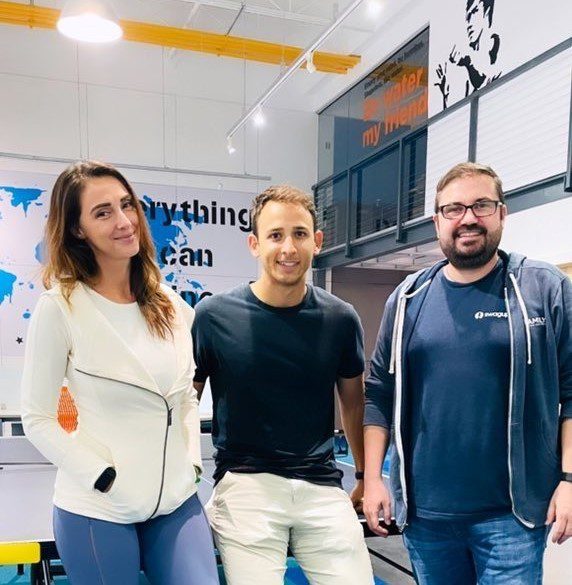
Helen Rankin and technology leader Dak Gonzalez were part of the Florida chapter. By January 2021, SwagUp had a Miami office at Ironside in Little Haiti, with a local group working across product, design, engineering, sales and customer success. Martocci valued the opportunity to work together on technical and creative problems even as the company embraced remote work.
His description of culture remained practical. In a February 2026 conversation, he emphasised trust, responsibility and curiosity. He wanted people to have room to do meaningful work, rather than to derive their importance from a title. As the company spread geographically, protecting that experience became another piece of the founder’s job.
He could still recall the black water bottles with a white logo ordered by early customer Apiary Digital. The sale came through a Facebook group associated with Hustle Con. Friends from his local area helped with the young company’s work. Such recollections restore the small scale that growth figures tend to erase: someone agrees to buy, someone nearby agrees to help.
A sale, a departure, a different road
BDA announced its acquisition of SwagUp on December 4, 2024. By then, the customer base extended from startups to enterprise names including Nasdaq, Logitech and Northrop Grumman. The buyer highlighted SwagUp’s technology and its approach to ordering and distribution. Martocci, identified in the announcement as Chief Swag Officer, looked toward serving enterprise customers with BDA’s resources behind the operation.
- May 2017
- SwagUp begins
- December 2024
- BDA announces its acquisition
- June 2026
- Martocci’s SwagUp chapter ends
When he later marked his departure, he put cumulative sales at close to $300 million across more than 10,000 companies. His fondest memories concerned the team: late nights getting holiday packages out, office games, trips and shared milestones. His farewell contained a compact verdict: “The journey was the destination.”
Backroad turns toward a longstanding interest. He describes years spent watching car videos and reading Autoblog. The new company focuses on market intelligence and connections for enthusiasts; its early-access site offers free membership with activation by the team. There is another complicated buying experience here, and another audience that cares deeply about the objects involved.
The driveway salesman has returned to a personal enthusiasm, with considerably more operational experience. This time the objects have engines. The satisfaction, if the past is any guide, will include finding people who want to build the thing with him.
Keep following the road
Find Martocci on LinkedIn, X and Instagram. Explore Backroad and SwagUp.