Michael Farrell had made a list. On one side were the reasons to join his father’s company in San Diego. On the other was the complication that could make every ordinary office disagreement rather less ordinary: his father would be the boss. An employer can be left behind at five o’clock. A father has a longer lease.
It was 2000. Farrell was working at Arthur D. Little in Boston and considering opportunities at Boston Scientific and Genzyme. He called his father, Peter, for advice. Peter supplied a third option: come west and work with him. Mick initially intended to attend the interview, satisfy his father, and take another job. Then the consultant started consulting himself.
On the flight, with his soon-to-be wife Lisette, he weighed the opportunity. The business had room to grow. The technology interested him. The family complication remained. “The only negative was that the old man is the boss,” he later recalled. He decided he could give it a year or two.
That temporary arrangement has now lasted more than a quarter-century. Farrell became Resmed’s chief executive in March 2013 and its chairman in January 2023. A short experiment became a career, and then a second act for a company whose founder happened to share his surname. The family resemblance is easy to establish. The interesting question is what the son would do differently.
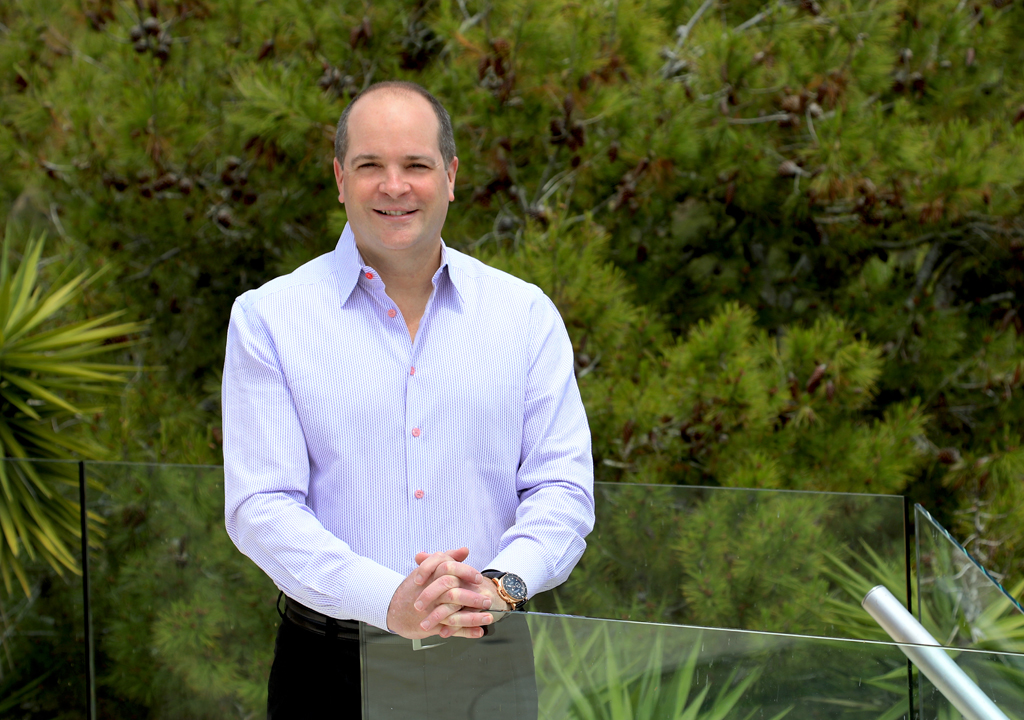
An engineer before the corner office
His training began well away from a boardroom. Farrell graduated from the University of New South Wales in 1994 with first-class honours in chemical engineering. His early employers included BHP and Dow. Those names place the beginning of his career in the world of industrial processes, materials and manufacturing, where an elegant idea eventually has to survive contact with a factory.
He went on to earn a master’s in chemical engineering at MIT and an MBA at MIT Sloan, graduating in 1998. The combination matters to the shape of his working life. Engineering supplies the question of how something operates. Management adds questions about who will buy it, who will build it, and how an organisation will pay for the next version.
Before Resmed, he also worked at Genzyme and in consulting. The route gave him experience inside different kinds of organisations before he entered the family-founded business. It is tempting to draw a straight line from a surname to a chief executive’s desk. His résumé takes several detours through other people’s buildings.
In June 2020, he returned virtually to his Australian university as the first speaker in an inspiring-alumni series. An audience of 156 students and staff heard him discuss his career. There is something useful about that return journey: the executive speaking about ambition had once been the undergraduate learning the technical work. The qualifications were followed by years of practice.
Thirteen years before the top job
Farrell joined Resmed in September 2000. He worked in marketing and business development, became a senior vice president in 2007, and took charge of the Americas region in 2011. He held that regional presidency until his appointment as chief executive two years later. His ascent occupied thirteen years inside the company.
Those steps covered different vantage points. Business development looks for opportunities beyond the current operation. A global business unit requires decisions across functions and markets. A regional presidency puts commercial execution close to the centre of the job. The sequence is more revealing than a list of titles alone: his responsibilities widened before the final promotion.
The 2013 succession also involved a board committee. When the appointment was announced, lead director Gary Pace described the decision in terms of the experienced internal team that had helped build the company. Rob Douglas, already chief operating officer, became president as Farrell took the chief executive role.
The paired appointments deserve attention. A company can make its succession announcement look like a solo entrance, even when its daily work depends on a much larger cast. Here, the announcement advanced two established operators. The founder’s son was the person in the headline, but the organisational arrangement gave another senior colleague a larger role too.
A decade later, the board appointed Farrell chairman, effective January 25, 2023. Peter became chairman emeritus and remained a board member. The transition carried a certain familial economy: the son added a title while the father kept a seat. Yet the governance consequence was substantial. The executive running the business would also lead its board.
- 2000Joins Resmed
- 2011President, Americas
- 2013Chief executive
- 2023Chairman + CEO
The chief executive’s disappearing act
For someone with those two titles, Farrell offers a surprisingly practical account of leadership. He argues for hiring people who know their jobs better than he does, giving them resources and a strategy, and allowing them to work. The higher the executive climbs, the further he gets from the particular processes on which the company depends.
That is an uncomfortable admission for a profession so often photographed at the centre of everything. The chief executive cannot personally possess the best answer to each manufacturing, logistics or technical problem. Farrell’s version of the role leaves room for expertise to live elsewhere in the organisation. Authority includes deciding when another person should have the floor.
“Get out of their way and let them operate,” he says. The sentence sounds easy until a leader has to follow it. Budgets, hiring and strategic choices remain executive responsibilities. Giving someone freedom without the resources to exercise it would be a rather economical form of theatre.
His 2025 conversation with Scott Johnson on the Orange Tree podcast returned to recruiting and retaining talent. The subject is consistent with that earlier account of leadership. A business that depends on skilled people has to persuade them to arrive, then give them reasons to stay. An appointment letter handles only the first half of that bargain.
“Get out of their way and let them operate.”Mick Farrell, on empowering colleagues
Make room for the people who join
Farrell has used the word “joiners” for people who connect disciplines inside a business. It is an unusually modest label in an industry of elaborate job titles. An engineer, a marketer and a commercial operator can each understand a different part of the same opportunity. Someone must help them work on it together.
An internal competition called VentureTHON gave that idea an organisational form. Employees could propose projects, assemble teams and compete for funding. Farrell described his early expectation that the programme might mainly provide development and help retain people. He later said it had also produced projects with commercial potential.
The distinction between those outcomes is useful. Learning has value even when a proposal does not become a business. At the same time, an innovation programme needs some route from the presentation to the funded work. Otherwise, the most polished product it makes is a slide deck.
Farrell’s stated ambition was to keep the energy of a startup as the company aged. Taken seriously, that creates a continuing management problem. Established businesses need dependable processes; new ideas need permission to challenge them. The people who join things together must be able to cross the boundaries an organisation has spent years drawing.
Two boardrooms, different seats
Farrell’s working life also extends beyond Resmed. He joined Zimmer Biomet’s board in December 2014 and became its lead independent director in January 2025. His committee work there includes compensation and management development, alongside quality, regulatory and technology oversight.
That role places him on the other side of the executive-board relationship. At Resmed he holds the combined chairman and chief executive titles. At Zimmer Biomet he serves as an independent director. The responsibilities are distinct, even when the person bringing his experience into the room is the same.
In January 2026, he began a two-year term as chair of AdvaMed, having served on its board since 2015. An association adds another kind of leadership. Its members have their own businesses, priorities and shareholders. The chair has to work across that collection rather than issue instructions down a single corporate hierarchy.
His announced agenda includes digital transformation and wider global access to technology. These are public priorities, rather than completed accomplishments. They give his term a direction and create a basis on which its work can later be judged. The calendar supplies a useful discipline: two years is long enough to make decisions and short enough to keep them in view.
The numbers, with their dates attached
By August 2026, Resmed was reporting annual revenue of approximately US$5.7 billion, up 10% for its fiscal year. It also reported returning US$1 billion to shareholders through dividends and repurchases during that period. These are company results produced by an organisation, rather than a personal scorecard for its chief executive.
The distinction matters in a profile of a long-serving leader. A tenure provides continuity, but a company’s output also depends on colleagues, customers, investment and circumstances beyond one office. Farrell’s own emphasis on giving capable people resources sits more comfortably with that collective explanation than with the familiar portrait of the solitary corporate magician.
His October 2026 shareholder letter thanked a workforce of more than 11,300. That scale changes what leadership can mean in practice. A leader cannot maintain a personal working relationship with every employee. Priorities have to survive being passed through teams and locations; decisions have to reach people who will never sit opposite the chairman.
The figures therefore tell two stories at once. They describe the size of the enterprise under Farrell’s leadership. They also describe the limits of personal control. The larger the organisation becomes, the more his advice about trusting specialists begins to sound like an operating necessity.
A return closer to home
Farrell’s community work includes Father Joe’s Villages in San Diego, which supports people experiencing homelessness. He has described the satisfaction of serving the community as a “return on soul”. It is a small alteration to the language of investment, with a markedly different thing being counted.
He has also identified Clayton Christensen’s book How Will You Measure Your Life? as a favourite. Its presence in his account of leadership is telling. Alongside the quarterly report sits a longer question about where a person directs time, attention and responsibility. A company provides one set of measures. A life requires several.
Farrell was born in Seattle to Australian parents and grew up in Australia. Today his working base is San Diego. The geography has changed more than once; the connection between practical training and management has remained. He has spent much of his career moving between technical questions and the people needed to answer them.
The young consultant who considered a short stay in his father’s company could hardly have put all of this into a pros-and-cons table. There would have been too many columns. Twenty-six years later, the most revealing part of his leadership may be his willingness to leave space for other people to do the work. Taking over, in that account, includes learning what to hand on.