Michael Dorrell’s first view of Manhattan did not come with the composure one might expect from a future investment firm founder. Flying along the Hudson, looking at the density of skyscrapers around Central Park, he remembered a pounding heart and a blunt question: “What the hell am I doing here?” It is a better opening to his story than a balance sheet. Before there was a firm to lead, there was a young Australian trying to imagine himself inside that city.
The transfer had involved a choice. At Macquarie, where he had worked in mergers and acquisitions in Sydney, New York required moving into infrastructure. He chose the city. The field came with it. There is something pleasingly ordinary about this hinge in a consequential career: geography gets a vote, and professional destiny arrives attached to the job description.
A city first, an asset class second
In 2001, Dorrell joined Macquarie’s small US infrastructure team. The setting offered room to learn a market before the market became crowded. America already had established ways of financing public infrastructure, including municipal bonds. Private investors had to look beyond the familiar airport and toll road to see how much else the category could contain.
That widening definition would matter. Pipes, communications networks, freight equipment and energy facilities could all sit inside an investing world once more closely associated with roads. The opportunity depended on knowing the individual business well enough to distinguish a useful asset from an expensive object. Concrete alone is a rather poor investment committee.
Dorrell spent more than a decade at Macquarie, eventually becoming a Senior Managing Director. He later became a Senior Managing Director in Private Equity and Co-Head of Infrastructure Investment at Blackstone. In 2011, he and fellow former Macquarie banker Trent Vichie founded Stonepeak. The résumé records the institutions; the sequence shows the years of practice that preceded independence.
His current responsibilities include the firm’s strategy, investment decisions and expansion into new regions and products. Those are broad assignments. What makes the career legible is the recurring subject beneath them: the physical systems that allow other businesses, and ordinary daily life, to function.
The freedom to work it out
Dorrell grew up in Griffith, New South Wales, the oldest of five children. He remembers riding a BMX bike to school and exploring outdoors with friends. In his telling, the freedom to make decisions without constant adult direction was formative. He later won a scholarship to a Sydney boarding school, where studying alongside ambitious peers helped change his academic environment.
His account gives both independence and company their due. Children can learn by working things out themselves; they can also move further when the people around them make effort feel normal. That combination is more useful than the familiar picture of a founder advancing alone, serenely immune to everyone else.
He earned law and commerce degrees at the University of New South Wales. Years later, his thinking about hiring would return to the distance someone had traveled: he has spoken about valuing applicants who changed their own life trajectories. The destination on a résumé may be shared by many candidates. The route there can contain quite different evidence.
Buying the connections
Stonepeak’s approach joins a preference for defensive hard assets with thematic investing and operational work. The firm emphasizes local knowledge and downside protection, then works with management teams to develop the businesses it backs. That places the practical details of an asset alongside the broad forecast for its sector.
Consider Cologix. Stonepeak first invested in the North American data center business in 2017 after evaluating more than 70 opportunities across the sector. Its thesis centered on interconnection: facilities where networks, cloud providers and enterprises meet. The value comes partly from the concentration of those connections and the difficulty of recreating their physical position.
The distinction is easy to miss if every data center is imagined as a warehouse full of computers. A building can house equipment. An established meeting place for networks offers another layer of usefulness. The investment question becomes whether customers need that particular place, rather than merely more floor space somewhere.
Dorrell made the criterion explicit in a February 2025 television interview, emphasizing assets with strong competitive defenses. At that time, Stonepeak described five data center platforms across North America, Latin America and Asia Pacific, with more than 100 facilities. These were different businesses in different markets, rather than a single wager on one building design.
“What we really look for is businesses [and assets] that have big competitive moats.”Michael Dorrell · CNBC · February 2025
The same attention to connections appears in freight. Stonepeak invested in TRAC Intermodal in March 2020. TRAC provides marine chassis, the equipment that lets shipping containers continue their journey between ports, railroads and destinations. Its network spans more than 600 chassis locations across the United States.
A container arriving at a port is a milestone, not the end of the job. There must be a next movement. The chassis is an uncelebrated participant in that handoff, unlikely to become the star of a glossy consumer advertisement. Yet the handoff is precisely where a chain of activity can be enabled or interrupted.
Lineage offers another example from Stonepeak’s portfolio: temperature-controlled logistics serving the food supply chain. There, the useful work includes preserving and distributing food as it moves. Taken together, these businesses make Dorrell’s investing world easier to picture. The objects differ, but each occupies a place in an activity people depend on.
Different assets. Everyday dependencies. A conceptual map, not a portfolio allocation.
The cloud has a power bill
The rise of AI brings Dorrell’s interests in digital infrastructure and energy into the same conversation. In March 2026, he joined Hugh MacArthur on the Dry Powder podcast to discuss data centers, the comparison with the dot-com era, power markets and shifting supply chains. The subjects belong together because a digital forecast eventually becomes a physical requirement.
A computer cannot negotiate with an unavailable power connection. Land, equipment and electricity must meet in a working arrangement. That offers investors opportunities, while also creating a reason to inspect the arrangement carefully. Demand for a service does not settle every question about the assets that will supply it.
By September, Dorrell was discussing the hard assets underlying AI with Sonali Basak on iCapital’s The Bridge. Later that month, in Sydney, he talked about Australian data center opportunities and confidence in cash flows over the next decade or two. He also supported connecting renewable energy development with data center development.
The time horizon matters. A popular sector can attract capital and lift prices before a particular project has proved its economics. His emphasis on cash flows asks a more demanding question than whether AI will be important. It asks what a buyer can reasonably expect a specific investment to earn, and for how long.
Stonepeak’s renewable energy experience includes Madison Energy Investments, a platform it helped form in 2019 and sold to EQT Infrastructure VI in February 2023. Madison developed distributed solar generation for customers including universities and commercial facilities. During Stonepeak’s ownership, its portfolio grew to more than 386 megawatts.
In September 2026, Stonepeak announced an investment in AMPYR Distributed Energy, which develops onsite renewable energy infrastructure for businesses in the UK and Europe. The announcement described 250 megawatts of contracted projects across 200 sites. These are firm and management-team achievements; they also show the kinds of operating businesses inside the institution Dorrell leads.
A port is a beginning
In July 2026, Stonepeak and CMA CGM completed the formation of UNITED PORTS LLC. Stonepeak invested $2.4 billion for a 25 percent stake in a portfolio of nine terminals across five countries. CMA CGM retained 75 percent ownership and full operational control. The ownership structure matters as much as the scale: investment capital and day-to-day operation have distinct roles.
The partners outlined capacity expansions, cargo-handling equipment, better links to rail and inland transport, and infrastructure for electrifying port operations. They also left room for further investment. A port can be purchased as an interest in a business; its usefulness still depends on how ships, equipment and onward networks work together.
Stonepeak now reports approximately $93 billion in assets under management, using March 2026 figures inclusive of subsequent committed capital. Its October 2026 figures list more than 400 staff and investments across more than 60 countries, including some signed transactions awaiting completion. Those numbers describe the firm’s footprint. They should not be confused with Dorrell’s personal wealth.
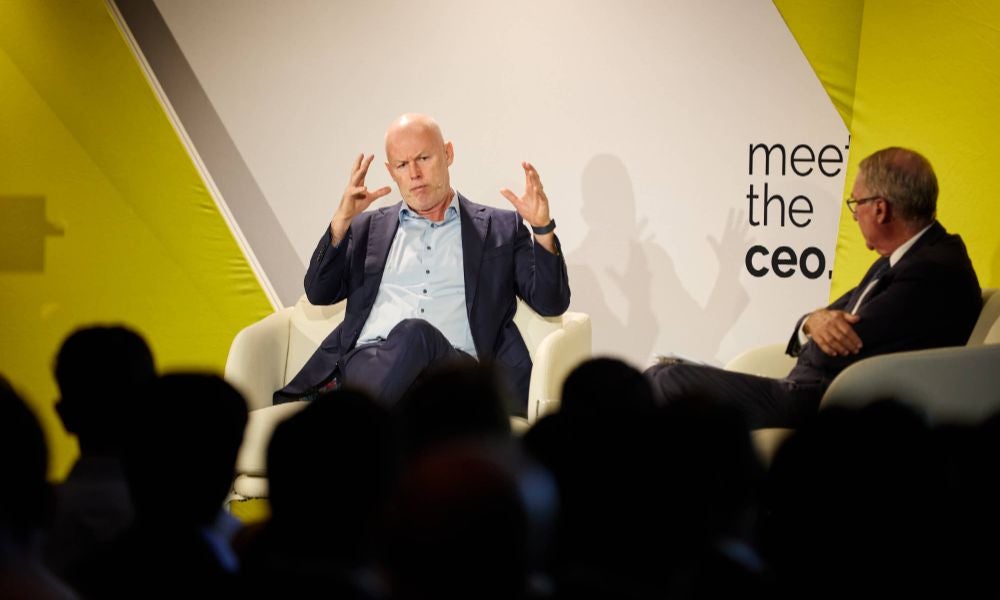
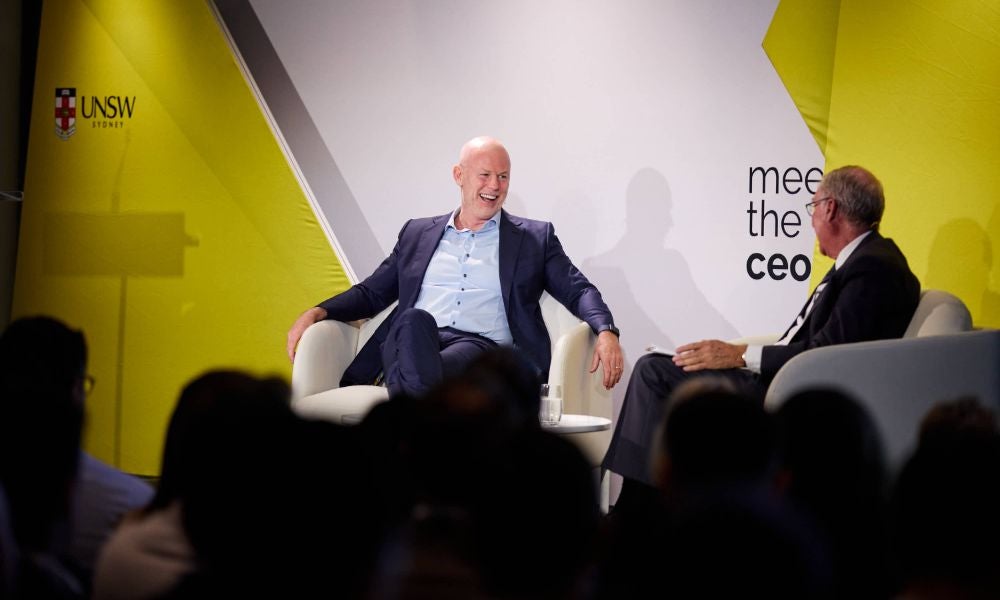
He remains interested in the people who can carry the business further. In his conversation with David Gonski, he emphasized entrepreneurial leaders with low egos. In a separate discussion with Ed Elson, he talked about becoming comfortable with uncertainty and giving the next generation more responsibility. Both concerns fit a founder whose work now includes making room for other people’s decisions.
That is where the young Australian’s arrival in Manhattan becomes more than an opening anecdote. His career began with entering an unfamiliar place and learning what could be done there. The firm he leads depends on teams doing their own versions of that work. Beneath the forecasts and the large numbers are specific places, practical judgments and the next connection that must hold.