There is an ice and splash pad in Hamilton with the Serafini family name on it. In winter, it gives people somewhere to skate. In warmer weather, it offers a different excuse to be outside. For Lou Serafini Jr., whose working life involves funds, investment committees and institutional capital, this is a pleasantly legible expression of what money can do. Nobody needs a glossary to understand a pair of skates.
The facility opened at the Bernie Morelli Recreation Centre in 2019. Alongside it came the Fengate Recreation Fund, supporting access to equipment and programs. The two together represented a $1 million gift to the city. The practical details matter: skates and helmets for families with limited resources, help with recreation fees, support for a local girls’ running program. A place to play is more useful when people can afford to join in.
Serafini now leads Toronto-based Fengate Asset Management, investing across infrastructure, real estate and private equity. His career has taken the family business far beyond Hamilton. Yet the rink is a useful place to begin his story. It makes the distance between financial ambition and an ordinary afternoon seem considerably shorter.
The business his father began
Fengate began in 1974, when Louis Serafini Sr. founded a real estate brokerage and property-management business in Hamilton. Its early work involved buildings and their day-to-day care. In 1981, Enrico Mancinelli of LiUNA local 873 entrusted the elder Serafini with managing an affordable-housing initiative in Hamilton, Burlington and Niagara Falls. A relationship that would outlast many property cycles had begun.
Lou Jr. joined Fengate in 1995, after working as a banker at Royal Bank of Canada. He holds an MBA from McMaster University. The ingredients are modest enough on paper: banking experience, business school, the family firm. The interesting part lies in what followed. He would become responsible for the direction of an organization whose work expanded from property into several forms of long-term investment.
In 2000, Fengate launched Northgate Properties, its first fund, for a group of high-net-worth investors. Its first infrastructure fund followed in 2006. Private equity launched in 2017, the year the firm opened its first American office in Houston. These were distinct steps into new businesses, taken over years. The family name remained; the range of people and institutions relying on the firm widened.
A pension has a building site
The labour connection gives Serafini’s investment work a particular character. Fengate’s relationship with LiUNA stretches back to his father’s housing work. Pension money represents future obligations to people who have spent years earning it. Putting that capital into real assets creates a connection between the money workers save and the places other workers build.
Fengate’s responsible-labour approach describes several intended effects of investment: fair-wage construction jobs, pension contributions, economic activity and tax revenue. These are different ways of accounting for a project. An investor considers the return; a construction worker considers the work; a neighbourhood considers what will occupy the site. The same building has several constituencies, each with a reason to pay attention.
Serafini’s public role has also taken him into the discussion of how infrastructure gets financed. In March 2017, he appeared on BNN to discuss the Canada Infrastructure Bank following the federal budget. It was a subject well suited to his business: the meeting of public priorities and private capital. Roads, transport and civic buildings require more than an attractive announcement. Somebody must arrange the money, the responsibilities and the years that follow.
The people who make expansion possible
A company can put its chief executive’s name on the announcement. It still needs people who can carry out the work. In February 2024, Fengate named Jaime McKenna president of its real estate business, brought in Alison Kimmell to lead development and portfolio management, and appointed Colin Catherwood to lead investments. Serafini publicly credited McKenna’s contribution since joining in 2019.
The appointments reveal the division of labour behind an expanding firm. Kimmell arrived with experience leading the development of Toronto’s CIBC Square. Catherwood took responsibility for investment opportunities, including acquisitions and capital raising. The work needs judgment at several stages, from deciding what to buy to making a development happen. Leadership here means having other people with substantial responsibilities.
By February 2026, further promotions included Kevin Reid as chief operating officer and Greg Buxton-Forman as executive vice-president of operations and strategic initiatives. Serafini’s explanation was direct: “The success of our firm is a direct result of the dedication of our team members.” It is the sort of line that can disappear into a corporate announcement. Alongside the named appointments, it has something concrete to attach to.
The cloud needs somewhere to live
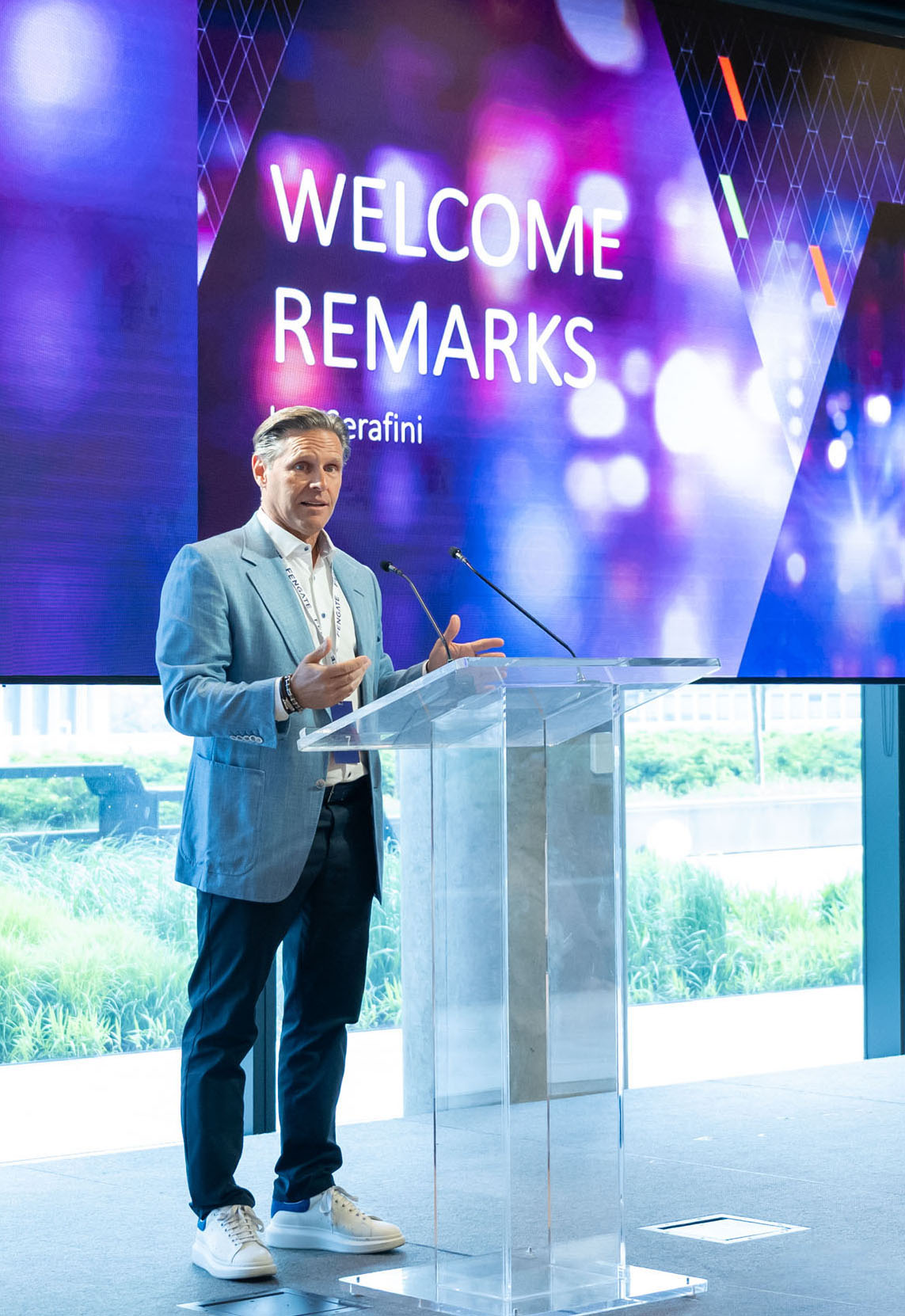
The digital economy gives real-asset investors an amusingly physical problem. Information may travel invisibly, but the equipment has to go somewhere. Fengate’s investment in eStruxture puts Serafini’s business in that meeting place between an expanding digital world and the buildings required to accommodate it.
In June 2024, Fengate completed a C$1.8 billion transaction that increased its equity stake in eStruxture Data Centers. The financing brought together institutional secondary investors, co-led by Partners Group and Pantheon, as well as Fengate funds and affiliated entities. At the time, eStruxture’s portfolio comprised 15 facilities across Canada. Serafini described the investment as a continuation of a relationship built over years.
The deal’s size is one part of the story. Its structure is another: a familiar investment platform, existing partners and additional capital for expansion. Fengate’s digital business now describes eStruxture as a 16-center platform, with locations in Montreal, Toronto, Vancouver and Calgary. For a chief executive overseeing several investment businesses, digital infrastructure adds another set of physical assets to a career that began around property.
Fengate’s June 2024 eStruxture deal
More capital, more people to answer to
In January 2025, Fengate announced the final close of Infrastructure Fund IV at US$1.1 billion. Its backers included public and private pension plans, insurance companies and fund-of-funds managers from Canada, the United States, Europe and Japan. The investment geography was North American; the people supplying the capital were spread considerably farther afield.
That distinction helps explain the scale of Serafini’s role. His work connects institutions with different constituencies to investments with different operating demands. Fund IV’s portfolio included transportation, digital and energy-transition assets. The firm described active management and monitoring as part of its investment approach. Raising a fund begins a set of obligations that continues after the closing announcement.
Inside the company, a different measure of relationships arrived in April 2026. Great Place To Work Canada ranked Fengate first in its 100-999 employee category, up from fourth in 2025. The assessment included confidential employee feedback and a culture audit. The category matters: it describes a particular comparison group. For Serafini, the result adds a measure of employee experience to the more familiar measures of fundraising and investment activity.
Back to the business of homes
In April 2026, Fengate launched Fengate Communities, bringing its residential properties under a common brand. Five communities on which it had broken ground the previous year were expected to deliver 1,915 homes. The new platform would start with leasing at 500 Upper Wellington in Hamilton, a city that keeps reappearing in the firm’s story.
McKenna described the intention as a consistent resident experience, from the first leasing conversation to everyday life in a community. That is a different vocabulary from capital commitments, although it concerns the same investments. People encounter a housing business through their homes. The tenant’s experience extends beyond the day a building is acquired or a fund completes a transaction.
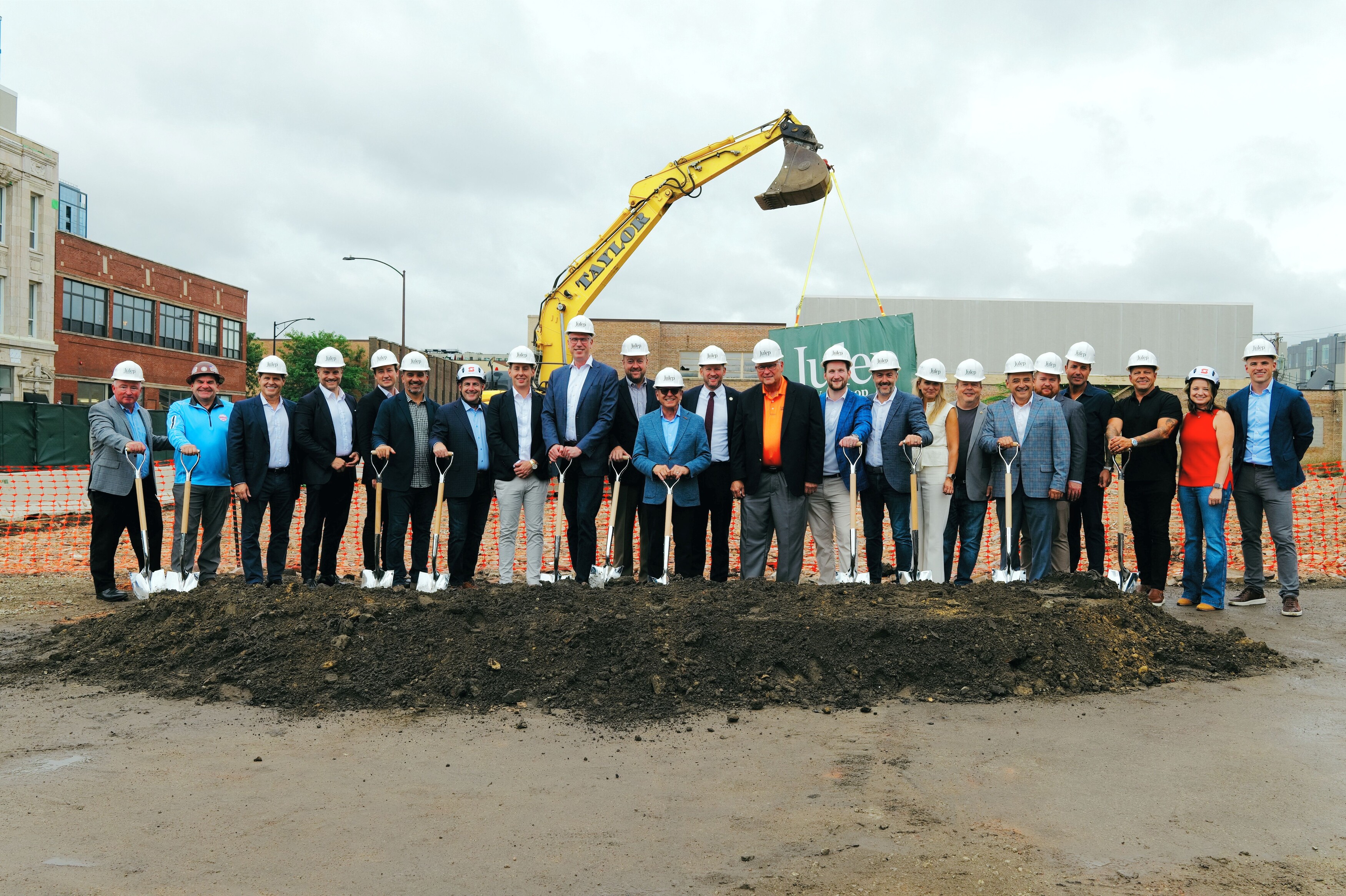
Then came Chicago. On September 9, 2026, Serafini was among the speakers at the groundbreaking for Julep West Loop, a 25-story development with Mavrek. Plans called for 380 apartments, including 76 affordable units, and commercial space anchored by a grocery store. LiUNA, city representatives and construction partners were part of the occasion. More than four decades after the original housing partnership in Ontario, the relationship was present at another building site, in another country.
The small things still count
The recreation gift was part of a wider habit of giving. Serafini established the Fengate Community Foundation, created in 2010 and administered through the Hamilton Community Foundation. It supports charitable organizations, with a focus on children and youth. A fund can make giving less dependent on the enthusiasm of a single afternoon, providing an arrangement that continues beyond the ceremony.
In 2026, the company also launched Building Her Up with Toronto social enterprise Building Up. The scholarship covers a female participant’s tuition and pairs her with a Fengate mentor. Akeba Canning was named its first recipient. Training, communication and financial literacy are among the areas the partnership supports. These are specific interventions, aimed at helping someone enter and develop a career in the skilled trades.
The latest investment announcement, on October 7, 2026, took Fengate into seven development-stage solar-plus-storage and standalone battery-storage projects through its acquisition of Accelergen Energy. The existing management team would continue developing the portfolio. Expansion brings another set of partners and another stretch of work still ahead.
For Serafini, the public record holds both kinds of scale: transactions that require several institutions around the table, and a recreation program that helps a child get onto the ice. They belong to different accounts. They also belong to the same career. In Hamilton, the family name sits on a facility people can use. Whatever the financial vocabulary becomes, that is an unusually straightforward way for an investment story to come home.
“Hamilton has been central to our family’s history and we’re honoured to support this new facility.”Lou Serafini Jr. · 2019