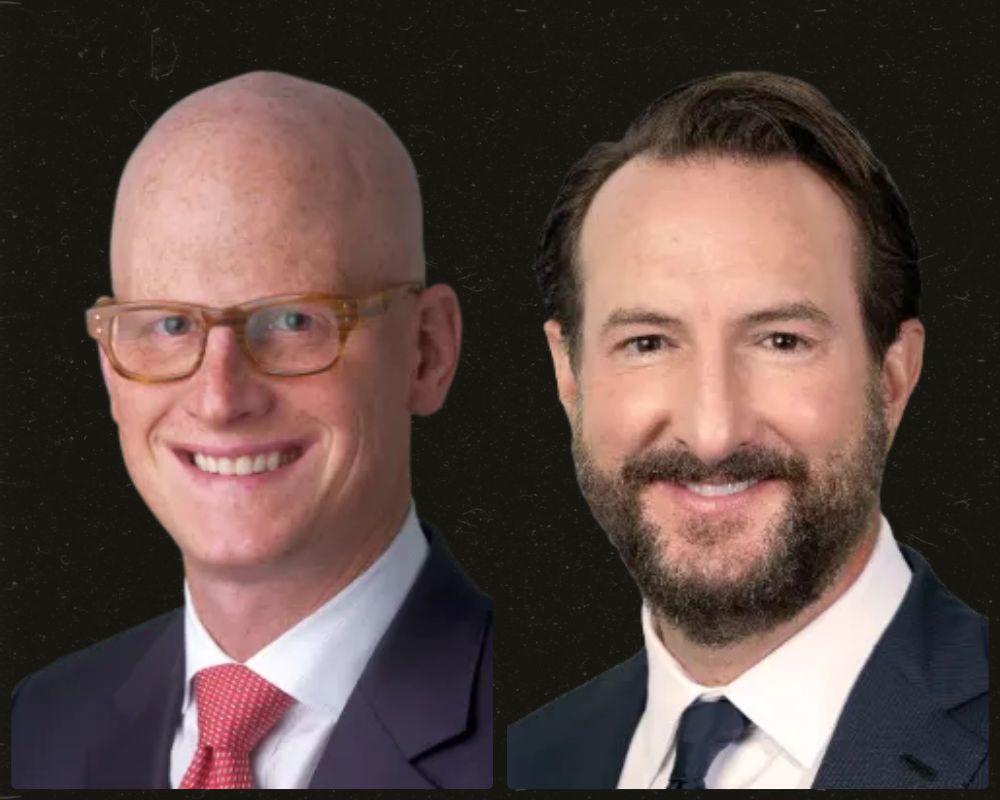
A railroad is an unusually substantial way to begin a working relationship. In 2006, Emmett McCann and Josh Connor met at Morgan Stanley. During their first year together, they worked on the sale of a transnational railroad operator to a private equity firm. The transaction had an ending. Their partnership acquired a much longer timetable.
By 2024, they were taking Oaktree’s transportation infrastructure business independent as Duration Capital Partners. McCann became its co-chief executive officer and co-portfolio manager alongside Connor. Between those two moments lies a career spent working on the businesses that move people and goods, and a recurring question about how patiently their owners should behave.
Finance likes a closing date. Transportation supplies a departure time, an unloading schedule, a customer waiting for a delivery. Put those calendars together and the neatness disappears. McCann’s story lives in that untidy space, where an investment must eventually make sense to someone responsible for getting the next thing moving.
A railroad, then a relationship
At Morgan Stanley, Connor’s territory was transportation investment banking. McCann helped develop the infrastructure effort in Europe and North America. Their interests overlapped in an industry whose physical assets were easy to see and whose operating relationships were harder to put a price on.
The early railroad sale gave them a shared assignment. Their later account of that period also described an affinity for transportation and its people. That is a modest origin story by financial-industry standards. There is no garage, no sudden revelation over coffee, no conveniently cinematic napkin. There is a railroad transaction and two colleagues who continued to find reasons to work together.
McCann’s institutional route included Goldman Sachs, where he was part of the team establishing an infrastructure investment banking practice. He joined Highstar Capital in 2009 and Oaktree in 2014. The employers changed; infrastructure remained the thread. His education combined a finance degree at Wisconsin-Madison with an MBA, earned with honors, at the University of Chicago.
The airport has a public
Highstar put McCann’s infrastructure experience into an especially visible setting. He helped lead its London City Airport investment and led work on the 40-year lease of Luis Muñoz Marín Airport in San Juan. Airports make the obligations of infrastructure investing rather difficult to overlook. The customer is standing in the terminal.
The San Juan project brought private investment into a public-private partnership. In the FAA hearing record, McCann introduced himself as a Highstar managing director and an Aerostar board member. He described Highstar’s proposed partnership with ASUR, named the executives accompanying him, and set out commitments to security, efficiency and a customer-first approach.
That setting matters. A public hearing is a different kind of room from a transaction meeting. A financial case has to be explained to people whose interest in the airport begins with its usefulness. They may fly through it, work there, or depend on the connections it provides. They are entitled to ask what an investment will mean outside the investment committee.
A 40-year lease makes those questions persist. Forty years contains many budgets and many changes of leadership. It demands more than an attractive opening presentation. In McCann’s career, the airport chapter gives long-term investing a concrete scale: a public facility with an operating life extending far beyond the deal announcement.
The airport lease associated with McCann’s Highstar work. A contract measured in decades; a service experienced one journey at a time.
The trouble with a passive asset
In a 2017 discussion, McCann recalled an early infrastructure-investing assumption: buy an income-producing asset and let it sit. He used a heavily financed Australian toll-road investment as a cautionary example. An essential asset could still be a complicated business, and financial engineering could leave very little room for trouble.
His explanation put operating expertise alongside spreadsheets and capital structures. People who had run infrastructure businesses could identify practical changes and understand local relationships. The attraction of predictable cash flow did not remove the need for management. Nor did owning something tangible automatically make the investment sensible.
It is a useful distinction for a reader who has never opened an infrastructure model. Concrete has a reassuring solidity. The business around it can be thoroughly delicate. Revenue, expenses and relationships keep changing while the asset sits there looking permanent. A runway does not become easier to operate because it photographs well from above.
By 2023, McCann’s explanation of transportation investing had a concise formulation: “Transportation is cyclical but critical.” Demand fluctuates, yet the need to move people and goods remains. His argument was that an owner should have the capacity to stay invested through the cycle rather than be compelled to sell at an inconvenient moment.
“Transportation is cyclical but critical.”
Emmett McCann · 2023
The two halves of the phrase deserve equal attention. Criticality describes the service. Cyclicality describes the investor’s exposure. A business can matter enormously to its customers while presenting its owners with a difficult year. Patience has to be built into the investment arrangements before it can be praised as a virtue.
Independence with familiar company
The transition to Duration became public in July 2024, following the team’s separation from Oaktree on June 28. Oaktree retained a minority investment in the new firm. John Frank, its vice chair and former managing partner, became Duration’s chairman. Independence arrived with continuing institutional ties.
The portfolio also traveled with the team. The launch announcement named Watco, OTG Management, Ports America and Rand Logistics among the businesses it would continue supporting. For McCann and Connor, establishing a new firm was therefore an organizational change around relationships and responsibilities already in motion.
The name invites an obvious reading. Duration is a word about time, and time is central to the approach McCann had been describing before the firm existed. The observation does not require a story about who chose the name. It simply makes the sign on the door rather well suited to the argument inside.
- 2006McCann and Connor meet at Morgan Stanley.
- 2014McCann joins Oaktree from Highstar.
- 2024The transportation team establishes Duration.
- 2025Duration expands its investment in Watco.
A relationship with another chapter
In June 2025, Duration made a minority equity investment of more than $600 million in Watco. The size of the check earned attention. The age of the relationship helps explain the transaction: the team’s dealings with Watco extended back to 2018.
The intended uses were specific. Watco would pursue its strategic objectives, including taking full ownership of Industrial Rail Services, which operates rail assets at six Dow Chemical facilities in the United States and Canada. This was capital attached to identifiable operating businesses, rather than an announcement left floating somewhere above the tracks.
McCann described the relationship this way: “Our relationship has grown into a deep collaboration.” The remark fits the public arc of his career. A colleague becomes a long-running partner. An investment relationship becomes the setting for another transaction. The work accumulates through repeated dealings with people and businesses.
Such continuity does not prove that every decision is right. It changes the questions an observer can ask. What did the partners learn in the earlier transactions? How does that knowledge inform the next commitment? Does familiarity improve judgment, and are there enough independent voices to challenge it? A long relationship creates opportunities and obligations together.
Promises meet the payroll
Duration describes a commitment to labor partnerships, supported by a responsible contractor policy and a dedicated labor ombudsman. Those commitments bring the ordinary experience of employees into the firm’s stated investment approach. They also provide a standard against which its portfolio can be examined.
In August 2025, more than 200 food and beverage workers at Philadelphia International Airport were reported to have filed complaints alleging wage and work-hour violations. The workers were employed by OTG Management, identified as a Duration-owned business. These were reported allegations. The account said Duration had been approached for comment.
The episode belongs in the same picture as the firm’s commitments. An investment business can state its principles clearly; employees experience the schedules and pay practices of individual operations. The distance between those levels is an organizational responsibility. A values-based approach becomes meaningful through the arrangements that connect them.
The calendar keeps running
McCann’s public responsibilities also include a seat on Youth INC’s board. The Wisconsin School of Business lists him as Duration’s co-CEO and co-portfolio manager. These connections place his current work alongside an educational institution and a New York youth nonprofit, without requiring a grand theory of his private motivations.
Duration now reports $5.0 billion in assets under management and 15 investments to date, with its website figures dated June 30, 2026. Those are firm-level measures. They indicate the scale of the organization McCann co-leads; the daily experience of its businesses has to be understood at a different level.
That is where his story returns. The airport has another departure. The railroad has another customer. The investor has another decision about management, capital or a partner. After nearly two decades, the relationship that started with a railroad sale is still working inside that sequence. The announcement gets its date. The business keeps its timetable.