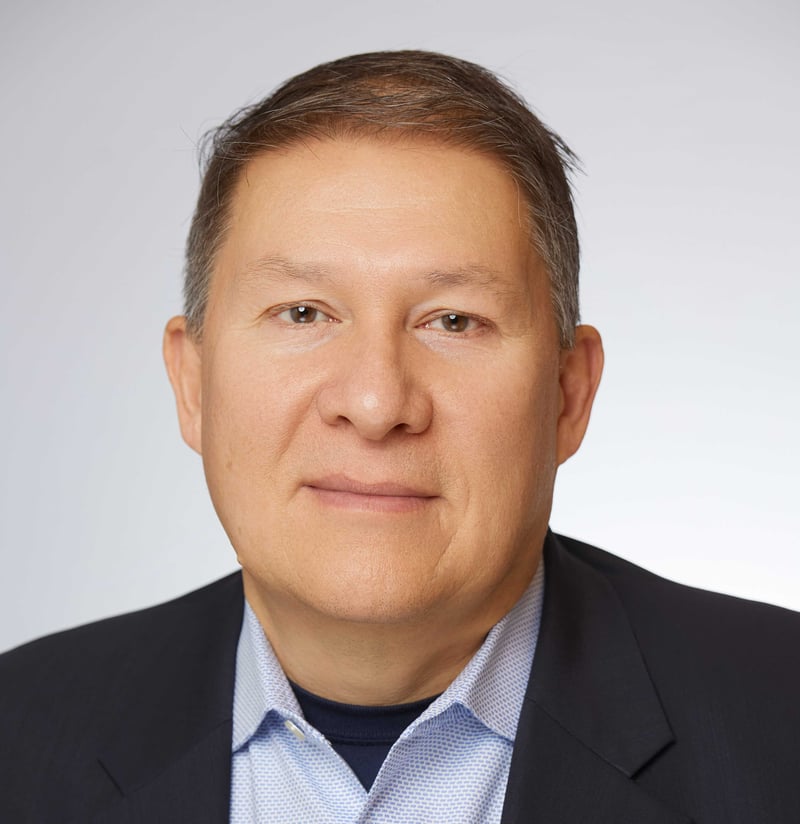
He runs Kytopen, where the goal is deceptively simple: get DNA, mRNA and CRISPR into millions of living cells - fast enough to make medicine out of them.
Most people meet a cell therapy as a miracle. Michael Chiu meets it as a production line that isn't fast enough yet.
The hardest part of a living medicine is not the idea. It is the moment you have to open up a cell and put something new inside it - a gene, an instruction, an edit - and then do that a few hundred million more times, cleanly, at a price a hospital can stomach. That step is a bottleneck. Chiu spends his days trying to widen it.
His company, Kytopen, was spun out of an MIT laboratory. Its platform is called Flowfect: a non-viral, continuous-flow way of pushing genetic payloads into cells using electric fields and fluid movement rather than viruses. The promise is a single technology that runs from a scientist's bench experiment all the way up to GMP manufacturing, without the science changing underneath you.
Chiu took the CEO seat in August 2023, succeeding co-founder Paulo Garcia. He was not the inventor. He was the scaler - the person you bring in when a clever thing built in a university lab has to become a product that ships, gets installed, and survives an FDA-grade manufacturing floor.
That is a job he has done before, in fields that have almost nothing to do with each other. Which is the interesting part.
Kytopen's platform has transformative potential to redefine the discovery and manufacture of next-generation living medicines.— MICHAEL CHIU, ON TAKING THE JOB
Chiu started at Teradyne, the company that builds the machines that test other machines - semiconductors, electronics, the invisible plumbing of modern hardware. He held engineering, product and marketing roles. It taught him how a product actually gets out the door.
Then he went off on his own. In 2010 he sold Trophos Energy, a venture-backed startup he founded around biological fuel cells and energy harvesting - the idea that you could pull usable electricity out of biological processes. Selling a deep-tech company is rare. Selling one you started is rarer.
Next came GeckoCap, a healthcare technology startup where he was founder and CEO. After that, Automation Engineering Inc., where he rose to chief technology officer before the company was acquired by Sweden's Mycronic. Then Erbi Biosystems, a micro-bioreactor company he led as CEO until it was bought by Merck KGaA - MilliporeSigma in the U.S.
Look at the list sideways and a pattern appears. Energy, digital health, precision automation, bioprocessing. The subject keeps changing. The verb does not: take something delicate built in a lab, make it manufacturable, hand it to a buyer who can take it global. Kytopen is the same verb, aimed at the cell.
To engineer a cell you have to deliver a payload inside it. Traditional methods are slow, viral, or don't scale. That step gates the whole cell therapy industry.
Flowfect uses electric fields and continuous fluid flow to open cells and deliver DNA, mRNA or CRISPR - non-viral, tunable, and high-throughput.
One platform that scales down to R&D and up to clinical manufacturing, so the science doesn't have to be re-invented as you grow.
With strong and growing customer demand, this investment lets us scale globally while continuing to invest in infrastructure.— MICHAEL CHIU, ON THE SERIES B
The bet is that cell and gene therapy stays a boutique miracle until someone fixes the factory. Chiu wants Flowfect to be the reason a curative therapy is affordable enough to reach the patient - not just brilliant enough to publish.
// Cambridge to the clinic. Discovery to production. One flow.