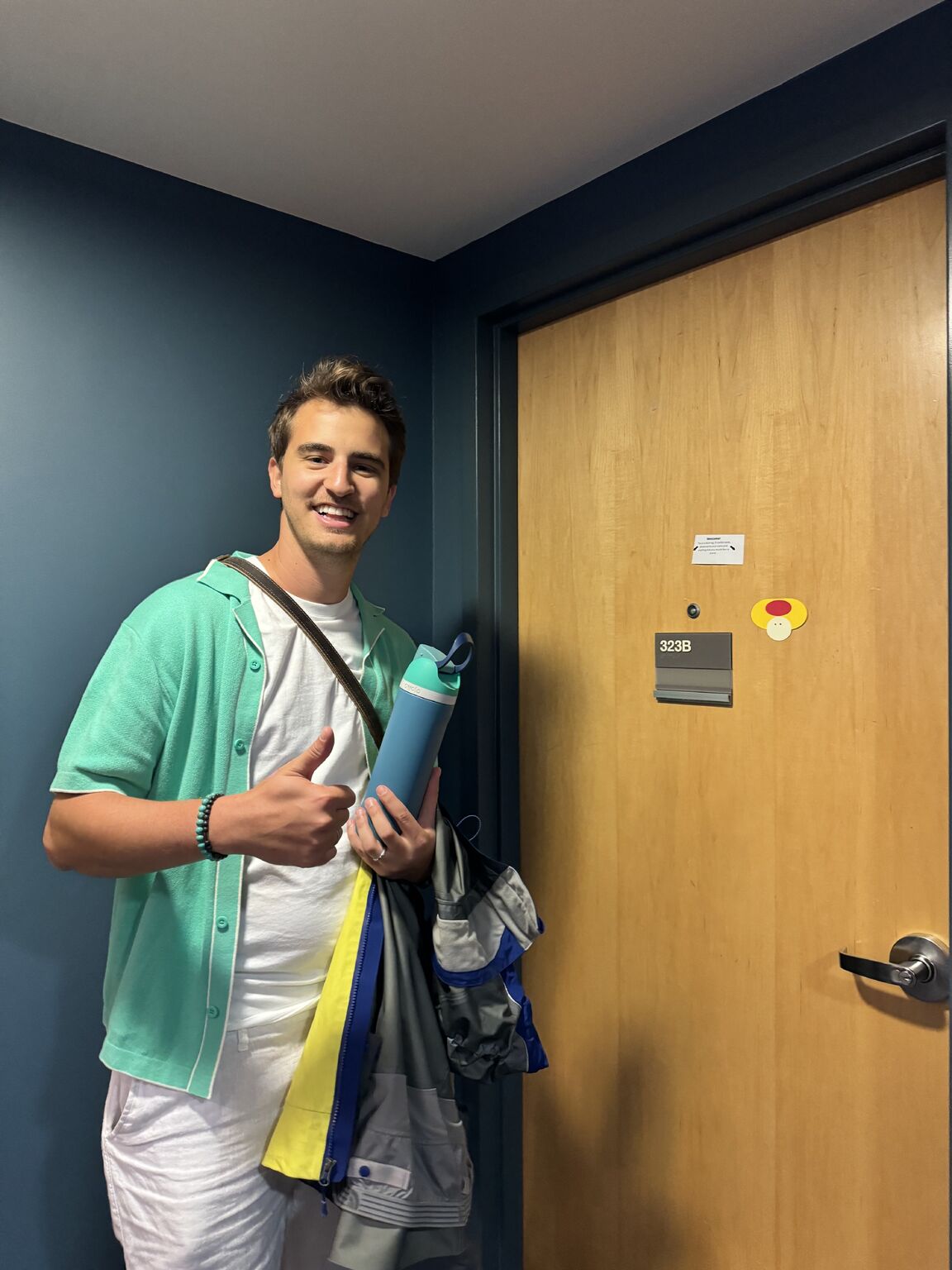
The homework was to clean a hotel room. Micah Estis Green kept going. At Cornell, a housekeeping rotation gave him a close view of a job that guests mostly notice when it has gone wrong. He began bringing a stopwatch and a notepad. He wanted to know where the minutes went, which tasks repeated, and which of them a machine might reasonably take over. A hospitality student had found something to investigate between the bed and the door.
That attention became Maidbot in 2015, later renamed Tailos. Green is its founder, president and CEO, based in Austin. Rosie, the company’s commercial robotic vacuum, does the floor work while staff get on with the rest. The arrangement is almost comically straightforward for a business involving autonomous navigation. A machine can be complicated inside and useful outside. The person operating it should not have to admire its engineering before finishing a shift.
Green’s early measuring exercise also gives this story a useful starting point. Before the investment rounds, before the recognition, before a fleet of robots, there was a student doing the job himself. The notepad is a small object to place at the beginning of a company. It is rather more persuasive than a slide announcing that everything is about to change.
The family business, with circuitry
Hospitality was familiar territory. His mother, Cindy Estis Green, founded the hotel analytics company Kalibri Labs. His grandparents ran a summer camp, where he worked during summers and developed an affection for serving guests. Cornell’s hotel school extended a family interest into a course of study. It also put him in the working parts of a hotel, where a tidy room has to be produced rather than merely appreciated.
There was another interest running alongside it. Green grew up in Maryland outside Washington, DC, and took part in robotics competitions at high school. Business and making things were already part of his life. He describes an early attraction to creating something from nothing, with the entrepreneurial habit running through his mother’s side of the family.
His earlier ventures included SharkPuncher, a multiplayer smartphone game. Players raced, rode dolphins and punched sharks. The premise was inspired by a story he had encountered about a kayaker striking a shark. It belongs to the agreeable tradition of young developers deciding that a phone might as well contain something absurd. Hotel cleaning, by comparison, offered fewer dolphins and a much more persistent customer problem.
The move into robotics required a choice. An existing app gave him something he could keep developing. A commercial robot asked him to recruit technical people, build hardware and persuade hotel operators to try an unfamiliar tool. The new idea came with considerable homework of its own. Even a convincing reason to automate leaves the question of how to do it.
Eight students, one summer, no finished robot
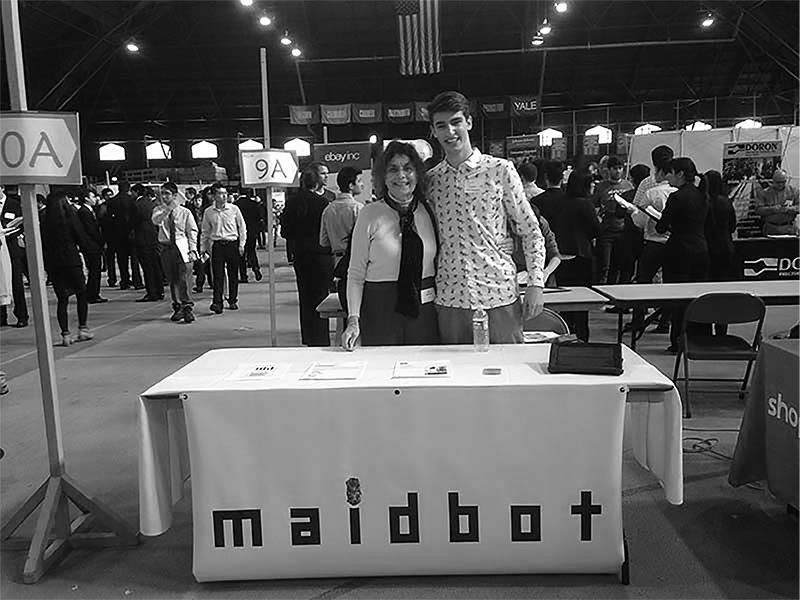
Mentors helped the project become a commitment. Pam Silverstein, an entrepreneur in Ithaca, encouraged him to pursue it. Ken Rother offered a route into the inaugural Rev: Ithaca Startup Works hardware accelerator if Green could assemble a team. Eight engineering students joined for the summer. The company’s first official address, Green later recalled, was a fraternity house. He remembered the sticky floors. A cleaning startup could scarcely complain that it lacked material.
The accelerator supplied something less photogenic and more valuable: a place to make things repeatedly. Green had access to a prototyping lab and people who could help him think through hardware and commercialization. He credited Rother and Brad Treat with guidance. In his early account, Rev provided $2,500 for prototyping, and a LaunchNY pitch competition added $1,000. Those amounts bought a beginning, rather than a ready-made business.
He also learned to treat advice as material requiring judgment. A founder can collect so many opinions that each conversation sends the company in another direction. Green warned about this problem in his early interviews. Welcoming mentors did not relieve him of deciding which suggestions applied. An open door is useful; a steering wheel that everyone grabs is less so.
The first team’s work joined two kinds of knowledge. Green understood enough about hotels to recognize a recurring operational problem. The engineers had to turn that understanding into a machine. Neither side could finish the project alone. A room attendant’s routine, a hotel buyer’s requirements and the behavior of a prototype all needed to fit together. The summer was an introduction to that negotiation.
Green’s early route from a hotel assignment to a product. Each return to the floor gives the next version something to answer.
A hotel room has opinions
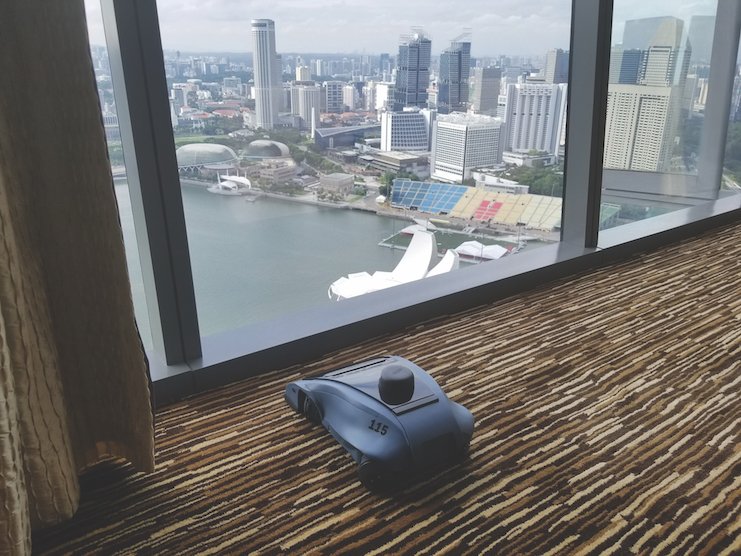
Rosie’s name came from the robotic housekeeper in The Jetsons. The fictional Rosie could carry an entire domestic future on her shoulders. The actual product began with a defined task: cleaning floors. Green’s early descriptions stressed that hotels needed equipment built for commercial use. A machine designed for occasional use at home would face a different working day in a hotel.
The first pilot in Houston helped make those differences concrete. By 2018, Green was describing the many variations that appeared when room attendants and management started using the product. Deployment specialists helped employees become comfortable with the equipment. Familiarity with technology varied, and the company had to accommodate that. The person with a room to finish has little reason to indulge a robot that creates another task.
That practical education extended to information. Moving through rooms gave Rosie a way to collect operational data. Wi-Fi coverage was one early example: weak connectivity affected the robot, and identifying those gaps could help a property improve its network. Green had already made his standard clear in 2016: “Data collection is great, but if it’s not actionable, what’s the point?” The question is pleasantly impatient. A dashboard still has to give someone a reason to act.
“Data collection is great, but if it’s not actionable, what’s the point?”
Micah Estis Green, 2016
There was also work customers would rarely see. In 2020, Green explained the company’s use of Foundries.io to deliver software updates without interrupting daily operations. A fleet of physical machines needs maintenance through software as well as parts. Once a product is working in someone else’s building, updates become part of keeping a promise. The next version must arrive without making today’s job unnecessarily difficult.
The diploma could wait
Green left Cornell to concentrate on the company. He described the decision in terms of the worst outcome: school would still be available if he needed to return. It was a practical argument for a choice that looked unusual on paper. A growing venture needed his time; lectures and exams had their own timetable. Trying to obey both schedules made the conflict increasingly plain.
Recognition followed. He became a Thiel Fellow in 2017 and appeared on Forbes’ 2018 30 Under 30 list in Enterprise Technology. The company won the 2016 Student Startup Madness tournament, giving the early team introductions and attention. Those milestones made the young founder visible. They did not spare him the ordinary work of recruiting, developing a product or getting it into service.
By January 2018, Maidbot had closed a $2 million Series A and received an additional investment from Bissell alongside other investors. Green described the relationship as an exchange: Maidbot brought emerging technology and robotics; Bissell brought cleaning and operational experience. He also returned to Cornell as a guest lecturer. Leaving the degree program had not severed the relationship with the place where the business began.
His education continued elsewhere, too. At UNLV’s Black Fire Innovation, the company worked with Robert Rippee on understanding human and robot interaction in hospitality. A hotel is a social environment as well as a building full of floors. Introducing a machine means figuring out how it fits into the work of the people around it. The operational questions remain as consequential as the technical ones.
- 2015Maidbot begins at Cornell
- 2016Student Startup Madness win
- 2017Thiel Fellowship
- 2018Forbes 30 Under 30
- 2022The Tailos name arrives
- 2025Ten years of the company
A new name with an old ambition
In March 2022, Maidbot became Tailos. The name draws on Talos, the bronze guardian of Crete in Greek mythology. A mythological automaton is an ambitious namesake for a business that began with vacuuming. It also gives the company more room than a name tied to one household role. Green wanted to build physical and digital tools addressing labor shortages across commercial spaces.
The broader idea has remained in view. In later conversations he discussed an ecosystem extending into delivery, security and maintenance. Rosie already supplied a concrete starting point for that ambition. Rather than asking customers to buy a whole imagined future, the company could offer them help with an existing floor. Each additional task would need its own justification and its own usable product.
At the company’s tenth anniversary in July 2025, Green reported 110 million square feet cleaned and more than 325,000 robot runs. These are the company’s figures, and they describe accumulated use rather than a forecast. The work had moved well beyond the first campus assignment. His anniversary message also credited the team, investors and advisers who had kept the venture moving through a decade of development.
The notebook survived
Austin is where Green has made his life alongside the company. Outside work, he has spoken about cycling, tennis, visiting Barton Springs and taking the dog to the park with his wife. Music has stayed with him as well. Earlier biographies mentioned electronic production; more recently he described playing ukulele and making music with his wife. There is room in this robotics career for an instrument that requires no software update.
The early housekeeping notebook survived, too. Green said his wife found it, bringing back the original exercise in measuring tasks. That is a satisfying object to recover after years of building machines: a record of the questions that came before them. His company now has a different name, a longer history and customers far from Cornell. The page of observations still belongs to the same project.
He had been assigned a room to clean. He decided to examine the work closely enough to change how a part of it was done. Ten years later, the most revealing thing about the beginning remains its scale. One person, one job, a stopwatch, a notebook. There was plenty to learn before the robot even entered the room.