An advertiser buys space on television, a phone and a computer. Each seller returns a handsome audience number. Add the numbers and the campaign looks larger still. But someone watching television may also be scrolling on a phone. The arithmetic has counted a screen change as a new person. Miaozhen Systems has spent much of its life working on this discrepancy: the distance between what an advertising system records and what a budget owner needs to know.
- Checks ad delivery and filters suspicious traffic.
- Plans media budgets around audiences shared across screens.
- Combines software with reports and specialist services.
- Now applies AI to social insights, content and reporting.
A mathematician enters the advertising business
Minghui Wu founded Miaozhen in 2006. His education at Peking University included mathematics and computer science, an appropriate preparation for a business where apparently simple totals conceal difficult questions. Miaozhen’s history records advertising monitoring in 2008, social listening in 2009, and the introduction of its iGRP measurement system and MixReach planning tool in 2010.
That sequence matters. First, establish what happened. Then work out how to spend differently. Mobile advertising measurement followed in 2012. As audiences moved between devices, measuring each device separately became less useful to the person paying for the whole campaign.

Today Miaozhen sits within Mininglamp Technology, with Jane Zhao identified as Miaozhen’s president on its leadership page. Its stated purpose is to provide “measurement, insights, and optimization tools and services.” The language is modest enough. The difficulty lies in persuading buyers and sellers to work from a comparable account of events.
The second screen is not a second customer
Admonitor, its core verification product, checks digital advertising delivery and identifies anomalous traffic. Its anti-fraud system uses more than 40 metrics, including general and sophisticated invalid traffic. For an advertiser, the practical distinction is between buying apparent activity and buying activity that survives inspection.
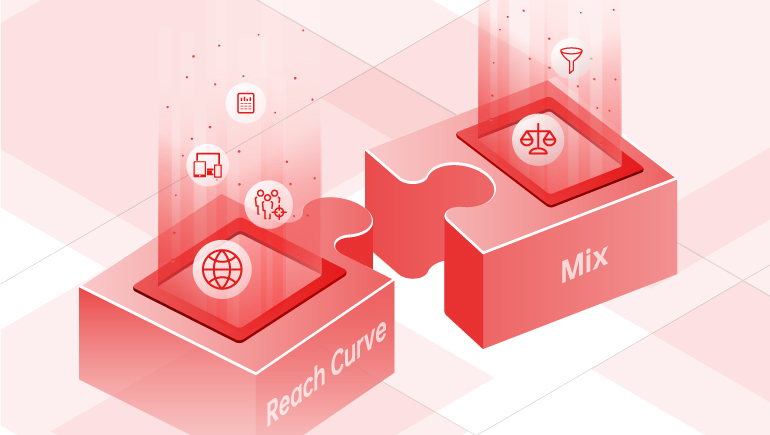
MixReach takes the next step. It models reach across screens, estimates audience overlap and allocates budgets against a reach objective. The workflow also includes checking actual campaign performance against the plan. A forecast becomes something the buyer can revisit, rather than a handsome document filed away when the campaign begins.
MediaInsight helps choose the channels themselves, considering reach alongside qualities such as tone and impact. PlanExecution handles scheduling and allocation across placements. Together, these tools connect decisions that companies can otherwise make in separate meetings, with separate spreadsheets and separate definitions of success.
A business between the buyer and the seller
Miaozhen serves brand advertisers and agencies. Historical company announcements name Procter & Gamble, Microsoft, Volkswagen, L’Oreal, Coca-Cola and Yili. In 2015, it announced work with Nestle and Mindshare connecting audience data with programmatic reservation advertising in China. These are documented relationships, rather than a promise that every named brand remains a customer today.
The company describes a neutral third-party position, with data security and privacy central to its management approach. Its distinction is the combination of verification, cross-screen planning and accumulated advertising data within China’s media environment. A platform’s own dashboard answers questions about that platform; Miaozhen’s proposition is to help compare activity across several.
Competition has been concrete. Campaign Asia reported that AdMaster beat Miaozhen to Unilever’s advertising monitoring contract in 2013. Measurement buyers have choices, and technical credibility still has to survive a commercial pitch.
The price follows the work
This is an enterprise business with several ways to charge. Mininglamp’s 2025 prospectus describes media optimization service fees linked to monitored advertising budgets or usage, alongside software license fees based on accounts and usage. Social insights can involve negotiated prices per report. MediaInsight offers individual reports, annual report contracts and system sales.
For a buyer, the useful starting point is a defined job: verify a campaign, compare media options, select influencers or connect customer data. Miaozhen’s broader portfolio also includes outdoor and live television monitoring, Social Grow for influencer and content analysis, and customer data and marketing automation tools.
Expansion took capital. A reported US$50 million Series D in May 2015, led by Primavera, was intended for ownership restructuring and acquisitions. Earlier, WPP Digital publicly confirmed participation in the third financing round. Funding explains part of the company’s development; it does not supply a price tag for a customer’s project.
Now the measurement company measures its own work
The pressure has not all come from technical problems. Mininglamp’s prospectus describes weaker consumer sentiment and reduced marketing spending during 2022 and 2023. Its responses included more cost-effective, standardized offerings and tighter cost control. Accurate measurement cannot protect a supplier from a customer shrinking the budget being measured.
The newer direction brings AI into both products and production. insightFlow CMS launched and began generating revenue in the first quarter of 2025, according to the prospectus. It combines social content analysis, marketing insights, generation and performance prediction. The commercial idea is to carry evidence from observing content into making it.
Mininglamp’s annual report, published in April 2026, also describes Miaozhen using AI workflows for social insight reports while retaining human review. It reports a twentyfold labor-efficiency improvement for one in-depth report example. That is a company-reported example, not a guarantee for every assignment.
Its August 2026 interim results extend the commercial argument: social marketing services increasingly target client outcomes, with performance-based pricing. For the wider group, automation is becoming something to sell as well as something to use.
“measurement, insights, and optimization tools and services”
Miaozhen Systems · its stated purpose
Ask a better question before buying another impression
The transferable habit is straightforward: define the audience, inspect the delivery, remove overlap, compare the prediction with the result. It gives the next budget meeting a better starting point than competing totals.
There are limits. Cross-screen estimates depend on data access, samples and compatible definitions. Reach alone cannot prove incremental sales, and an AI prediction of audience response still needs testing. Miaozhen is useful where marketers need a common measurement framework and enough evidence to act on it. The final decision remains wonderfully human: given what happened, what should we pay for next?