Minghui Wu remembers a wall of cabinets filled with clocks and watches. His mother worked in quality inspection at a clock factory in Yantai. She would set a selection of timepieces to standard time, let them run for two or three days, then check how far they had drifted. An unreliable result could mean withdrawing a production line. It was a childhood view of a grown-up problem: a thing can appear to work beautifully while quietly getting the answer wrong.
Wu also repaired clocks and watches at home. Years later, when he described the family connection to his advertising measurement company, the resemblance amused him. Miaozhen means “second hand,” the small hand whose constant movement makes precision visible. The family resemblance pleased him. Making the company work would require rather more than a pleasing name.
His working life has taken him from mathematics to advertising data, from student software projects to enterprise artificial intelligence. The markets have changed. The underlying question remains wonderfully awkward. Who checks the numbers when everyone has a reason to prefer a different answer?
The mathematics teacher who took a detour
At Peking University, Wu found an early way to turn mathematics into income: teaching competition mathematics. He had entered the university through the mathematics Olympiad route. By 2003, while still an undergraduate, he was running classes and building the money that would help finance his first business experiments.
That same year, he and six or seven classmates formed a small software outsourcing studio. Paid development work gave the group practical experience and revenue. Eventually, Wu came to regard making software exclusively for other people as a poor use of the team's capabilities. He wanted a product of their own.
He later joked that, without friends pulling him into outsourcing, he might have become the principal of a mathematics training school. The alternative career is easy to picture: the same appetite for problems, a different set of customers, rather more homework. The joke also gives his entrepreneurial beginnings a useful scale. They started with classes, classmates and work someone would pay for.
His formal training continued alongside those experiments. He completed a mathematics bachelor's degree in 2004 and a computer science master's degree in 2007, both at Peking University. Miaozhen was founded in 2006, before the master's was finished. His business and his technical education grew together.
A referee with something to give up
Advertising offered a specific problem. Brands were spending across an expanding collection of online outlets and needed to know what that spending achieved. A meeting with advertising executive Zhu Wei in late 2007 helped sharpen the opportunity. Miaozhen began offering advertiser-oriented internet monitoring in early 2008.
The difficult decision arrived in 2009. The company had both an advertising trading business and a monitoring business. Large customers were preparing to use its data for settlement. Wu later recalled that management chose measurement, regarding it as the scarcer service, even though it was not the most profitable choice at the time.
That decision gave independence a practical cost. A referee who also sells tickets has an explanation to make; a referee with a stake in the score has a much longer one. Miaozhen's commercial position depended on customers believing the measurement could stand apart from the transaction being measured.
Consider the buyer's problem. Several publishers can each report an impressive audience. Adding their totals may count the same person several times. A campaign can produce plenty of activity without answering the question the budget owner asked. Independent measurement creates a place to examine those mismatches. It gives the buyer something more useful than a collection of enthusiastic reports.
“We never provide free products.”
Minghui Wu, 2013 interview; translated from Chinese
Wu linked charging customers to both sustained research investment and third-party neutrality. It was a blunt position in an internet economy fond of giving things away. Someone must eventually pay for the machinery. His argument was that the payment relationship helped define whom the machinery served.
Counting is the beginning of the job
By 2013, Wu was describing a service that went beyond logging advertisements. Miaozhen analyzed reach, frequency and subsequent audience behavior, then used that information to advise on investment returns and media choices. Its MixReach product addressed budget allocation across television, desktop internet, mobile internet and other digital channels.
The distinction mattered to an advertiser trying to divide one budget among several screens. A monitoring system could establish that an advertisement appeared. A planning system had to help decide where the next unit of money should go. The second task required comparing channels that had developed their own habits, measures and sales pitches.
The daily data volume Wu reported for 2012 in an April 2013 interview.
That historical volume offers a glimpse of the work behind an apparently tidy report. In the same interview, he discussed the economics of operating infrastructure and the trade-offs between public cloud services and systems tailored to a large customer's needs. Even a business selling clarity had to make its own messy engineering choices.
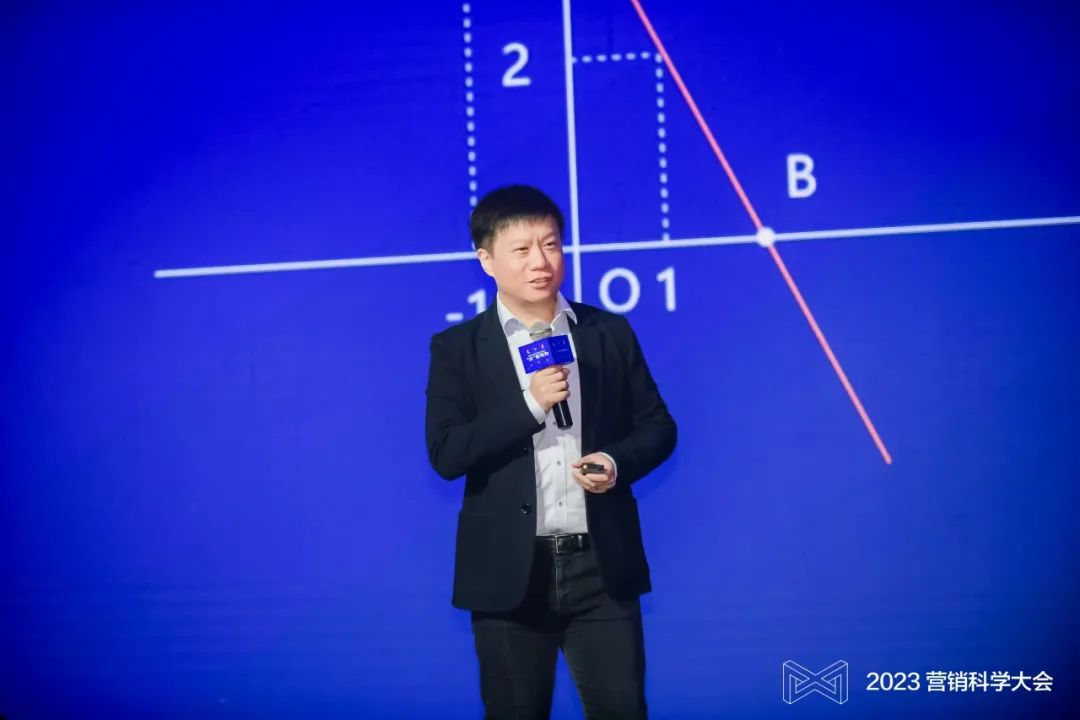
In 2014, he took those questions to an international industry audience, speaking at the IAB Global Summit in New York about mobile and video advertising practices in China. The presentation put him in the role of explaining one market's conditions to people accustomed to another. Advertising might travel easily; the assumptions inside an advertising system often require a passport inspection.
Different screens, different rules
A 2016 partnership with Drawbridge exposed how local those assumptions could be. Miaozhen wanted to help advertisers recognize connections across devices. China's large internet platforms had their own cross-device data, but Wu argued that those connections did not readily travel outside the platforms' ecosystems.
The engineering details were less glamorous than the phrase “consumer identity.” Cookies could disappear. IP addresses could rotate. A system trained around one mix of desktop and mobile activity needed adjustment for another. Drawbridge's approach had to be calibrated for the conditions it encountered in China.
The partnership used a private graph approach, allowing a marketer's own data to be combined with other information in a locally hosted graph. The ambition was a useful cross-device system outside any single publisher's boundaries. The story is instructive precisely because the obstacles were so ordinary. A polished model can still trip over a browser setting.
A second company, a familiar problem
Wu founded Mininglamp Data in 2014. Advertising had given his teams experience processing information at scale, while customers had questions extending well beyond online campaigns. In a later account, he described seeing demand for analysis of offline data as well as internet data. The skills had somewhere else to go.
His argument for diversification was specific. He considered himself a data-processing specialist. Moving into another data business could build on that competence. Moving into real estate, he said, would be a different proposition. A founder can collect new markets as if they were souvenirs; Wu's stated test was whether the technical foundation still belonged to him.
In a 2018 discussion of Mininglamp, he described an interest in fields where work depended heavily on knowledge and where knowledgeable workers were scarce. That is a sharper brief than promising artificial intelligence to everyone. It asks where expertise is needed, how it can be represented and what a customer actually needs to decide.
Knowledge graphs became one way of addressing that brief. They represent relationships among information rather than treating every record as an isolated entry. For a business, that can make the difference between having a warehouse of facts and being able to follow a relevant connection. A large filing cabinet is still a filing cabinet until someone can find the right file.
The company grows; the questions grow with it
Mininglamp's group formation in 2019 gave that wider effort an organizational home. The following year, Wu discussed the combination of data infrastructure and industry know-how. He also described HAO: human intelligence, artificial intelligence and organizational intelligence. The final term deserves attention. A company needs people and systems to work together, even when each individual component performs well.
His 2016 message for Miaozhen's tenth anniversary had already looked beyond marketing. Enterprise customers had other unmet needs, he wrote, and the company's data expertise could help address them. The ambition was to build a lasting enterprise services business and take its capabilities beyond China.
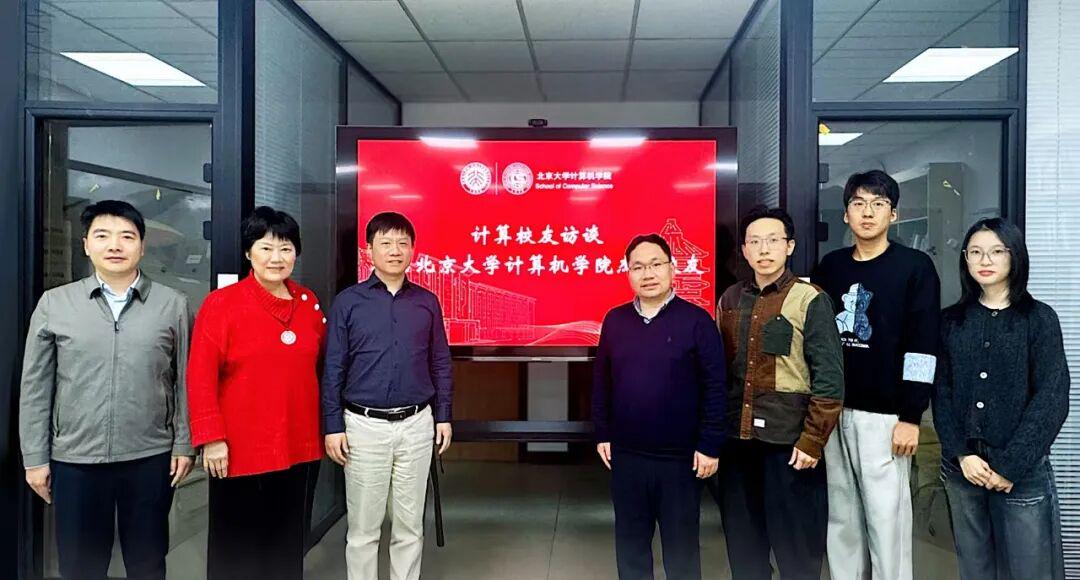
That is a long horizon for someone whose first company was created while he was still a student. It also makes the 2025 Hong Kong listing a milestone in a longer sequence. By the 2025 annual report, published in April 2026, Wu was Mininglamp's founder, chairman, CEO and CTO. The title spans strategy, management and technical development. He also serves as an entrepreneurship mentor at Peking University and Renmin University of China.
An AI system needs an exam worth taking
At a September 2025 Tencent conference, Wu argued for evaluation tailored to particular fields. A general benchmark, in his account, resembled a school subject exam. It could reveal a capability without settling whether a model was useful for the task a business needed done.
He used advertising content testing to explain the difficulty. Audience response involves differences among people. Reducing those responses to a single supposedly correct answer can hide the very variation a marketer wants to understand. Choosing the assessment is part of the technical work, rather than a ceremony performed after the model is finished.
He also offered a domestic comparison: his child's middle-school AI project could accomplish work resembling his own master's research. It is a funny, slightly disconcerting measure of progress. Yesterday's specialist achievement can become today's school assignment. The founder's answer was to keep looking for distinctive technical capabilities and evaluations grounded in real use.
Two brains, and work to do
In August 2026, Wu's attention was on robotics. Mininglamp appeared with Hikrobot at the World Robot Conference. He described the companies as bringing different capabilities: models and agents on one side, robot engineering and manufacturing experience on the other. Making robots useful required choices about what was ready and what still needed work.
In his conference speech, published in September, he distinguished an individual robot's reasoning from an organization's ability to coordinate robots, software agents and existing IT systems. A capable machine still needs to fit into the work around it. Deployment is a problem of relationships as well as intelligence.
He illustrated that problem with a friend's dishwashing robot. The machine washed dishes, but the human job had also involved collecting them and doing other tasks. Automating one activity did not automatically improve the whole operation. The anecdote brings HAO down to floor level. A machine can master its assigned action while the organization remains badly arranged.
Wu's career keeps coming back to the conditions under which a result becomes useful: an independent measurement, a model tested against the right task, a robot that fits the working day. In the clock factory, agreement with standard time had to survive a few days of running. In a business, the test is equally practical. Let the system work. Then check what actually happened.