The Feature · By The Desk
A Health-Food Company That Sells You Fewer Ingredients
Most food companies compete by adding things. More protein. More flavor packets. More convenience. Methodology, a San Francisco meal-delivery outfit founded in 2015, has built a nationwide business by conspicuously subtracting them. No gluten. No dairy. No refined sugar. No preservatives. And - the one that tells you these people are serious - no canola oil, ever, in favor of avocado oil. This is a company whose product pitch is, in large part, a list of things it refuses to put in the box.
That is a stranger business than it sounds. The economics of processed food run entirely the other way: cheaper oils, shelf-stabilizers, sweeteners that make anything palatable. Removing them is expensive, and it makes the food harder to ship and quicker to spoil. Methodology's bet is that a certain kind of customer - busy, health-conscious, and tired of reading labels - will pay a premium for a company that has already done the excluding for them. Individual meals run about $22 to $23. You are not buying calories. You are buying everything you would otherwise have to police yourself.
"Bridge the gap between food as medicine and food as pleasure."
The founder is Julie Nguyen, whose resume is the kind that makes for a good origin story precisely because it does not obviously lead here. She worked at J.P. Morgan, then at the brain-training startup Lumosity - finance to consumer tech, with no restaurant in sight. What she did have was a personal data point: chronic asthma, eczema, and seasonal allergies that, she says, eased when she changed what she ate. That is not a clinical trial, and Nguyen is careful about the claim. "Eating better is by no means a cure-all," she has said, "but it's easy to underestimate the power food can have on your life." It is a notably un-hyped thing for a wellness founder to say, which is part of why it lands.
The Part Where the Jar Comes Back
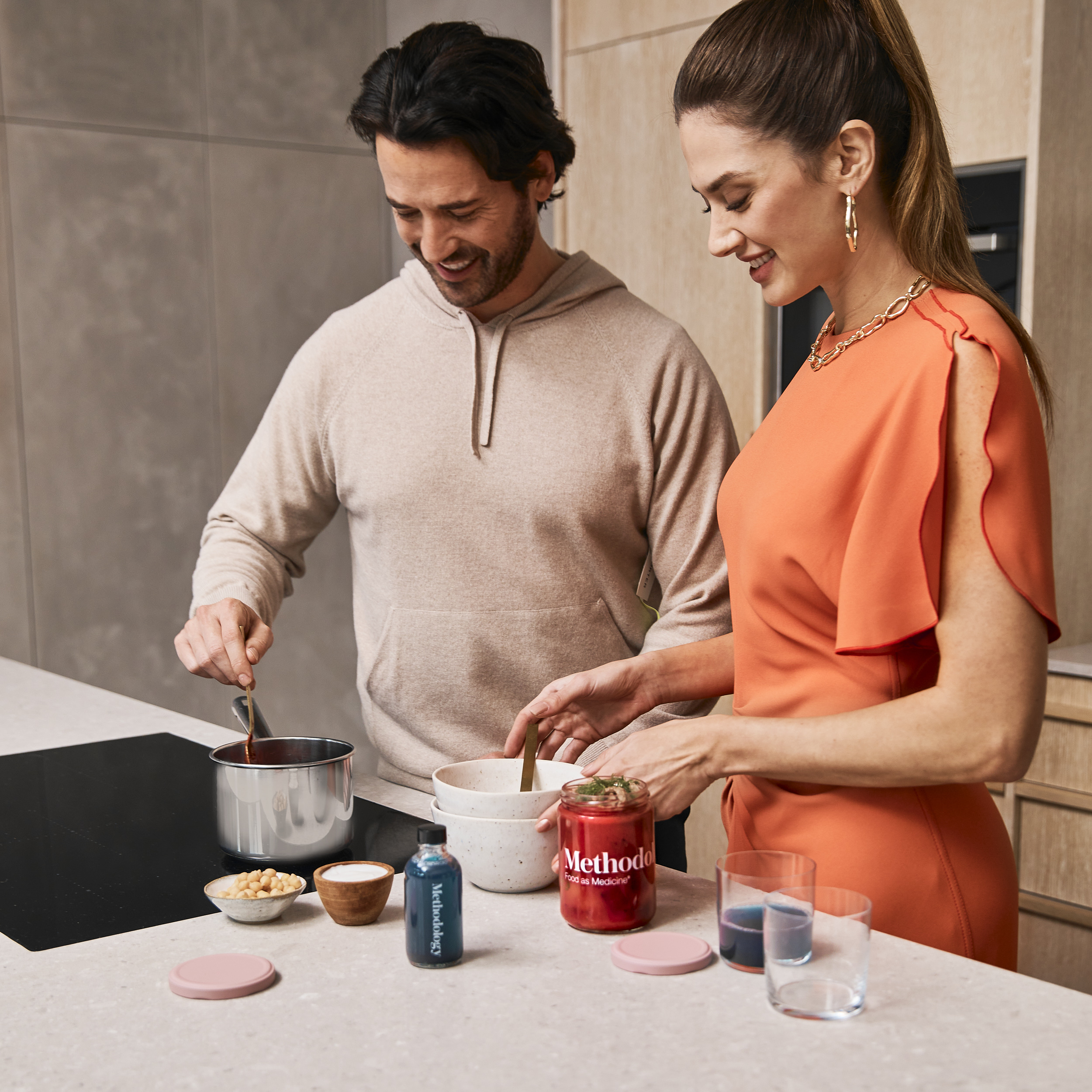
Here is the operational detail that separates Methodology from the crowded field of premium meal services: the packaging is not disposable. Meals arrive in glass jars and bentos, and the company collects them, sanitizes them, and uses them again. In logistics terms this is a reverse supply chain - a genuinely annoying thing to build, because it means every delivery is also a pickup, and every container has to survive being shipped, eaten from, returned, washed, and shipped again.
The industry norm is the opposite: send the customer a cooler full of foam and plastic and let the landfill sort it out. Methodology decided that the trash was the problem, positioned itself as a leader in reusable food packaging, and ate the added complexity. It is the sort of choice that looks like a marketing line until you realize it commits the whole company to running fleets and dishwashers it would otherwise not need.
The trash was the problem. So they built a supply chain that runs in reverse.
Cooked, Not Assembled
The other thing Methodology refuses to do is make you cook. This distinguishes it from the meal-kit category - the Blue Aprons of the world - which promised to save you time and then handed you fourteen raw ingredients and a sink full of dishes. Methodology's food arrives fully prepared. It reheats in three to four minutes. The co-founder, a chef named Stephen who spent about seven years in fine-dining kitchens around the world, is responsible for the standard that makes this defensible: the meals are meant to taste like something you'd choose, not something you'd tolerate for your health.
The menu rotates weekly and seasonally, spans international cuisines, and, per the company, draws on more than 200 plant varieties in a given week. That last number is less a flex than a description of an operational burden - sourcing that much variety, on a schedule, from suppliers like Bariani Olive Oil and Lakeside Organic Gardens, is the hard part nobody sees. Customers fill out a questionnaire; the service tailors meals around keto, plant-based, dairy-free, and allergen-friendly needs.
The Money, and the Market
Methodology is not a blitzscaled unicorn, and it does not pretend to be. Public records put total funding around $580,000 across its seed stage, with backing from Alchemist Accelerator and FirstMark Capital. The team is roughly 44 people. What it has done instead of raising enormous rounds is expand carefully - from four California metros (the Bay Area, Los Angeles, Orange County, San Diego) to nationwide shipping across the lower 48 - while trying not to cheapen the product on the way. That is the quiet discipline of the business: scaling is the moment most premium brands quietly lower their standard, and Methodology's whole value proposition dies if it does.
It has also picked a genuinely underserved niche: postpartum nutrition. The company runs a program built specifically for new mothers and newborns, aimed at the fourth-trimester window when a person most needs to eat well and least has the time to arrange it. It is a good illustration of the overall strategy - find the moment when doing this yourself is hardest, and do it for the customer.
Whether "food as medicine" survives contact with a $22 lunch is the open question, and the honest answer is that it depends on who you are. For a large slice of the country, this is simply not the price of dinner. For the slice Methodology is built for - people who already spend on their health and would rather outsource the sourcing, cooking, and dishes - the pitch is coherent all the way down. The company is not trying to feed everyone. It is trying to be the version of eating well that requires nothing of you but the reheat, and the returning of a jar.