Dudley Davis carried a bank around in his head. As president of Vermont’s Merchants Bank, he knew the borrowers, the histories, the reasons a loan made sense. When Joe Boutin succeeded him in 1994, part of the job was getting that knowledge onto paper. A customer relationship could be personal. The institution responsible for it needed a record.
- Merchants served households, businesses and towns through a regional branch network.
- It bought NUVO in 2015, extending into Massachusetts.
- It joined Community Bank in 2017, after weighing the economics of independence.
That small administrative problem contains a much larger business question. How do you make something personal big enough to last? Merchants spent generations answering it. By the end, its answer included online banking, a Massachusetts acquisition, a baseball debit card and, finally, a new owner.
A building that meant business
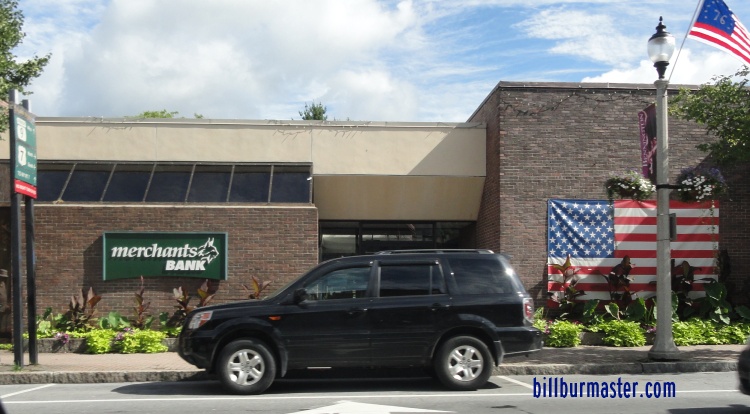
The bank began in Burlington in 1849. It moved to College Street in 1857. In 1895, a $60,000 renovation changed its appearance, including a second story finished in Vermont granite. Money, in this version of banking, had an address and a substantial facade. You could walk past the place where it was kept.
Architecture did some of the work that an app interface does today: it made an institution legible. The building said permanence. The banker supplied recognition. The combination is easy to romanticize, but it was also practical. A lender who understood a local business had information that a distant competitor might lack.
The handshake needed a filing cabinet
The difficulty was making that understanding transferable. The 1994 account of the leadership change describes the effort to document Davis’s knowledge as lending requirements grew more demanding. Experience was valuable, but a successor, colleague or examiner needed to be able to follow the reasoning.
For anyone building a service business, there is a useful lesson here. Write down what your experienced people notice. Record why they make exceptions. Personal service becomes fragile when only one person can explain a decision. That is an interpretation of Merchants’ history, and a more useful takeaway than simply telling every company to behave like a small-town bank.
A customer relationship could be personal. The institution responsible for it needed a record.
An observation from the Merchants story
Same customer, several financial lives
By its final independent years, Merchants offered personal checking and savings, certificates of deposit, mortgages, commercial lending, municipal banking and trust services. Customers could use online and mobile banking alongside branches. Its market included families, business owners, public bodies and investment clients, with different needs arriving through the same doors.
The business model was recognizable banking: take deposits, make loans, earn a spread after funding costs, and collect fees for services. The interesting distinction was its regional focus. Merchants combined a Vermont branch network with commercial expertise and personal relationships. Its products were familiar; the setting and the people delivering them supplied the distinction.
That breadth also created a marketing problem. Brandthropology, its agency, described the need to connect the commercial and community sides. After stakeholder focus groups, it developed the question, “Where Do You Want to Grow?” A mortgage, a business loan and a town’s banking needs could all fit inside that invitation.
There was a pleasantly concrete version of belonging, too. In 2016, Merchants promoted a Vermont Lake Monsters debit card with merchandise discounts and ticket benefits. The announcement described a relationship with the baseball team stretching back more than twenty years. A checking account could carry a little local allegiance in a wallet.
First the buyer, then the bought
Merchants was willing to grow through acquisition itself. In April 2015, its parent announced a deal to buy Springfield’s NUVO Bank & Trust Company for approximately $21.8 million in stock and cash. NUVO focused on businesses and individuals in western Massachusetts. The transaction closed that December.
The logic was specific: give a smaller commercial bank access to more funding, greater lending capacity and a broader product set. NUVO retained its name as a division. Growth did not require immediately erasing the identity customers already recognized. The adviser’s account presented the transaction as an opportunity for revenue growth rather than a cost-cutting exercise.
Then Merchants faced the same question from the other side. Its board weighed independence against an offer from Community Bank System. The merger proxy identifies local economic conditions, interest rates, rising operating and compliance costs, and competition among the considerations. Knowing the market did not remove the expense of operating in it.
The price of a bigger umbrella
This was a profitable business. Merchants Bancshares reported $14.9 million in net income for 2016, with approximately $2.07 billion in assets at year-end. Those figures matter because a sale can otherwise look like a rescue. The board’s decision concerned future prospects and shareholder value as well as the business already in hand.
October 2016
May 2017
Stock-and-cash consideration. The announcement figure and completed acquisition value describe different dates.
The transaction completed on May 12, 2017. Community’s network gained 31 Vermont branches and one Massachusetts location. Merchants’ customers entered a larger banking organization; the independent Vermont institution ended. Contemporary reporting described branches closing Friday and reopening Monday as Community Bank.
What can a reader copy? Preserve local knowledge, make it usable by colleagues, and connect expansion to a customer benefit people can name. Those choices still require judgment. A larger network brings little comfort if the people who understood a borrower disappear. The merger documents themselves identified integration and employee retention as risks. Relationships take time to accumulate; ownership can change over a weekend.
Today, the banking successor is Community Bank, N.A. Merchants belongs to the history of how that network grew. Its story leaves an unusually practical question for any business proud of knowing its customers: if the person who knows everyone leaves, how much does the company still know?