In 2014, Melanie Matheu sat at an entrepreneurship gathering and wrote a small question in her notes: “Deck?” The speaker was discussing pitch decks. Matheu had a doctorate in physiology and biophysics. The business vocabulary was still arriving. It is a pleasing detail in the life of an inventor: you can understand what light does at microscopic scale and remain briefly puzzled by what investors want in a slide presentation.
Two years later, she founded Prellis Biologics. Another company, Lyric Bio, followed in 2024. Between those dates came an invention, a change of job inside the company she had created, and a widening set of questions about what her technology could do. The route has included both careful preparation and deliberate departures from it. Starting over, in her case, has meant taking the accumulated knowledge along.
A campus with several doors open
Matheu studied biochemistry and molecular biology at UC Santa Barbara, graduating in 2001. The location appealed to an outdoor enthusiast who liked surfing and mountain biking. Mountains and ocean made a persuasive extracurricular argument. Her laboratory interests ranged from protein engineering to inorganic chemistry; she remembers the support of Herb Wait and Patrick Daugherty. Moving among those subjects gave her several ways to approach a problem before she had a company to build around one.
Her next degree took her to UC Irvine, where she earned her doctorate in 2009. Michael Cahalan became her doctoral mentor. Postdoctoral work took her through UC Irvine, VIB in Belgium and UC San Francisco. These institutions supplied different colleagues and working environments, along with the years of practice that sit behind an apparently sudden invention. A good idea can arrive quickly. Learning enough to recognize it usually occupies a rather larger portion of the calendar.
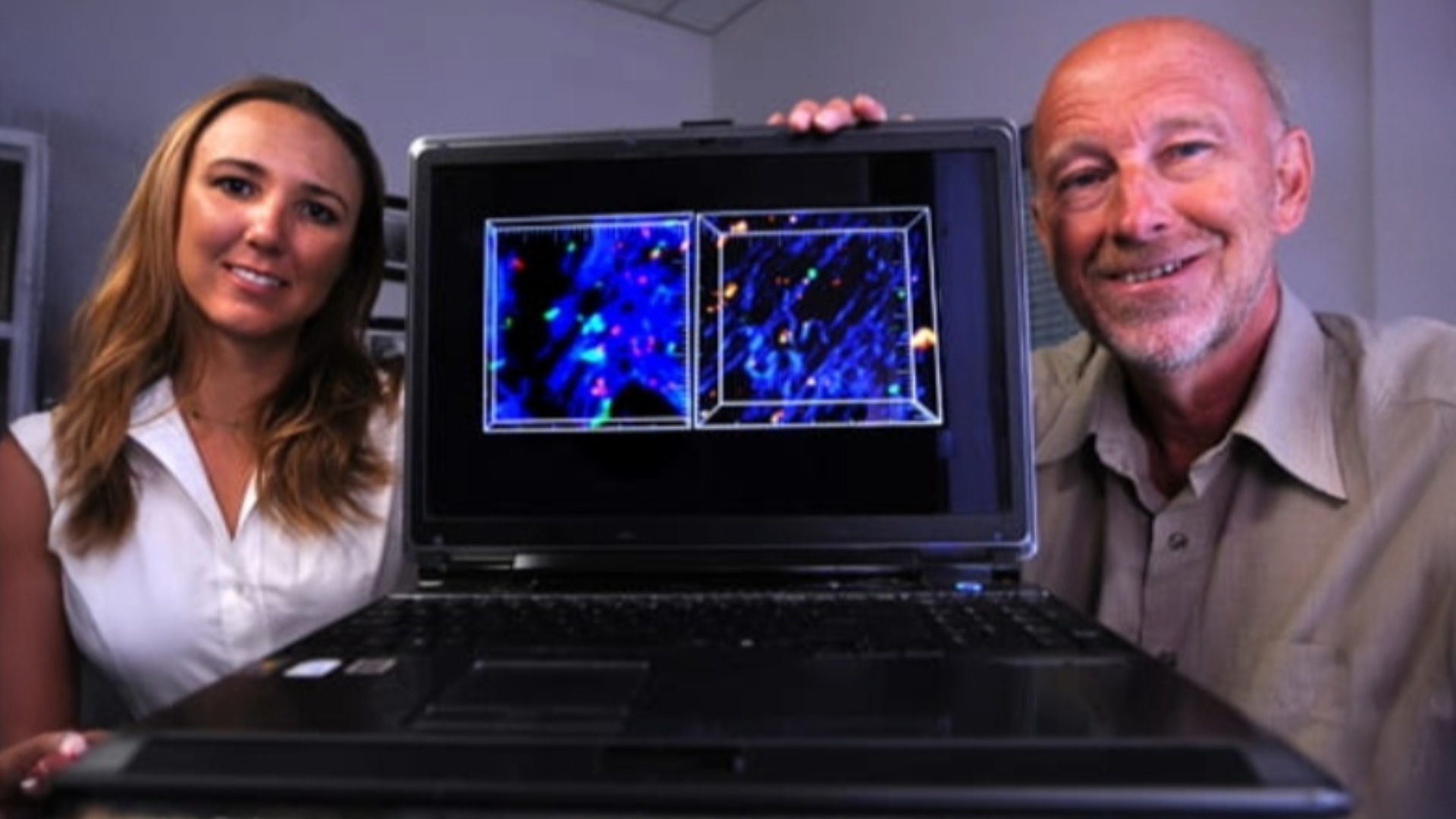
At UCSF, she worked with laser-based imaging. Her later account of Prellis’s origins describes a question about reversing that process: could a system used to observe small structures become a way to construct them? Her author biography in the scientific video journal JoVE describes the resulting projection approach as partially separating printing speed from resolution. In other words, the engineering task was to preserve fine detail while changing how much could be made at once.
Giving light a different job
An imaging system and a printer can share a vocabulary without sharing a purpose. One helps a researcher inspect an existing arrangement. The other must produce an arrangement from a design. Moving between them requires decisions about optics, materials, control and timing. Matheu’s invention occupied that crossing. Her experience with a familiar instrument offered a starting point for a machine with a different assignment.
The paper trail is quite concrete. US patent 10,933,579 names Melanie P. Matheu as inventor and Prellis Biologics as assignee. Granted on March 2, 2021, it covers methods and systems for printing biological material. The document describes arranging light into a pattern and using it to polymerize material. It is the formal record of an optical approach, complete with the technical detail that a memorable founding story tends to leave out.
reveals a structure
builds a structure
One optical background. A new assignment for light.
The distinction matters because invention has several stages of proof. A mathematical account needs to survive contact with equipment. Equipment needs to produce the intended result. A company then has to turn that capability into work somebody will pay for. Matheu encountered all three tasks. In 2018, she described personally financing the early company and patent filings, after checking the physics. The first successful print made the wager tangible.
“I checked all of the physics and then took the leap.”
Melanie Matheu, 2018
The company had to be learned, too
Prellis joined the biotech accelerator IndieBio. True Ventures welcomed Matheu and co-founder Noelle Huskey Mullin into its portfolio in 2017, noting their complementary scientific backgrounds. Their partnership brought specialized microscopy and biophysics together with a colleague’s expertise in cell and developmental biology. An invention may have a named inventor; a company needs other people who can see what to do with it.
The early business also demanded a new set of skills from Matheu. She sought coaching from Teddy Tannenbaum, explaining that she had spent her adult life in academia and now needed to learn how to be a CEO. There is refreshing economy in that request. Starting a company does not deliver the management education by return post. You still have to ask for help, and occasionally admit that the job description contains subjects you have yet to study.
Her first move into the startup world had ended when the company she joined closed. Later, during Prellis’s early period, she went more than six months without a paycheck and was offered a position at a larger company. She declined it after considering which decision she would regret. This was a choice with a visible cost, rather than a motivational poster’s pleasantly inexpensive version of risk.
The attraction of a new project can be easy to explain. Continuing it after the novelty has worn off is a more revealing test. Matheu’s account includes hesitation and alternatives, as it should. A founder has to make decisions before all the evidence is in. The practical difficulty lies in judging which uncertainty can be investigated, which can be endured, and which requires a different plan.
A different seat at her own table
In 2022, Prellis announced a $35 million Series C financing and the appointment of Mike Nohaile as CEO. Matheu would become Chief Technology Officer and continue leading scientific work. The founder was changing responsibilities inside the organization she had started. The announcement gives a useful date to a change that can otherwise disappear behind a succession of company biographies.
There is a tempting habit of treating the chief executive title as the natural destination of every entrepreneurial career. Matheu’s subsequent work makes that assumption look unnecessarily restrictive. An organization needs different kinds of attention as it grows. The person who created the technical approach may have further inventions to pursue, while another leader takes responsibility for the expanding business. Assigning those jobs is itself part of building the company.
- 2016Founds Prellis Biologics
- 2022Moves from CEO to CTO
- 2024Co-founds Lyric Bio as CSO
Her current Lyric biography lists her as co-founder and Chief Scientific Officer, with a continuing board role at Prellis. The connection between the companies remains explicit: Lyric uses printing technology developed at Prellis. The new role gives Matheu another setting in which to work on the consequences of the original invention. A business card has only a few lines. A technology can keep offering more work than will fit on it.
The second company inside the first idea
Matheu approached Kayj Shannon in February 2024 to discuss a spinout. By August, they had founded Lyric Bio. Shannon became CEO and Matheu CSO. The project applies the printing platform to high-density bioreactors, with three-dimensional structures supporting the manufacturing process. One of her explanations centers on the relationship between surface area and volume: geometry becomes part of the production problem.
The spinout gives a distinct application its own organization. That is an interesting sequel to the original engineering work. Once an instrument can do something useful, there may be several directions in which to develop it. Each direction comes with its own practical demands. Creating a second company establishes a place for a team to concentrate on one of those possibilities, while carrying forward the technology that made it plausible.
In December 2025, Lyric announced a $6.6 million seed financing led by The Venture Collective. Participants included Black Diamond Ventures, Draper Associates, Lucas Venture Group, Meiji Seika Pharma and SOSV. The round marked a new business milestone for the spinout. In September 2026, Matheu was also listed for a BioProcess International panel on leadership, innovation and career growth, a fitting subject for someone whose own responsibilities have repeatedly changed.
Another audience, another kind of work
Matheu also writes LIL Science and communicates through social platforms, including TikTok under LaughterInLight. She co-hosts the Bench to Bedside podcast with Zachary Rubin. Her literary agency lists a first book in progress. These are further forms of explanation, with different audiences and different amounts of room for a thought. A brief video and a book ask very different things of the same communicator.
Her interest in education predates those channels. Asked in 2018 what she would wish for, she emphasized science teaching and more interaction between disciplines. Away from work, she described long-distance running and occasional art-making. The visual interest seems particularly at home beside a career spent working with images, although she need not justify a pastime by giving it a professional application. Sometimes a picture is allowed to remain a picture.
In 2023, she received the VIB Alumni Award. The recognition returned her to a research community she remembers warmly, including Bart Lambrecht’s laboratory in Belgium. That connection places the companies within a longer history of people and places that helped her develop confidence to try new work. The inventor remains attached to the environments where she learned to investigate a question.
Her account of the future still includes an eventual return to academia. For now, two companies, a public writing life and a developing book offer several outlets for her curiosity. The direction of travel need not be permanent to be serious. Matheu has repeatedly changed where she works and what the role requires, while keeping the accumulated knowledge available for the next problem. That little question about a deck belongs in the story. So does the willingness to write another one.