The first thing an agency veteran learns is that attention is rented. A clever line may win a second. A beautiful film may buy thirty. Neither guarantees that anyone will remember who spoke, understand what was asked, or do something afterward. Melanie Johnston spent more than two decades in Canadian marketing learning to close that gap. Then, in 2022, she changed the brief.
Johnston left the chief executive role at Forsman & Bodenfors Canada to become Chief Marketing Officer of The Princess Margaret Cancer Foundation. It was a shift from running an agency to representing one institution, and from commercial assignments to philanthropy. Yet the work she carried with her was familiar: make a complicated organization legible, give talented people a clear problem, and build a brand sturdy enough to hold both emotion and evidence.
Her career reads less like a collection of campaigns than an apprenticeship in translation. She began on the client side at TD Bank in 1998. In 2001 she moved to DDB Canada, where her titles traced the expanding circumference of the job: account director, business unit leader, client service director, managing director, president. Every promotion added another constituency. Clients wanted growth. Creative teams wanted room. The agency needed revenue. People needed a place where strong work could survive the calendar and the budget.
The long apprenticeship
When DDB promoted Johnston to president of its Toronto office in 2015, the announcement named four responsibilities: people development, creative product, revenue growth and overall stewardship. That list is revealing. The president had to create the conditions in which good ideas could be made, sold, delivered and repeated, whether or not the ideas were hers. DDB also credited her with helping the Toronto operation grow and with the Volkswagen Canada win.
She had already been at the agency for more than a decade. The length matters because agency life rewards short memories. Accounts arrive and leave. Teams reform. The urgent pitch displaces the important operating question. Johnston's ascent suggests a different kind of value: continuity across the churn, and an ability to move between client confidence and creative ambition without treating them as opposing camps.
Her next stop made the operating philosophy more explicit. Forsman & Bodenfors was built around a flat, collaborative model in which teams held unusual autonomy. Johnston became the Canadian CEO in 2018 and joined the global board. A year later, the Toronto and Montreal offices received 3% Certification, something no Canadian agency had done previously. The independent assessment focused on female leadership, workplace equality, culture and equal creative opportunity.
“Our people are the combination of ambition and generosity, truly making up the fabric of the collective.”Melanie Johnston, on Forsman & Bodenfors in 2019
Ambition and generosity make an interesting pair. Ambition pushes the standard up. Generosity widens the circle of people who can meet it. Johnston's public comments about the certification gave the credit to the collective and described diversity and empowerment as unfinished work. That combination of pride and incompleteness is more useful than a victory lap. Culture, like brand, lives in patterns that need to hold on an ordinary Tuesday.
There is a glimpse of her taste in the two books she recommended during a 2015 conversation about women in advertising leadership. One was The Beautiful Constraint, Adam Morgan and Mark Barden's argument for turning limits into creative fuel. The other was Anthony Doerr's novel All the Light We Cannot See. One is a business book about pressure. The other is fiction built from attention, moral choice and lives that cross at a distance. Together, they make a more revealing reading list than a shelf of management manuals.
Constraints were never theoretical in the jobs Johnston held. An account arrives with a budget, a deadline, a skeptical audience and several definitions of success. An agency office adds payroll, morale and the need to win the next assignment while delivering the current one. Leadership means refusing to let any single pressure become the whole brief. The lesson traveled with her: a limit can sharpen an idea, provided the team understands which outcome cannot be compromised.
A recognition problem hiding in plain sight
At the foundation, Johnston encountered a stubborn marketing problem: people could see the work and still file it under someone else's name. Research later submitted with The Art of Conquering Cancer campaign found that only 26 percent of respondents connected the organization's tagline to The Princess Margaret. Forty-nine percent assigned it to another charity.
Buying more reach for a fuzzy association could simply make the confusion larger. The task was to give the institution a more distinctive mental address. Johnston said the foundation had an opportunity to differentiate itself and build a brand on which fundraising could grow. The phrasing is practical: brand provides the structure that helps a person know what their participation belongs to.
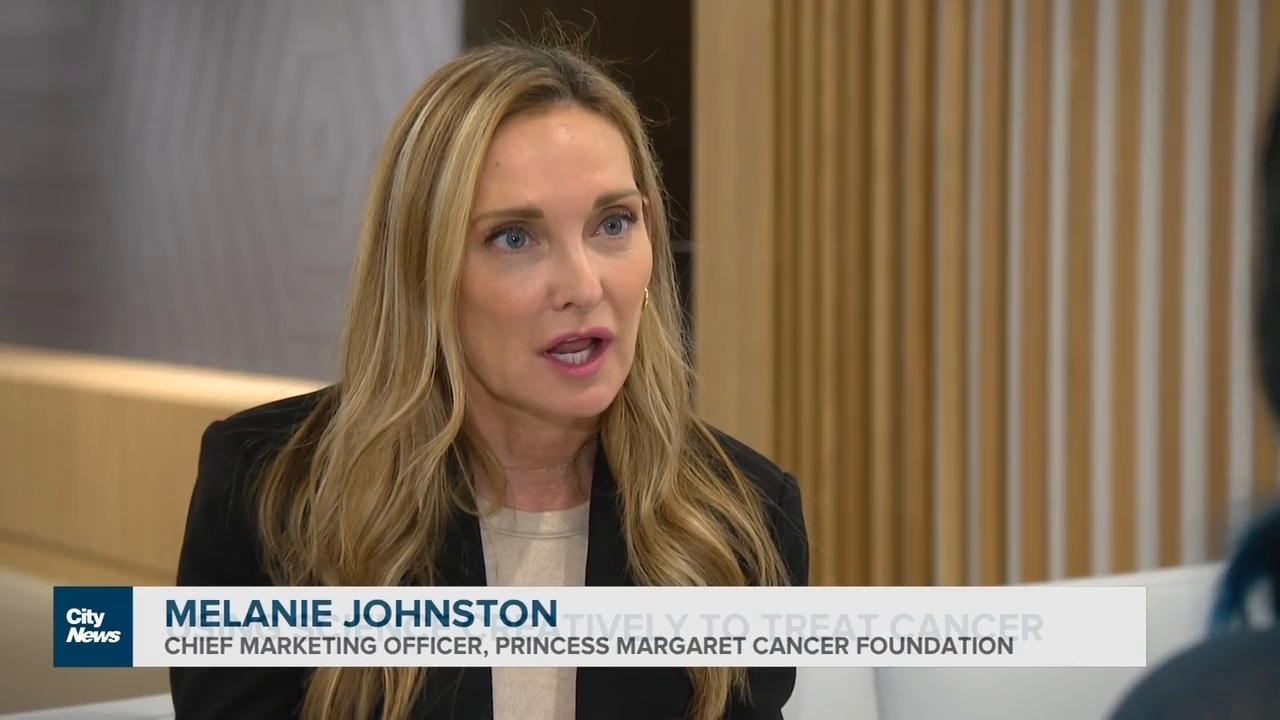
The Art of Conquering Cancer supplied an organizing idea: creativity belongs inside rigorous discovery. In a CityNews interview, Johnston described free-form thought and scientific process working together. The campaign moved across broadcast, connected television, billboards, transit and social media. It featured the people doing the work and gave the public a way to see an institution that might otherwise remain abstract.
The reported outcome was more than 50 million impressions in six weeks and a 300 percent year-over-year increase in online donations. A view and a gift remain different actions, so the sequence matters. Distinct idea first. Distribution second. Participation last. The campaign's reach is interesting because the donation movement sits beside it.
“True innovation and true net new discoveries - they don't happen without creativity.”Melanie Johnston, CityNews interview, 2022
The CMO as translator
Johnston's public career has repeatedly placed her between specialized groups. At DDB, she stood between clients and makers. At Forsman & Bodenfors, she led within a collective designed to resist conventional hierarchy. At the foundation, she works between institutional experts, agency partners, fundraisers and a public with limited time. Her craft depends on choosing the detail that unlocks the rest while keeping the meaning intact.
That may explain the foundation's 2023 choice of Broken Heart Love Affair as agency of record. Johnston framed the assignment around eminence, clear association and mass donor acquisition. The agency was asked for more than a campaign wrapper. It was asked to help the organization occupy a more precise place in the public imagination.
Name the confusion
Find one handle
Connect reach to action
Carry The Fire, the platform that followed, uses another portable image. A fire can be held, shared and passed forward. It gives many kinds of supporters a common verb without requiring identical reasons for joining. Johnston's comments on the work emphasized optimism, progress and continued support. Again, the strategic move is translation: make a large mission feel like an action a person can recognize as theirs.
The platform has stretched across fundraising events, campaign films and a podcast hosted by Lisa LaFlamme. That range is useful. A brand idea earns its keep when it can survive outside a launch film and organize many encounters without becoming wallpaper. Johnston shared the podcast's second season in 2026, showing how the platform continues to function as a publishing frame as well as a campaign line.
What the career makes visible
There is an easy way to tell Johnston's story as a leap from commerce to cause. The more instructive version is about transfer. She brought client-side empathy from TD, account discipline from DDB, collaborative operating instincts from Forsman & Bodenfors, and decades of judgment about what makes an idea travel. The destination changed. The muscles did not.
Her public reflections keep returning to people. In 2026, looking back at DDB amid discussion about the agency brand, she wrote that it had soul and spirit, and remembered learning, collaborating and creating with colleagues she admired. On LinkedIn, she has also written about being moved by quiet acts of philanthropy undertaken without applause. The connection is subtle but consistent. She notices the culture around the work and the motive behind the action.
For operators, there is something to steal here. Volume needs clarity. Culture shapes output. Even a mission with obvious stakes needs explanation. Build the association before demanding the action. Give the idea enough shape that other people can carry it.
Johnston's career is still unfolding, but its through-line is already clear. Making people look is only the beginning. They also need to understand what they are looking at, remember who made it possible, and see a credible place for themselves in what happens next. Attention may be rented. Participation has to be earned.